Where talks stand and who is leading
Turkey's Energy Minister Alparslan Bayraktar used his COP31 stop in Antalya to lay out the short list for the country's next reactors. Speaking to Bloomberg Television, he said Turkey is weighing technology options and is "more or less convinced by these two suppliers," meaning Canada and South Korea. His timing signal was clear: "The next few months are quite critical."
He also spelled out what Ankara wants from bidders: "competitiveness, diversification, the best technology offer." On money, he said Turkey has held discussions with Canadian pension funds. His comments show others in the mix, including Russia and China, have slipped in the contest for projects that run into the billions.
What is already being built and what is next
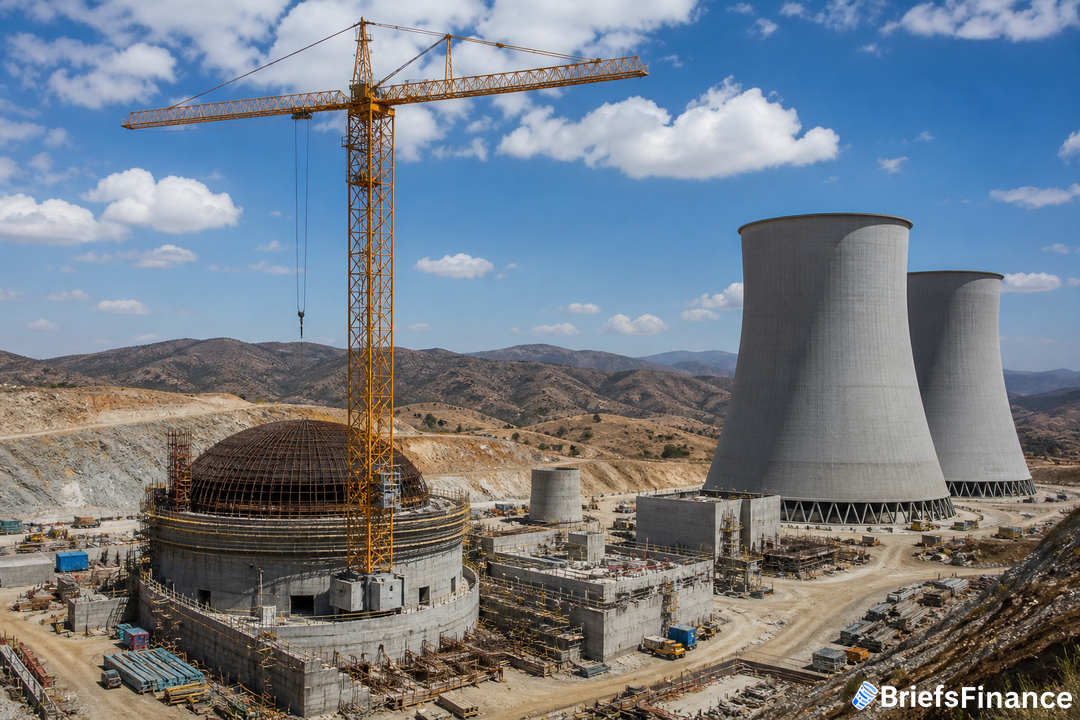
Rosatom, Russia's state company, is constructing Turkey's first nuclear station at Akkuyu on the Mediterranean, a 4.8 gigawatt facility slated to begin delivering power next year. Bayraktar has previously said Rosatom's work at Akkuyu put it in a strong position for the next planned site at Sinop on the Black Sea, a project South Korea is also chasing.
The rival Canadian pitch centers on Montreal-based AtkinsRealis Group Inc. and its CANDU reactor design.
Investors often gain an edge by watching how technologies reshape long term energy options. We're hosting our first ever investor livestream on 11/17 to show you how to use ChatGPT and Claude to invest like a pro, hosted by Briefs Finance CEO Jaspreet Singh. Save your seat.
The grid vision and why it matters to your portfolio
Following Sinop, the plan is for a third large-scale plant plus about 5GW in small modular reactors, bringing nuclear capacity to 10GW by 2040 and to 20GW by 2050. Nuclear fits into a broader electrification push. Officials aim to raise electricity's share of final energy use from about 22% today to 36% by 2040, and note that COP31 sets a worldwide objective of 35% by 2035.
Bayraktar said Turkey plans to expand cross border connections to 15GW with routes to the east, west and south. One proposed path would connect Saudi Arabia, Jordan, Syria and potentially Lebanon to Europe via Turkey. Ankara also intends to route green power sourced in Central Asia and the Caucasus through Turkey's grid and onward to European consumers. The idea is to smooth peaks and troughs across time zones. We can use this time difference."
The bottom line: if Ankara lands new partners and builds out interconnections, equipment vendors, grid operators and fuel suppliers tied to these corridors could see durable demand.
Knowing where markets may adapt to new infrastructure helps investors make wiser decisions. On 11/17, our CEO Jaspreet Singh goes live for our first ever investor livestream on how to use ChatGPT and Claude to invest like a pro. Register to join him.