Free NewsletterPro Login

Warning: Undefined variable $stocks in /var/www/briefs.co/htdocs/wp-content/plugins/oxygen/component-framework/components/classes/code-block.class.php(133) : eval()'d code on line 448

Warning: foreach() argument must be of type array|object, null given in /var/www/briefs.co/htdocs/wp-content/plugins/oxygen/component-framework/components/classes/code-block.class.php(133) : eval()'d code on line 448

Warning: Undefined variable $funds in /var/www/briefs.co/htdocs/wp-content/plugins/oxygen/component-framework/components/classes/code-block.class.php(133) : eval()'d code on line 472

Warning: foreach() argument must be of type array|object, null given in /var/www/briefs.co/htdocs/wp-content/plugins/oxygen/component-framework/components/classes/code-block.class.php(133) : eval()'d code on line 472
/* the link was here */
×
Free investor livestream — Nov 17

How To Use ChatGPT & Claude To Research Stocks Like A Pro

01
The prompt we use to break down any stock
02
How to fact-check what AI tells you
03
How to compare two stocks in minutes

Luján Turns Into a Pop-up Hotel for Pope Leo XIV's Visit

Published Nov 10, 2026
Share:
Summary:
  • For Pope Leo XIV's stop in Luján, Lucía Rodríguez, 20, has set a price of 5 million pesos ($3,500) to rent her three-bedroom home, located about an hour from Buenos Aires, for a three-night stay.
  • The town of roughly 95,000 residents and 1,800 hotel beds is bracing for more than 1 million visitors for the Nov. 11 Mass, with residents offering spare rooms, gardens and even soccer fields.
  • City plans include thousands of portable toilets and mobile hospitals; rail service will be increased, while the municipality verifies listings but leaves bookings and payments to hosts and guests.

A pilgrimage crush, a housing scramble

Luján is about to host a crowd that dwarfs the town itself. Officials expect more than 1 million people for Pope Leo XIV's Mass on Nov. 11, a tidal wave for a city with only 1,800 hotel beds and about 95,000 residents.

Arriving from Uruguay on Nov. 8, Leo scheduled four days, with plans to meet President Javier Milei, hold events in Buenos Aires, and make a day excursion to Cordoba. Luján serves as his last big stop before he departs for Peru later on Nov. 11, and the crowds would mirror France, where roughly 800,000 assembled for a service at Paris's Place de la Concorde.

This visit carries extra weight in Argentina.

Residents cash in as the city braces

Mayor Leonardo Boto has called on residents to offer up extra bedrooms, yards, soccer pitches, and community halls to accommodate the surge. The municipality verifies listings but does not manage bookings or handle payments, so hosts and pilgrims arrange transactions directly, and while rental income is taxable, many of these one-off stays sit outside traditional hotels and booking platforms.

Rodríguez is one of many trying to capitalize, asking 5 million pesos for three nights at her modest home west of the capital. She hopes the payout will cover fresh paint, repair damp bedroom walls and finish a covered patio. "This opportunity - having the Pope come and people from all over the world - I don't think it will happen again," she said. "It would help us enormously with a lot of things we need."

Some offers stand out. A backyard spot that includes access to a shared bathroom is priced at $200, and Silvio Telechea intends to convert Greenfield 2 - among the oldest synthetic soccer pitches in Luján - into a campground for about 30 to 35 tents at $100 per person.

Ian Albornoz, 20, holds a job at a cardboard plant and, with his family, co-manages a modest soccer field called El Clasico. His plan is to set up space for up to 20 tents, run the grill for choripanes and other cuts, and keep the bar operating. "It crossed my mind," he said. "But it really weirds me out to think of people coming into my house and sleeping in my own bed."

Local surges in demand are a reminder to use smarter tools for investing. We're hosting our first ever investor livestream on 11/17 to show you how to use ChatGPT and Claude to invest like a pro, hosted by Briefs Finance CEO Jaspreet Singh. Save your seat.

The line between hospitality and opportunism is being tested. Some locals are quoting prices up to $10,000 to receive pilgrims, even while Argentina's economy is decelerating and formal employment is vanishing. Boto's take: "There are always opportunists, and it's understandable," he said.

"There are people who are asking crazy prices and keep them there, but that's part of the anecdote." He added that conventional hotel rooms can still be found at high yet fair rates and urged pilgrims not to be discouraged. "We're waiting for them with hospitality and open arms," he said.

Faith economy meets logistics reality

Luján's draw is centuries deep. In 1630, the settlement gained renown as a destination for pilgrims after a team of oxen transporting a depiction of the Virgin Mary refused to budge until the image was taken off the cart at that spot, which believers interpreted as the Virgin's wish to stay. Today, the site hosts the National Shrine of Our Lady of Luján, whose towering neo-Gothic basilica draws about 7 million pilgrims each year. Boto estimates that about one-third of the area's economy depends on faith tourism.

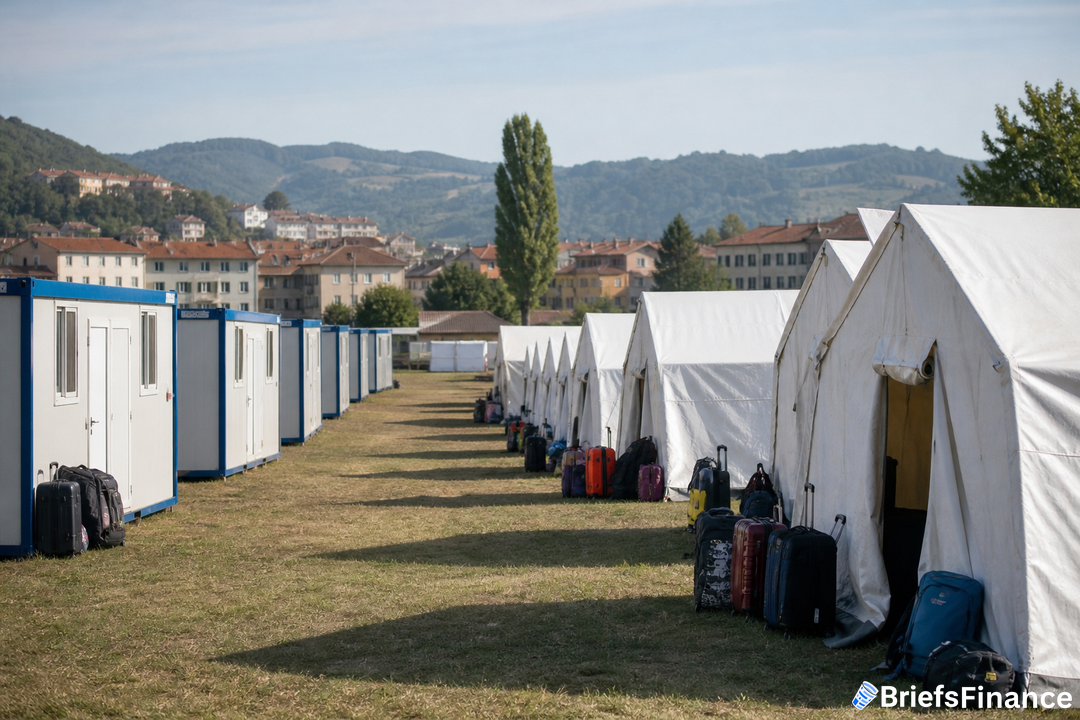
The city is moving to handle the surge. Roughly 1,200 locals signed up to operate temporary stalls offering items ranging from milanesa sandwiches to soft drinks, thousands of portable toilets are being installed and mobile hospitals are being set up. Motorists will be directed to parking lots located several kilometers from the basilica, train frequency will be boosted, and organizers urge pilgrims to get there early and cover the last leg on foot.

Not everyone expects a windfall. María de los Ángeles Peralta - now in the family's third generation of selling religious goods in Luján - said her 23-year-old son now helps her and sees nothing wrong with locals earning extra. "There's a whole family behind every one of these businesses, and the reality today is that money isn't enough and there aren't many other jobs in Luján," she said.

Others fear that shutdowns and security measures will block suppliers and discourage local patrons from leaving home. "The city is going to be completely turned upside down," he said. "It won't necessarily be a good day for us."

For the national government, the influx aligns with efforts to boost inbound tourism and bring in more foreign currency.

The bottom line for investors

In plain English, a single event is rewiring a local market for a few days. Prices range from $200 for a garden with a shared bathroom to 5 million pesos for a three-night house lease, while some listings reach $10,000 and much of the action flows outside conventional platforms as thousands of temporary facilities go in, the main highway will close, and drivers will be directed to parking areas.

Seeing how events reshape markets encourages investors to adopt advanced tools for an edge. On 11/17, our CEO Jaspreet Singh goes live for our first ever investor livestream on how to use ChatGPT and Claude to invest like a pro. Register to join him.

Disclosure

Recent News

1 2 3 … 123

Get Market Briefs delivered to your inbox every morning for free!

No fluff. No noise. No politics. Just finance news you can read in 5 minutes.

Blogs

November 3, 2026
How to Budget Every Payday: 5 Moves So You Never Worry About Money
  • A median earner could make about $4.7 million over a career, yet most retire with closer to $13,000 in the bank because of a keeping problem, not an income problem.
  • Audit your money, save $2,000, pay off credit card debt, then automate a 75/15/10 split across three bank accounts.
  • Earn more only after your system is in place, then protect what you build with an accountant, attorneys, the right insurance, and an estate plan.
Read More
November 3, 2026
How to Invest in Stocks: 5 Things to Do Before You Invest Your First Dollar
  • Paying off credit card debt at around 22% interest beats the stock market's roughly 10% average, and even Warren Buffett's 19%.
  • Save $2,000 in a separate emergency fund, learn to research with AI, and decide whether you're a growth, income, or wealth preservation investor.
  • Write down a plan for buying during market crashes, which have happened 25 times in the last 100 years.
Read More
November 3, 2026
Best ETFs to Buy: 5 Three-ETF Portfolios for Every Investing Goal
  • An ETF is a basket of stocks, so one purchase spreads your money across many companies instead of riding on just one.
  • Jaspreet Singh laid out five portfolios of three ETFs each, built for kids, cash flow, growth, slow and steady growth, and protection from a weaker dollar.
  • Based on 10-year average returns, $500 a month could grow to between about $660,000 and $3.1 million over 30 years, though past returns never guarantee future ones.
Read More
November 3, 2026
Best Investments of a Generation: 5 Market Shifts Backed by Your Tax Dollars
  • Private companies are about to spend $1 trillion a year on AI, and the Trump administration is putting tax dollars behind the same industries.
  • The five shifts are AI and its supply chain, robotics, rare earths, energy, and defense.
  • Each comes with real risk, from an AI bubble to wars ending or a new Congress, so these are ideas to research, not sure things.
Read More
November 3, 2026
How to Get Ahead Financially: 10 Moves to Make While Everyone Else Falls Behind
  • Learning a high-income AI skill, or building AI tools for tradespeople, can raise your earning power in a tough job market.
  • Higher interest rates, the 2025 tax cuts, Trump accounts, and stacked cash back can put more money back in your pocket.
  • Following where government money is moving, keeping cash ready for market crashes, and investing in your own education can speed up your wealth.
Read More
November 3, 2026
National Debt at $40 Trillion: Why Inflation Is the Hidden Tax, and Who Profits From It
  • Time magazine asked President Trump how he'd tackle the $40 trillion national debt, and he suggested inflation could help pay it off, a cost that lands on everyday Americans.
  • From 1971 to 2025, cars, houses, and college outpaced both inflation and incomes, while the S&P 500 grew more than 33,000% with dividends reinvested.
  • The U.S. can default, inflate, or outgrow its debt, and history shows each path rewards different assets.
Read More
November 3, 2026
FOMC Meeting: Why the Fed Is Getting Nervous, and Why AI Stocks Feel It
  • At its latest meeting, the Fed held rates steady but warned it may raise them again, because inflation is running near 3.5% against a 2% target.
  • Oil prices, tariffs, AI's hunger for energy, and government spending are all pushing prices higher, and gold, silver, and bitcoin fell on the Fed's news.
  • Chinese AI stocks are down about 40% in a few months and Google fell more than 10% in a day, raising fears that higher rates could pop an AI bubble.
Read More
November 3, 2026
Midterm Elections: Where the Money Could Move if Republicans or Democrats Win
  • The U.S. government spent about $7.5 trillion last year, and the midterm elections could change which industries get more of that money.
  • A Republican win could favor manufacturing, fossil fuels, banks, and defense.
  • A Democratic win could favor healthcare, weight-loss drugs, clean energy, and infrastructure.
Read More
November 3, 2026
Brazil Stock Market Crash: Why Lula's Win Matters to U.S. Investors
  • Brazil's stock market fell more than 20% in a few days, and its currency dropped 8%, after Lula won a presidential election investors expected him to lose.
  • The shock reaches U.S. investors through coffee and beef prices, the BRICS push away from the dollar, and a market that had become an investor favorite.
  • The last time Lula first won, in 2002, Brazil's stock market fell more than 20% and then grew 12x by 2008, though nobody knows if that will repeat.
Read More
November 2, 2026
Credit Utilization: How Paying Down Cards Can Help Your Score
  • Credit utilization is your card balances divided by your credit limits, checked overall and card by card.
  • Lower is generally better, and Experian says the effect becomes more noticeable around 30%.
  • Paying down balances and keeping new charges off your cards are the main ways to lower it.
Read More
1 2 3 … 32
Share via
Copy link










