Tehran's message and Washington's stance
On Sunday, Mohsen Rezaei, who serves as secretary of Iran's Supreme National Security Council, posted that Iran has prepared a fresh plan to answer any renewed U.S.-Israeli attack. He said "Iran's armed forces have prepared a response to any new act of adventurism that would be far more devastating than the 12-day and 40-day wars," tying those labels to Israeli strikes in June 2025 and to a February conflict he said was triggered by the U.S. and Israel. He added that "Iran's new operational plan will not follow the rules with which they are familiar."
Iran's foreign minister, Abbas Araghchi, was quoted by state outlet IRNA as saying Tehran will not yield its sovereign rights under pressure, while remaining willing to engage in talks.
In the U.S., President Donald Trump said last week he had no plans to employ nuclear weapons against Iran and did not expect to deploy ground forces there. In a Newsmax interview aired Thursday night, when asked about the GBU-43/B Massive Ordnance Air Blast bomb, he said: "I wouldn't use nuclear. We don't have to. We're the greatest nuclear power in the world."
Ships report fire in key waterways
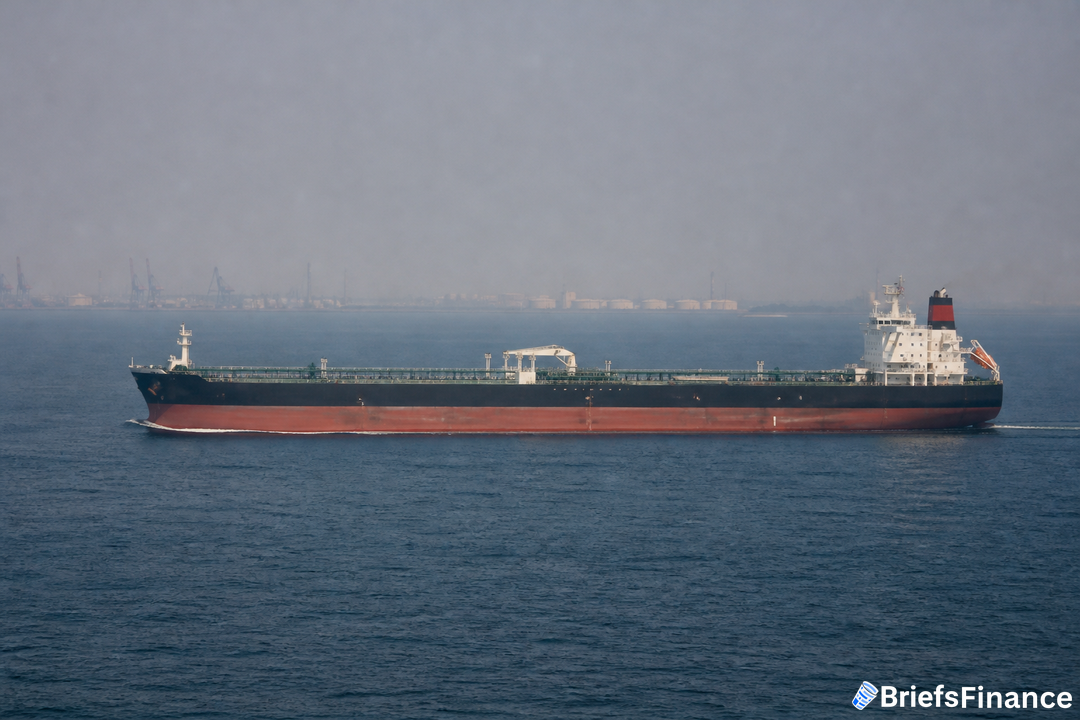
Maritime reporting channels logged multiple incidents in recent days across waters bordering the Arabian Peninsula. The UK Maritime Trade Operations, affiliated with the British Navy, said a tug moving south to the northeast of the United Arab Emirates was struck by two unidentified projectiles on Sunday.
On Saturday, the LNG carrier's captain, operating southwest of Yemen, reported that a small skiff carrying seven people closed in and opened fire twice, after which the ship's security detail responded with two warning shots. On Friday, a separate tanker located northeast of Saudi Arabia said a small craft launched a rocket-propelled grenade that hit the vessel.
When global news feels complicated, stay calmly informed with our free Market Briefs newsletter that explains markets in minutes.
Regional strikes add to tension
Saudi forces said that on Friday they intercepted multiple missiles above the Red Sea, among them one that was headed toward the Yanbu oil export terminal. The military also reported downing three drones in the Riyadh area and in southern regions. Iran-aligned Houthi militants in Yemen fired at Saudi Arabia repeatedly last week, and the kingdom's energy ministry said Aramco was targeted when militants struck an administrative facility in Dhahran on Tuesday.
Oil moves and what it means for your portfolio
Crude rallied on the headlines. Brent futures touched $110 during the session - the first such print since May - and then pulled back to $109.86, up 3.7%. U.S. West Texas Intermediate settled at $101.41, up 3.5%.
Over the past week, WTI rose more than 10% while Brent advanced nearly 5%. The live quote board listed ICE Brent Crude (Dec'26) at 109.86, marked UNCH, with a timestamp of Last | 10/17/26 BST.
Why it matters: higher geopolitical risk has already flowed into prices, lifting energy producers and squeezing fuel-sensitive sectors. Watch how shipping security and any follow-on strikes feed through to supply expectations and volatility in your energy exposure.
If you want clear context without the noise, sign up for the free Market Briefs and get quick rundowns.