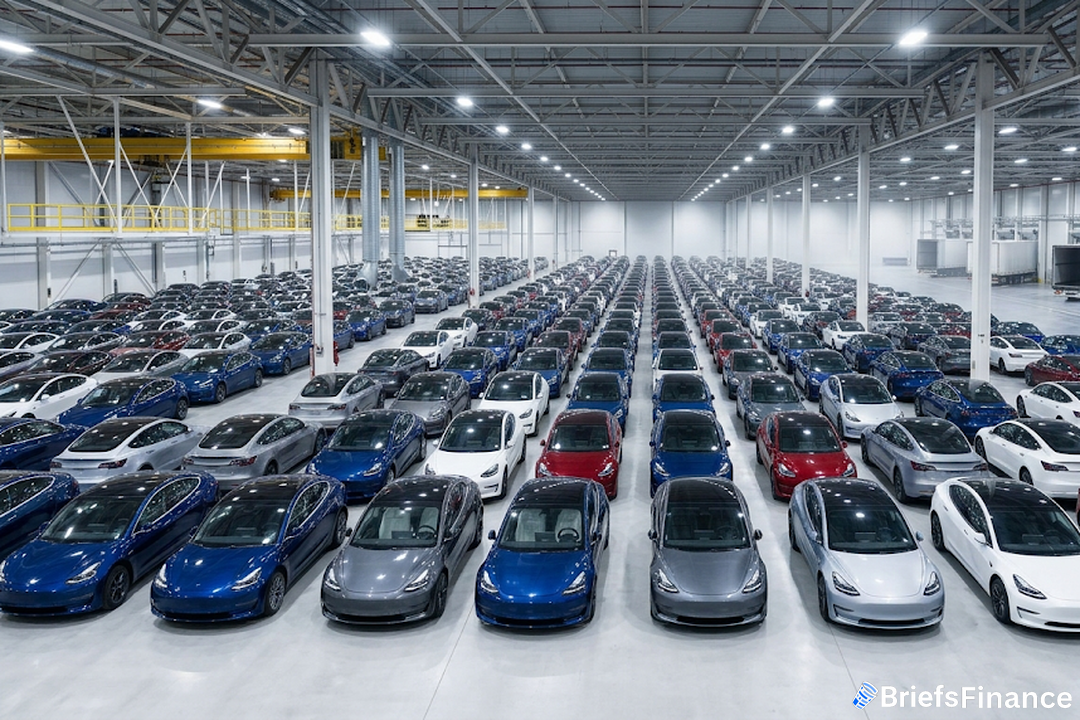
What the 10 Million Number Actually Means
Tesla just crossed a milestone.
Tesla CEO Elon Musk said, "That sounds like a lot of cars - and it is." But here is the context that matters: Tesla hit its first million vehicles about six years ago. For a young automaker that started from scratch, that is a fast climb.
The 10 million number represents more than a simple celebratory marker. It is part of a much bigger checklist tied to Elon Musk's compensation plan, which shareholders approved. The full payout requires hitting four product goals by 2035.
The Massive To-Do List Behind Musk's Pay Package
The main one: build 20 million vehicles. This production milestone represents half of the 2035 compensation goal of 20 million vehicles, yet Tesla has never sold 2 million units in any single year. Its U.S. sales actually dropped 13% in the second quarter of 2026 compared to a year earlier.
Get the market news that matters in a five-minute read with Market Briefs, our free daily newsletter
The other three goals are even bigger asks. One of the targets is having ten million paying subscribers for its Full Self-Driving system by the 2035 deadline. It recently reported roughly 1.5 million FSD subscribers, though it is not clear if free trials are included. The company also needs to deliver 1 million 'bots' - humanoid robots - and put 1 million robotaxis on the road, all by the same deadline.
The catch: to unlock the full value of that pay package, Tesla needs $400 billion in adjusted EBITDA (a measure of profit) by 2035. Currently, that figure stands at roughly $3.27 billion and is declining because of steep price cuts, disappearing regulatory credits, and significantly higher expenditure on projects such as AI and robotics.
What Slowing Sales and a Speedy Rival Mean
The company is seeking expansion in emerging territories such as Japan, Australia, and Lithuania. That makes sense when your home market is softening. But the bigger competitor to watch is BYD.
Even so, BYD's production scale is bigger than Tesla's overall.
This milestone underscores Tesla's rapid growth from a niche automaker to a global EV leader, but the road ahead is steep. With U.S. sales declining and BYD's scale advantage, Tesla must accelerate production and diversify revenue streams. The ambitious 2035 targets, including robotaxis and humanoid robots, depend on technological breakthroughs and regulatory approvals that remain uncertain.
The immense financial leap required is underscored by the $400 billion adjusted EBITDA target - especially when current profitability is squeezed by price cuts, fading regulatory credits, and rising R&D spending on AI and robotics. Meeting that goal will demand not only massive vehicle sales but also successful monetization of FSD, robotaxis, and humanoid bots, all of which face technical and regulatory hurdles.
Join Market Briefs, our free daily newsletter, for a quick daily rundown of the markets