Free NewsletterPro Login

Warning: Undefined variable $stocks in /var/www/briefs.co/htdocs/wp-content/plugins/oxygen/component-framework/components/classes/code-block.class.php(133) : eval()'d code on line 448

Warning: foreach() argument must be of type array|object, null given in /var/www/briefs.co/htdocs/wp-content/plugins/oxygen/component-framework/components/classes/code-block.class.php(133) : eval()'d code on line 448

Warning: Undefined variable $funds in /var/www/briefs.co/htdocs/wp-content/plugins/oxygen/component-framework/components/classes/code-block.class.php(133) : eval()'d code on line 472

Warning: foreach() argument must be of type array|object, null given in /var/www/briefs.co/htdocs/wp-content/plugins/oxygen/component-framework/components/classes/code-block.class.php(133) : eval()'d code on line 472
/* the link was here */
×
Free investor livestream — Nov 17

How To Use ChatGPT & Claude To Research Stocks Like A Pro

01
The prompt we use to break down any stock
02
How to fact-check what AI tells you
03
How to compare two stocks in minutes

Kenya Shuts Down Tata Chemicals' Magadi Plant Over Unpaid Royalties and Regulatory Breaches

Published Jul 29, 2026
Share:
Summary:
  • Kenya's Cabinet Secretary Hassan Joho ordered Tata Chemicals Magadi Ltd. to cease operations immediately due to unpaid royalties and other regulatory non-compliance.
  • Tata Chemicals claims full compliance and says it is working with authorities to resume operations.
  • Kenya is the world's fourth-largest natural soda-ash producer, supplying 1% of global output, used in glass, cleaning products, and EV batteries.

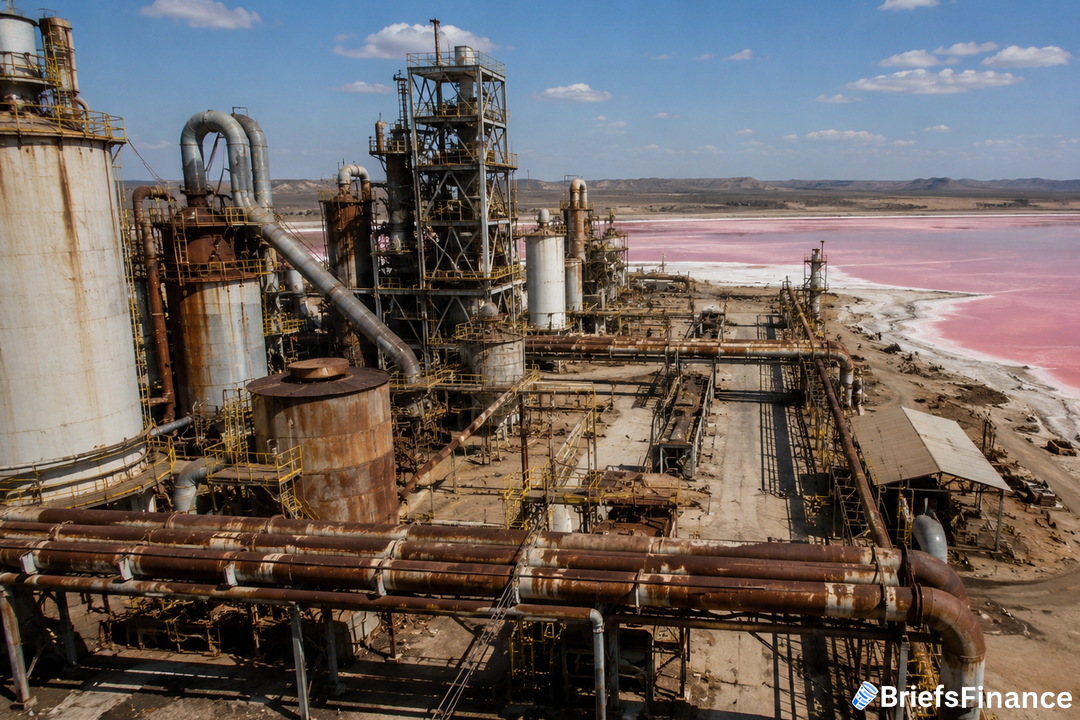
On July 29, 2026, Kenya's Cabinet Secretary for Mining, Blue Economy, and Maritime Affairs, Hassan Joho, ordered the immediate shutdown of the largest soda-ash producer in Africa. The government pointed to unpaid royalties and other unmet regulatory obligations as reasons for the shutdown.

The Magadi plant, situated along the shores of Lake Magadi in Kajiado County, has been operational since the early 20th century and serves as a major employer in the region. Its forced closure threatens local livelihoods and could strain economic activity in the surrounding area.

According to Joho's statement, the Kenyan subsidiary of India's Tata Chemicals Ltd. - operating as Tata Chemicals Magadi Ltd. - is required to provide thorough paperwork and proof that it has met all legal requirements and cleared any debts before being allowed to restart operations. Among the other outstanding concerns are shortcomings in executing value-addition and skills-transfer initiatives, insufficient hiring of Kenyan nationals, and non-compliance with export-reporting, local-procurement, and environmental-standards rules.

In a statement, a company spokesperson said, "fully compliant with all requisite regulations and continues to work with all authorities and agencies to uphold the highest standards of compliance." The company added that it is collaborating with authorities to resolve the situation.

Get the market news that matters in a five-minute read with Market Briefs, our free daily newsletter

Industry and Market Context

Sodium carbonate, as soda ash is also called, is employed in manufacturing glass, cleaning supplies, and electric-vehicle batteries. For decades, soda ash extraction has formed the bedrock of economic activity in Kenya's Rift Valley region, predominantly sourced from Lake Magadi.

The government's crackdown on royalty payments and local-hiring requirements reflects a broader push to increase domestic benefits from resource extraction. Given Magadi's position as Africa's largest producer, this shutdown could disrupt supply chains for glass manufacturers and battery producers worldwide.

The parent company, Tata Chemicals Ltd., saw its stock move 0.70% on the news, closing at 679.05.

Broader Implications for Resource Governance

The forced closure at Lake Magadi underscores Kenya's escalating enforcement of local-content and revenue-sharing rules in the extractive sector. The region has relied on soda-ash extraction for over a century, and the chemical is critical for manufacturing flat glass used in buildings, automotive industries, solar panels, and lithium-ion batteries. By demanding full compliance on royalties, hiring, and environmental standards, Nairobi signals that foreign operators must deliver tangible economic benefits to host communities or risk operational suspension.

The shutdown also threatens the livelihoods of hundreds of direct employees and thousands of indirect workers in Kajiado County, where the plant has long been a cornerstone of the local economy. Without a swift resolution, the area could face rising unemployment and reduced economic activity.

Join Market Briefs, our free daily newsletter, for a quick daily rundown of the markets
Disclosure

Recent News

1 2 3 … 127

Get Market Briefs delivered to your inbox every morning for free!

No fluff. No noise. No politics. Just finance news you can read in 5 minutes.

Blogs

November 3, 2026
How to Budget Every Payday: 5 Moves So You Never Worry About Money
  • A median earner could make about $4.7 million over a career, yet most retire with closer to $13,000 in the bank because of a keeping problem, not an income problem.
  • Audit your money, save $2,000, pay off credit card debt, then automate a 75/15/10 split across three bank accounts.
  • Earn more only after your system is in place, then protect what you build with an accountant, attorneys, the right insurance, and an estate plan.
Read More
November 3, 2026
How to Invest in Stocks: 5 Things to Do Before You Invest Your First Dollar
  • Paying off credit card debt at around 22% interest beats the stock market's roughly 10% average, and even Warren Buffett's 19%.
  • Save $2,000 in a separate emergency fund, learn to research with AI, and decide whether you're a growth, income, or wealth preservation investor.
  • Write down a plan for buying during market crashes, which have happened 25 times in the last 100 years.
Read More
November 3, 2026
Best ETFs to Buy? 5 Three-ETF Portfolio Examples and Risks
  • An ETF is a basket of stocks, so one purchase spreads your money across many companies instead of riding on just one.
  • Jaspreet Singh laid out five portfolios of three ETFs each, built for kids, cash flow, growth, slow and steady growth, and protection from a weaker dollar.
  • Based on 10-year average returns, $500 a month could grow to between about $660,000 and $3.1 million over 30 years, though past returns never guarantee future ones.
Read More
November 3, 2026
Best Investments of a Generation: 5 Market Shifts Backed by Your Tax Dollars
  • Private companies are about to spend $1 trillion a year on AI, and the Trump administration is putting tax dollars behind the same industries.
  • The five shifts are AI and its supply chain, robotics, rare earths, energy, and defense.
  • Each comes with real risk, from an AI bubble to wars ending or a new Congress, so these are ideas to research, not sure things.
Read More
November 3, 2026
How to Get Ahead Financially: 10 Moves to Make While Everyone Else Falls Behind
  • Learning a high-income AI skill, or building AI tools for tradespeople, can raise your earning power in a tough job market.
  • Higher interest rates, the 2025 tax cuts, Trump accounts, and stacked cash back can put more money back in your pocket.
  • Following where government money is moving, keeping cash ready for market crashes, and investing in your own education can speed up your wealth.
Read More
November 3, 2026
National Debt at $40 Trillion: Why Inflation Is the Hidden Tax, and Who Profits From It
  • Time magazine asked President Trump how he'd tackle the $40 trillion national debt, and he suggested inflation could help pay it off, a cost that lands on everyday Americans.
  • From 1971 to 2025, cars, houses, and college outpaced both inflation and incomes, while the S&P 500 grew more than 33,000% with dividends reinvested.
  • The U.S. can default, inflate, or outgrow its debt, and history shows each path rewards different assets.
Read More
November 3, 2026
FOMC Meeting: Why the Fed Is Getting Nervous, and Why AI Stocks Feel It
  • At its latest meeting, the Fed held rates steady but warned it may raise them again, because inflation is running near 3.5% against a 2% target.
  • Oil prices, tariffs, AI's hunger for energy, and government spending are all pushing prices higher, and gold, silver, and bitcoin fell on the Fed's news.
  • Chinese AI stocks are down about 40% in a few months and Google fell more than 10% in a day, raising fears that higher rates could pop an AI bubble.
Read More
November 3, 2026
Midterm Elections: Where the Money Could Move if Republicans or Democrats Win
  • The U.S. government spent about $7.5 trillion last year, and the midterm elections could change which industries get more of that money.
  • A Republican win could favor manufacturing, fossil fuels, banks, and defense.
  • A Democratic win could favor healthcare, weight-loss drugs, clean energy, and infrastructure.
Read More
November 3, 2026
Brazil Stock Market Crash: Why Lula's Win Matters to U.S. Investors
  • Brazil's stock market fell more than 20% in a few days, and its currency dropped 8%, after Lula won a presidential election investors expected him to lose.
  • The shock reaches U.S. investors through coffee and beef prices, the BRICS push away from the dollar, and a market that had become an investor favorite.
  • The last time Lula first won, in 2002, Brazil's stock market fell more than 20% and then grew 12x by 2008, though nobody knows if that will repeat.
Read More
November 2, 2026
Credit Utilization: How Paying Down Cards Can Help Your Score
  • Credit utilization is your card balances divided by your credit limits, checked overall and card by card.
  • Lower is generally better, and Experian says the effect becomes more noticeable around 30%.
  • Paying down balances and keeping new charges off your cards are the main ways to lower it.
Read More
1 2 3 … 32
Share via
Copy link











