A Banker Goes to the Shipyard
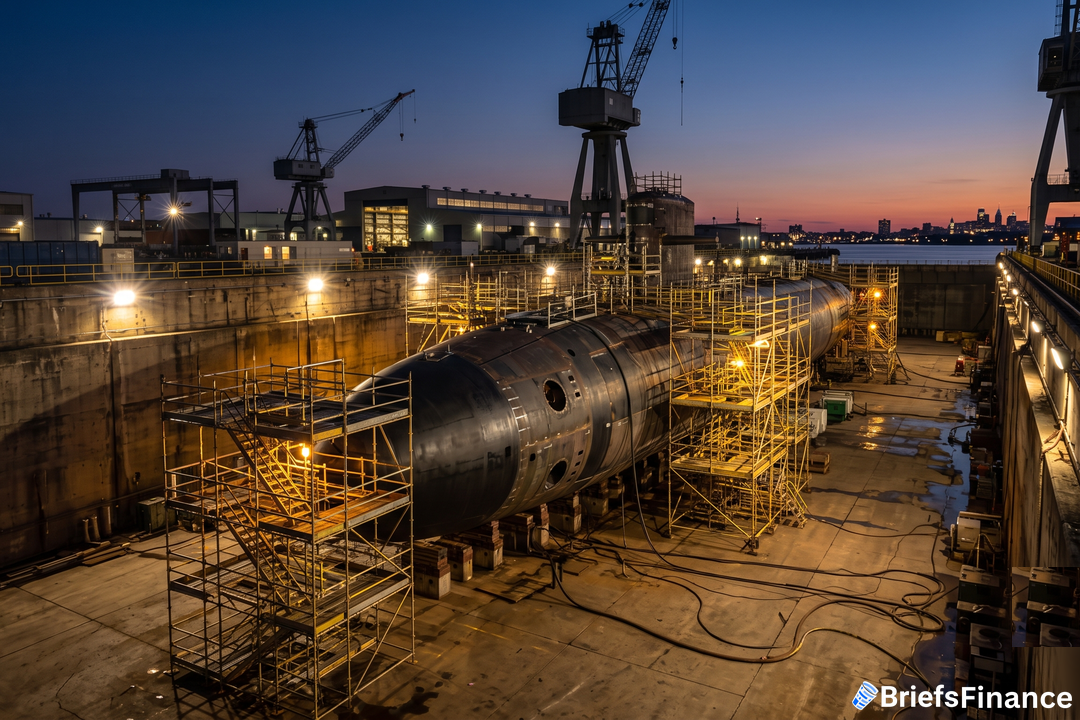
The money is slated for erecting a fresh submarine production site inside the Philadelphia Navy Yard, with construction handled by a company called Rhoads Industries.
Dimon told CNBC's Andrew Ross Sorkin that "the arsenal of democracy has been reignited." He pointed to Hanwha, a South Korean conglomerate, which runs a U.S. subsidiary at the same Philadelphia site. "People said it couldn't happen, but here you have Hanwha shipbuilding at the Philadelphia Navy Yard," Dimon said.
The timing is no accident. Ongoing conflicts in the Middle East and Ukraine have compelled governments around the world to rebuild military capacity and invest in domestic industry.
Get the market news that matters in a five-minute read with Market Briefs, our free daily newsletter
Historical Context and Strategic Importance
The Philadelphia Navy Yard, which was a major center for U.S. naval shipbuilding during World War II, has recently experienced a revival thanks to foreign and private capital. Hanwha's presence there demonstrates that legacy industrial sites can be revived through a mix of domestic and international capital. Dimon's reference to the "arsenal of democracy" harkens back to that era of mass production, suggesting that today's geopolitical tensions are driving a similar push for domestic manufacturing capacity in sectors like shipbuilding. This initiative aligns with broader government efforts to strengthen the industrial base, particularly as the U.S. Navy faces shipbuilding backlogs and increased demand for submarines.
The Navy Yard's revival mirrors a broader push to rebuild America's industrial base. After World War II, many shipyards closed or downsized, leaving the U.S. with a limited number of active naval construction sites. Today, the Navy's submarine fleet is aging, and new shipbuilding programs have fallen behind schedule. The partnership between Hanwha and Rhoads, backed by JPMorgan's capital, aims to demonstrate that private investment can help close these gaps.
Why Now? Geopolitical Tensions Drive Investment
The decision to finance this submarine facility comes at a moment when global instability is reshaping defense priorities. Wars in Ukraine and the Middle East have exposed vulnerabilities in supply chains and manufacturing capacity, prompting both private firms and governments to re‑evaluate their industrial bases. For the U.S. Navy, the need for new submarines is especially acute: backlogs have lengthened, and strategic competition with rivals like China demands a steady output of underwater vessels. JPMorgan's investment, though modest compared to the $1.5 trillion program, signals that Wall Street sees shipbuilding as a critical piece of national security infrastructure.
The Bigger Picture: $1.5 Trillion and Growing
The bank plans to expand the program into Europe later this year. JPMorgan also plans to boost credit for small firms in the maritime sector and reinforce local supply chains.
Hanwha, which already operates at the Navy Yard, brings experience in shipbuilding and defense from South Korea, and its partnership with Rhoads Industries could help accelerate production timelines. This investment is one element of JPMorgan's larger $1.5 trillion commitment to support industries deemed critical, with future expansion expected across the Atlantic.
Join Market Briefs, our free daily newsletter, for a quick daily rundown of the markets