If you've heard about cryptocurrency, you've probably heard this complaint:
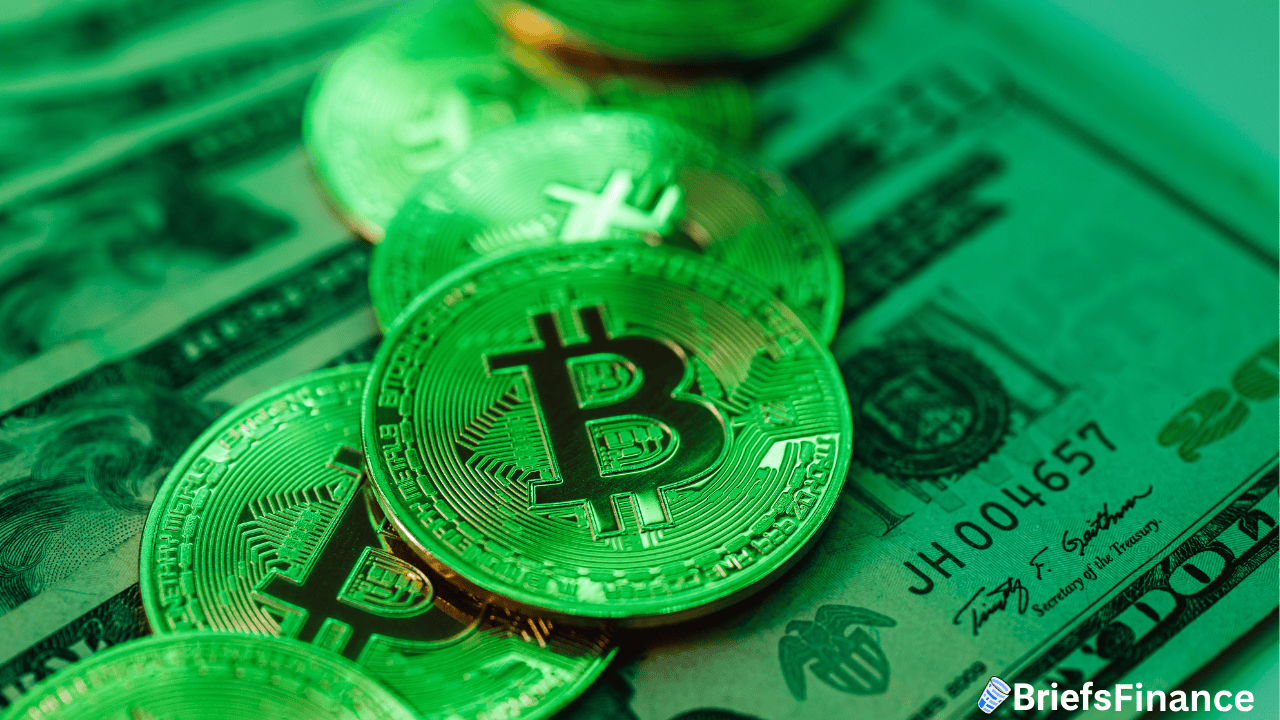
"Bitcoin dropped 20% in a week! Cryptocurrency is too risky!"
That's true for Bitcoin. That's true for Ethereum. But it's not true for stablecoins.
A stablecoin is a cryptocurrency that's designed specifically NOT to be volatile. It's designed to stay at a fixed value.
This might sound boring. But it's actually revolutionary - and important for investors to understand.
Crypto is moving fast - stablecoins, regulation, ETFs, everything. Market Briefs is a free daily newsletter that keeps you up to speed on crypto and the rest of the financial world in a quick morning read. Join 300,000+ readers.
What Is a Stablecoin and How Does It Work?
A stablecoin is a cryptocurrency pegged (attached) to a stable asset, usually the US dollar.
Example:
- 1 Bitcoin = varies wildly ($30,000 to $60,000+)
- 1 USDC (a stablecoin) = always approximately $1
The entire design of a stablecoin is: stay at $1. Don't move up. Don't move down.
It does this by being backed by real dollars or dollar-equivalent assets.
How Stablecoin Cryptocurrencies Work (The Basic Version)
Example: USDC
USDC is the most popular stablecoin. Here's how it works:
- You give a company (Circle) $1,000 in real money
- They give you 1,000 USDC tokens
- That $1,000 sits in a bank account, backed by the USDC
- If you want to exit, you trade 1,000 USDC back for $1,000 cash
The magic: Circle keeps $1 in reserve for every 1 USDC in circulation.
So USDC stays at $1 (or very close) because it's literally backed by real dollars.
This is radically different from Bitcoin, which has no backing - it's just worth what people will pay for it. Understanding this requires understanding the underlying blockchain technology that powers it.
Different Types of Stablecoin Cryptocurrencies and How They Work
Not all stablecoins work the same way. Understanding the differences matters:
Fiat-backed (Safest):
- Backed by actual dollars (or euros, etc.)
- Circle (USDC), Coinbase (USDC), Paxos (USDP)
- If the company collapses, your money is fine
- Most trustworthy
- Most boring
Crypto-backed:
- Backed by other cryptocurrencies (usually)
- DAI, MakerDAO
- If Bitcoin/Ethereum crashes, DAI might not hold $1
- More complex, more risk
- Smart contract based
Algorithmic:
- Backed by... an algorithm (math)
- Designed to stay at $1 through smart contracts
- Sounds cool, has failed spectacularly (Terra/Luna)
- High risk
- Avoid for now
For a beginner, stick with fiat-backed (USDC, USDT, USDP). They're boring and safe.
Why Stablecoin Technology Exists (And Why It Matters)
This is the important part: why would anyone own a stablecoin?
Reason 1: Speed and Cost
Sending $10,000 internationally:
- Traditional bank: 3-5 days, $50-200 fee
- Stablecoin: 10 minutes, $1-5 fee
You send USDC across the world instantly and cheaply. Other person receives USDC. They convert to local currency if they want.
This is revolutionary for international transactions. Countries with weak currencies benefit enormously - similar to how some investors use emerging market exposure to hedge against single-country risk.
Reason 2: Crypto Trading
You're a trader. You want to move money between exchanges quickly.
Old way: Transfer dollars (takes days) New way: Send stablecoins (takes minutes)
You're no longer stuck waiting for bank transfers.
Reason 3: Avoiding Volatility
You believe in Bitcoin but don't want to hold it 24/7.
Bitcoin drops 30% tonight. You move to stablecoins to avoid the crash. Bitcoin recovers, you move back in.
You're using stablecoins as cash within the crypto world.
Reason 4: Yield
You can deposit stablecoins into decentralized finance (DeFi) platforms and earn 4-8% interest.
Better than savings account (0.5%) without the volatility of stocks.
This is the appeal: earn decent returns without crazy risk.
The Big Risk with Stablecoin Investments: Counterparty Risk
Here's the thing about stablecoins backed by dollars: they only work if the company is honest.
What if Circle (USDC) is keeping only $0.80 per $1 USDC in circulation?
What if they're claiming to have the money but they don't?
This actually happened with Terra (the Luna crash). They claimed to have backing. They didn't. Billions lost.
So stablecoins move risk from price volatility (Bitcoin jumping around) to counterparty risk (company is dishonest or incompetent).
USDC is generally considered safe because:
- Coinbase owns it (regulated, big company)
- Audited regularly
- Regulated by FDIC insurance in some cases
But always check: is this stablecoin audited? Who backs it? Do they have the money? It's part of the financial health analysis every investor should do before committing capital.
Stablecoin Allocation Strategy: Where Stablecoins Fit Your Portfolio
Some experts believe alternatives should be a small allocation based on risk tolerance.
Stablecoins are different from Bitcoin/Ethereum because they're not speculative - they're not trying to make you rich. They're trying to be stable.
Where stablecoins fit:
Cash reserve: Instead of dollars in a savings account earning 0.5%, keep stablecoins earning 4-5%.
- Same safety (stable at $1)
- Better returns
- Accessible if opportunity comes
Crypto allocation hedge: You own Bitcoin but want to reduce volatility.
- Instead of all Bitcoin/Ethereum, 50% crypto + 50% stablecoins
- Reduces swings without selling crypto
- Maintains exposure if it shoots up
International utility: You send money internationally frequently.
- Way cheaper than bank transfers
- Instant instead of multi-day
- No exchange rate lockup
Dollar alternative in high-inflation countries: You're in a country with weak currency.
- USDC stays at $1 regardless of local currency weakness
- Better preservation of value than local currency
The Stablecoin Reality: Not Boring, But Not Exciting Either
Here's what kills people about stablecoins: they're boring.
Bitcoin goes up 100%, everyone talks about their gains. Stablecoin stays at $1, no one cares.
But boring is the point. Boring is why stablecoins are useful.
You're not trying to get rich on stablecoins. You're trying to:
- Move money safely
- Avoid volatility
- Earn better yields than savings accounts
- Enable crypto trading
If you need exciting, buy Bitcoin. If you need functional, use stablecoins.
How to Actually Use Stablecoin Technology (If You Want To)
Step 1: Choose your stablecoin
- USDC is most reputable and easiest
- Avoid algorithmic stablecoins (Luna disaster)
- Stick with top 5 by market cap
Step 2: Buy it
- On Coinbase, Kraken, or other regulated exchange
- Exchange $1,000 cash for 1,000 USDC
- Takes 5 minutes
Step 3: Use it
- Move it to DeFi platform for yield (4-8%)
- Send it internationally to friends
- Use it as trading cash on crypto exchange
- Hold it if you expect market crash
Step 4: Convert back
- Whenever you want, trade USDC for dollars
- Usually instant on regulated exchanges
- 1,000 USDC = approximately $1,000
It's that simple.
The Stablecoin Regulatory Question: Why It Matters
Governments are debating: should stablecoins be regulated as money? As securities? As something else?
This matters because regulation could:
- Make stablecoins safer (required audits, insurance)
- Make stablecoins illegal (government wants control of money supply)
- Make stablecoins better for business (clear rules)
- Make stablecoins irrelevant (central bank digital currencies replace them)
The safest stablecoins to use now: USDC, USDT (because they're most regulated and scrutinized).
The ones to be cautious about: new stablecoins promising high yields or backed by unclear assets - the same kind of red flags you'd watch for in meme stocks or other speculative plays.
Stablecoins vs. Central Bank Digital Currencies (CBDCs): The Difference
Governments are building their own digital currencies (CBDCs).
Eventually, you might use digital dollars from the Federal Reserve directly instead of USDC.
But CBDCs might allow governments to:
- Track every transaction (privacy concerns)
- Freeze money (political control)
- Implement negative interest rates (forced spending)
Stablecoins offer an alternative. Decentralized. Harder to control.
This is why some people care about stablecoins: not because they'll make you rich, but because they represent a different way to move money that's outside government control. It's part of the broader shift in how smart money is moving.
Key Takeaway: Boring Can Be Useful
Stablecoins are boring. They're not designed to make you rich.
But they solve real problems:
- Instant international transactions
- Better yields than savings accounts
- Stable crypto trading pair
- Value preservation in weak-currency countries
In your portfolio, stablecoins fit as:
- Emergency cash (better than dollars)
- Yield opportunity (4-8% without volatility)
- Trading utility (move between exchanges)
Not as a get-rich-quick tool. As a practical utility that happens to be better than traditional alternatives.
Whether it's stablecoins, Bitcoin, or what the Fed did this morning, Market Briefs keeps you in the loop. Free daily newsletter delivering the biggest business and finance stories every morning.
Disclaimer: Stablecoins are still a developing technology. While fiat-backed stablecoins like USDC are generally safe, they carry counterparty risk and are subject to regulation. This content is for educational purposes only and should not be construed as investment advice. Only use stablecoins with money you can afford to lose. Consult with a financial advisor before using any cryptocurrency.