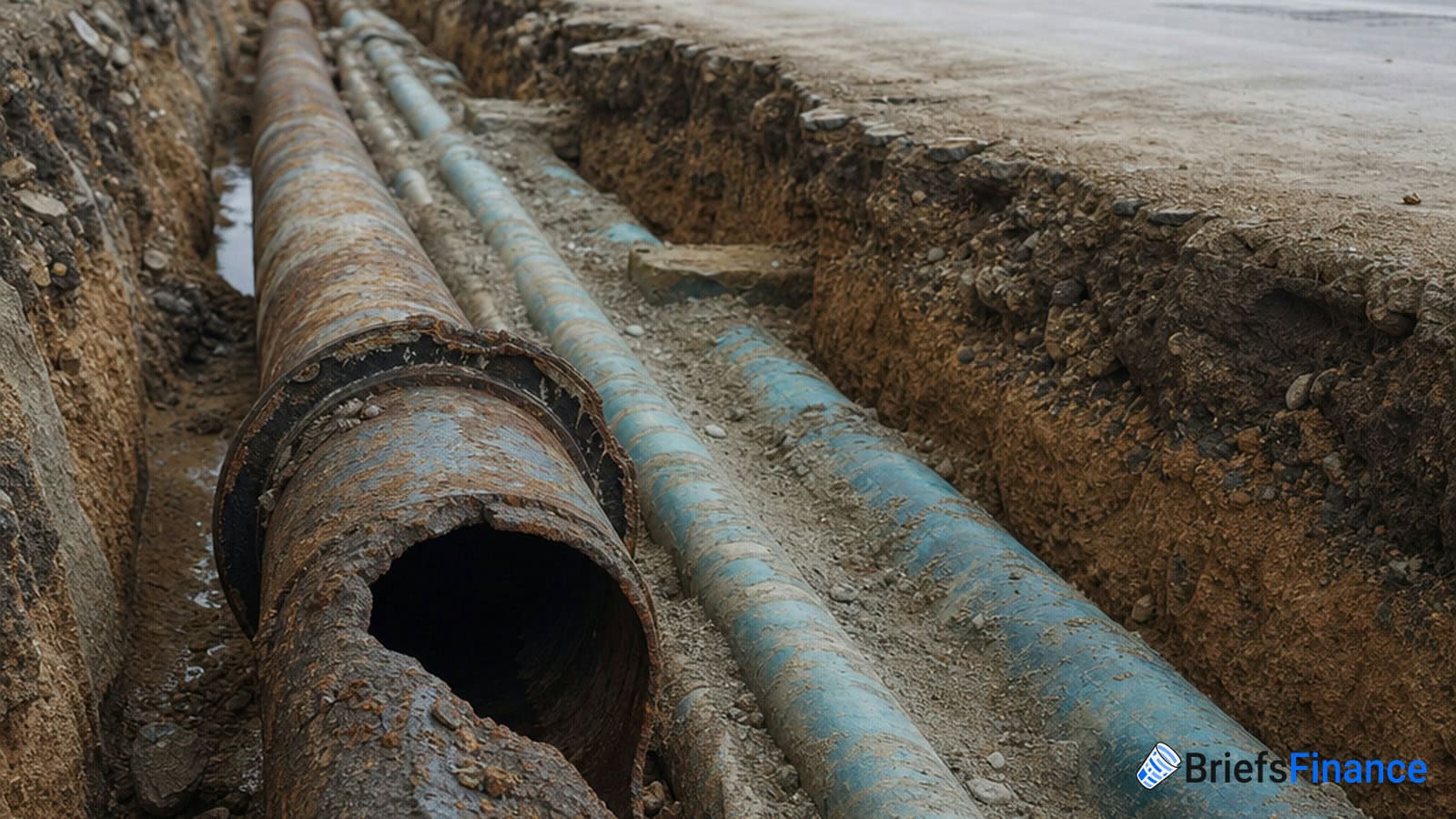
The pipes under American cities are old, the federal money used to fix them is about to shrink, and AI data centers are showing up thirsty.
That's why water utilities are borrowing at a record pace.
A Race To Borrow Before The Money Dries Up
Water and sewer bond sales have topped $21 billion in 2026 according to Bloomberg data, marking the fastest pace since 2015, with New York, California, and Texas leading the way.
The rush comes ahead of Trump's 2027 budget, which proposes deep cuts to two big federal programs - the clean water and drinking water state revolving funds that give cities cheap loans to repair pipes and treatment plants.
Those programs have been the backbone of water funding since the late 1980s and 1990s, lending out billions each year at low rates.
If those funds shrink, utilities will need to find the cash somewhere else - and the municipal bond market, where cities and states borrow money, is the obvious place.
And the pressure won't ease soon - a trade group representing 4,300 utilities says the country needs to nearly triple the pace of water spending over the next 25 years just to keep up.
We break down infrastructure moves like this one every morning in Market Briefs - five minutes a day, and you get a free investing masterclass when you sign up.
Demand Is Already Outrunning Supply
The squeeze is showing up at the state level, with the State Water Implementation Fund for Texas hitting its capacity limit last month after project requests piled up to $4.2 billion against a pool of nearly $2 billion.
Thirteen applications got turned away.
Illinois tells a similar story, with water bond sales jumping from just $16 million in 2021 to over $1 billion last year - and this year already past $940 million.
Construction costs are making it worse, with inflation hitting the water sector especially hard because the backlog of overdue projects is so large.
The AI Wild Card
Then there's the new pressure: data centers, which need huge amounts of water to keep their servers cool.
Amazon recently said its data centers use 2.5 billion gallons a year, and big tech companies have been racing to build new sites in regions like Arizona, Texas, and northern Virginia - many of which are already short on water.
That demand is hitting local water systems that weren't built for it.
Researchers estimate the U.S. will need at least $10 billion in new water capacity by 2030 just to support data center growth. That's a bill nobody had budgeted for five years ago.
What To Watch
The first thing to watch is the federal budget fight, where the proposed cuts to those revolving funds could push even more water utilities into the bond market in 2027 - making the Texas waitlist look more like a preview than a one-off.
The pipes won't fix themselves, and the federal check might not come.
Want this kind of read on the market every weekday morning? Join 350,000+ investors reading Market Briefs - delivered free, with a 45-minute investing course thrown in as a bonus.