Pro Login

TSMC Raises Guidance as AI Chip Demand Grows Faster Than Expected

A stylized illustration of a cylindrical cup with blue arrows and lines indicating a swirling or rotational motion inside the cup.
Published Oct 21, 2025
Share:
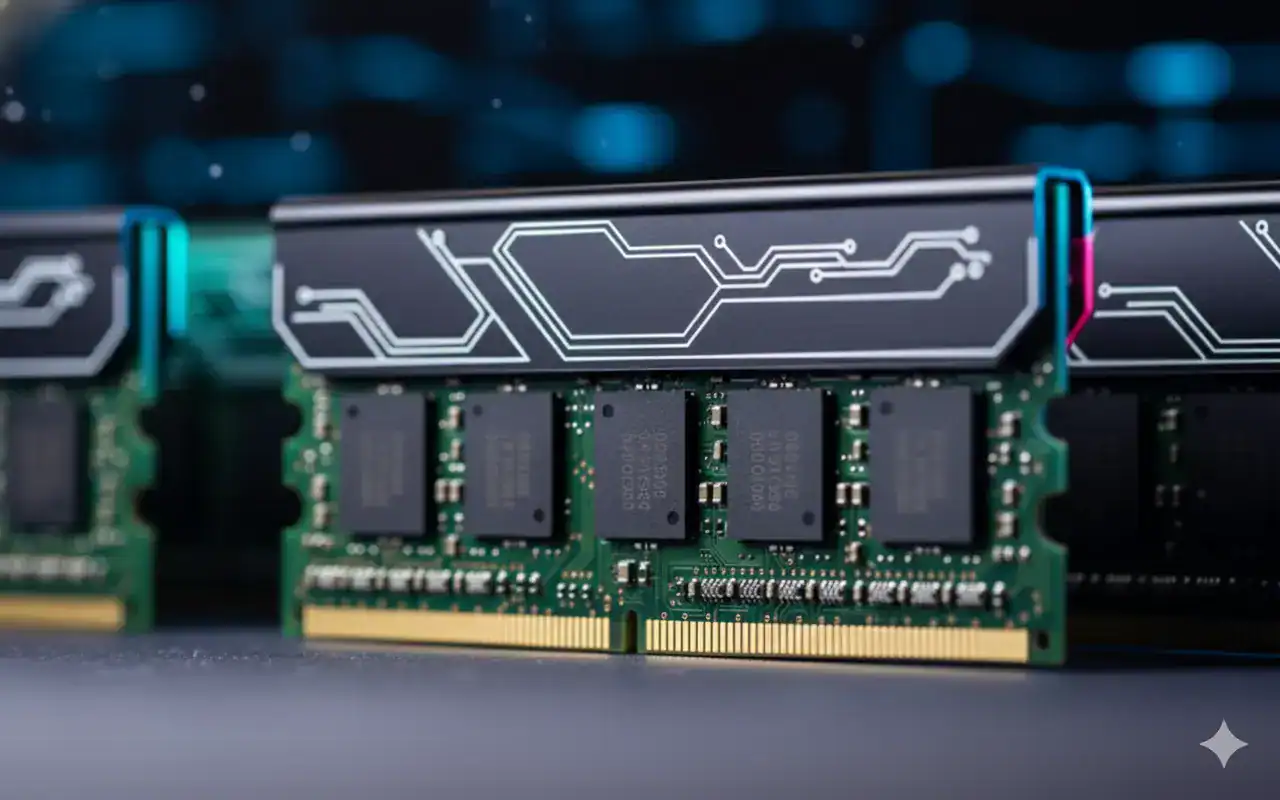
A close-up photo of a computer RAM module showing microchips and gold connector pins, with a patterned black heat spreader on top—a nod to rising AI chip demand and the latest guidance from tech leaders like TSMC.
Summary:
  • TSMC reported record quarterly profit of $14.77 billion and raised its annual revenue growth guidance to the middle range of 30%-40%
  • The company's CEO called current AI chip demand growth "insane" and said it's accelerating faster than they anticipated three months ago
  • TSMC dismissed bubble fears, saying AI demand is "very fundamental" and expects AI chip revenue to grow over 40% annually for the next five years

What Happened?

Taiwan Semiconductor Manufacturing just delivered a monster quarter.

The world's largest chipmaker posted record profit of $14.77 billion. That beat analyst expectations by a wide margin. Revenue jumped 41% in dollar terms to $33.10 billion.

But the real story is what TSMC said about the future.

The company raised its revenue guidance. It now expects growth in the middle range of 30%-40% this year. Previously, TSMC guided for 30% growth.

Why the upgrade? AI chips.

TSMC CEO C.C. Wei didn't mince words on the earnings call. He called the current demand growth "insane." He said AI chip demand is stronger than the company expected just three months ago.

Why This Matters

TSMC sits at the center of the AI boom.

The company manufactures chips for:

  • Nvidia (the AI chip leader)
  • Apple (iPhone processors)
  • Qualcomm (mobile chipsets)
  • AMD (processors)

Basically, if you're using AI technology, there's a good chance TSMC made the chip powering it.

That's why TSMC's outlook matters so much. Some analysts worry we're in an AI bubble. They point to circular financing deals - like OpenAI and Nvidia investing in each other - as warning signs.

TSMC isn't buying it.

"Our conviction in the megatrend is strengthening," Wei told analysts. "We believe the demand for semiconductors will continue to be very fundamental as a key enabler of AI applications."

Wei specifically mentioned that "the number of tokens increase is exponential." That's AI-speak for computing capacity usage. More tokens means more chips needed.

The company expects AI-related chip revenue to:

  • Double in 2025
  • Grow at a mid-40% annual rate for the next five years

Even if China sales remain limited due to trade restrictions, TSMC says AI revenue can still grow better than 40% a year. That's how strong demand is from other customers.

The Bottom Line

When the company actually making AI chips says demand is "insane" and accelerating, that carries weight.

TSMC has visibility into what major tech companies are ordering. They're not speculating. They're reporting what customers are buying.

The stock was barely up Thursday despite the strong results. It's already rallied 54% this year. That massive run means expectations were high going in.

But here's what matters for investors trying to figure out if AI is a bubble:

TSMC sees real, sustained demand. Not hype. Not speculation. Actual orders from companies building AI infrastructure.

The company's confidence shows in multiple ways:

Raising guidance mid-year

Projecting 40%+ annual growth for five years

Calling current demand better than expected just three months ago

Could they be wrong? Sure. Maybe AI adoption slows. Maybe companies realize they overbought capacity.

But TSMC isn't some startup making bold predictions. They're a $700 billion manufacturer with deep customer relationships. When they say demand is accelerating exponentially, they're basing it on actual production schedules and customer forecasts.

For investors worried about an AI bubble, TSMC's results suggest the infrastructure buildout is real. Companies aren't just talking about AI. They're ordering massive quantities of chips to power it.
The risk? If AI doesn't deliver on its promise, all this infrastructure becomes excess capacity. But right now, the company closest to the actual hardware says demand keeps surprising to the upside.

TSMC's guidance for Q4 is $32.2 billion to $33.4 billion in revenue. That would represent another strong quarter of growth.

The takeaway? At least for now, the AI boom looks real from the ground level. The chips are being made. The orders keep coming. And the world's biggest chipmaker says it's only getting stronger.

Disclosure

Get Market Briefs delivered to your inbox every morning for free!

No fluff. No noise. No politics. Just finance news you can read in 5 minutes.

Blogs

April 15, 2026
What Is a Put Option? A Simple Guide for Investors
  • A put option is a contract that gives you the right to sell a stock at a set price before a set date.
  • Investors use put options to protect their portfolio against losses or to profit when they think a stock will drop.
  • The most you can lose when buying a put option is the premium you paid for the contract.
Read More
April 13, 2026
What Is Free Cash Flow? How To Find It & Why It's Important
  • Free cash flow is the cash a company has left after paying its bills and putting money back into the business.
  • Investors use free cash flow to figure out what a company is really worth - and if the stock is a good deal.
  • You can find free cash flow on a company's cash flow report, one of three key reports every public company files.
Read More
April 13, 2026
Non Taxable Income: What It Is and Why Investors Care

Non taxable income is money you earn that the IRS does not tax - like Roth IRA cash, muni bond interest, and certain investment gains. The U.S. tax code taxes workers, investors, and business owners at very different rates. Tools like Roth accounts, muni bonds, and real estate write-offs can help you keep more of what you earn.

Read More
April 11, 2026
Nasdaq Index Fund: A Beginner's Guide to Investing in the Nasdaq 100
  • A Nasdaq index fund lets you invest in the 100 biggest non-bank companies on the stock market all at once.
  • You can access the Nasdaq through index funds, mutual funds, or ETFs like QQQ - each with its own fees, trading rules, and style.
  • Picking the right Nasdaq index fund comes down to three things: who runs it, what is in it, and what it costs.
Read More
April 11, 2026
What Is Wealth? It's Not What Most People Think
  • Wealth is about owning assets that grow and pay you - not just earning a high salary.
  • In a capitalist system, there are two ways to get paid: from your labor and from your capital.
  • Building wealth takes a shift in mindset, a money system, and the habit of investing before you spend.
Read More
April 10, 2026
Micron Stock: The AI Memory Play Most Investors Are Missing
  • Micron (MU) is the only U.S. company that makes HBM chips - the short-term memory layer that AI systems need to run.
  • By early 2026, data centers were using about 70% of all memory chips made in the world, creating an 18-month backlog for new orders.
  • Micron's DRAM - or short-term memory chip - revenue jumped 69% year over year, and the company shifted away from consumer products to focus almost entirely on AI.
Read More
April 10, 2026
What Is Working Capital? What Investors Need To Know
  • Working capital is current assets minus current liabilities - it shows if a business can pay its short-term bills.
  • You find it on a company's balance sheet inside its 10-K report.
  • Changes in working capital show up on the cash flow statement and affect how much cash a business really makes.
Read More
April 9, 2026
What Is a Meme Stock? A Simple Guide for New Investors

You've probably heard the term "meme stock" thrown around on […]

Read More
April 9, 2026
Enterprise Value Formula: What It Is and How to Calculate It
  • Enterprise value (EV) shows what a company is really worth - debt and cash included - not just its stock price
  • The enterprise value formula is: Market Cap + Total Debt - Cash and Cash Equivalents
  • Investors use EV with metrics like EBITDA to compare stocks more fairly than market cap alone
Read More
April 8, 2026
Return on Equity: What It Is and How to Use It
  • Return on equity (ROE) measures how much profit a company earns for every dollar of shareholder equity
  • The formula is simple: net income divided by shareholder equity
  • A higher ROE can signal a company that is good at turning investor money into profit - but it is not the full picture
Read More
1 2 3 17
Share via
Copy link









