Free NewsletterPro Login

Tether's Gold Reserves Just Hit $19.8 Billion

Published May 3, 2026
Share:
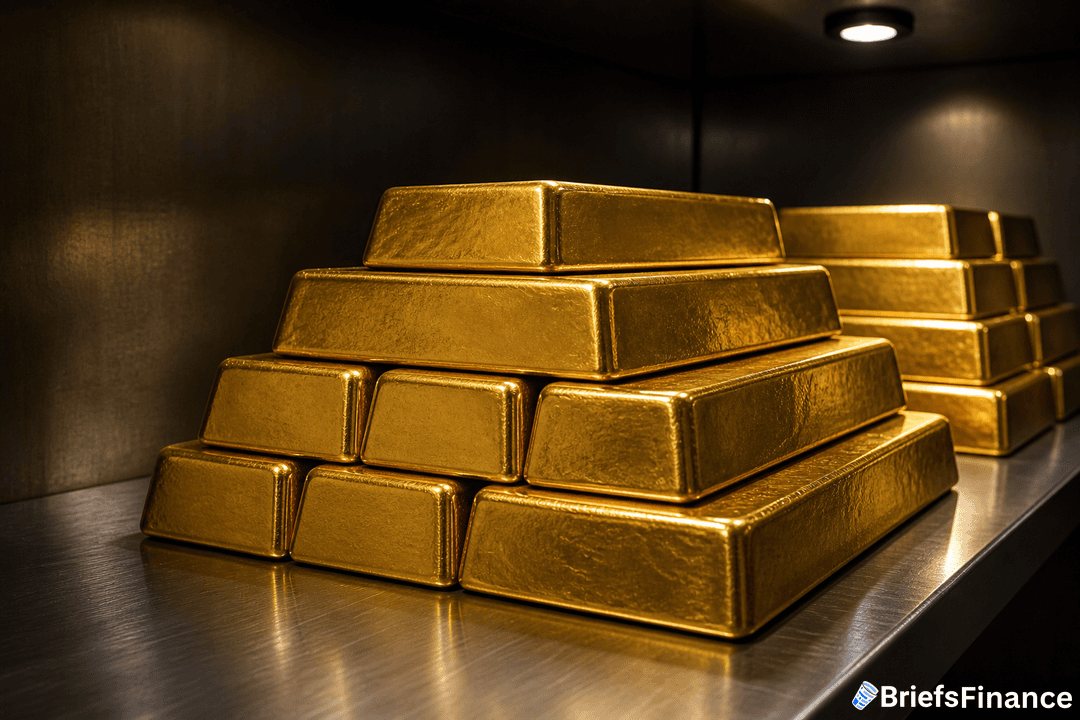
A stack of gold bars arranged in a pyramid shape on a metal shelf, with more bars in the background under warm lighting.
Summary:
  • Tether bought more than 6 tons of gold in the first quarter, pushing its total reserves to about 132 tons.
  • The crypto firm is the largest known holder of bullion outside of central banks and nation states.
  • Tether kept buying even as gold prices swung sharply during the US-Iran war.

One of the biggest gold buyers in the world right now isn't a central bank, it's the company that issues USDT. Tether's stockpile is now valued at $19.8 billion, with the firm continuing to add even as gold whipsawed during the US-Iran war.

The pace slowed from late 2025, but the run hasn't stopped, and Tether's role in the bullion market is now big enough that JPMorgan tracks it alongside sovereign buyers.

A Crypto Company With A Gold Vault

Tether bought more than 6 tons of gold in the first quarter, according to its latest reserves report, bringing total holdings to roughly 132 tons - making it the largest known gold holder outside of central banks and governments.

For context, the company snapped up 21 tons in the final quarter of 2025, so the Q1 pace was much slower, even as the buying didn't stop.

JPMorgan's Greg Shearer said Tether bought more gold than any central bank except Poland over the course of last year, with that scale starting to show up in global price action.

The firm recently cut two senior precious metals traders it had hired from HSBC, with the company saying it always strives to operate with a lean team, and it has leaned on a stake it took in US precious metals dealer Gold.com Inc in February for trading and logistics support.

Why A Stablecoin Issuer Holds So Much Gold

Tether is the issuer of USDT - the world's largest dollar-pegged stablecoin, with about $190 billion in circulation - and the company makes money by taking in dollars in exchange for USDT and parking those dollars in Treasuries and other assets, gold included.

The model is simple: hold something that backs the token, earn yield on those holdings, and send the profit straight to the bottom line.

Gold itself spent the quarter on a roller coaster, with prices running near a record $5,600 in January before getting hit by sharp selloffs, including one tied to the start of the US-Iran war in late February.

Tether kept buying through the swings, which is one reason analysts say the company's behavior is now treated as a structural force in the gold market rather than a quirky side allocation from a crypto firm.

What To Watch

Tether posted just over $1 billion in Q1 net profit, on top of more than $10 billion in 2025, and as long as that profit keeps rolling in, the gold pile keeps growing.

The line between the world's biggest stablecoin issuer and one of the world's biggest non-state gold buyers keeps getting thinner, and gold traders are now watching Tether's quarterly reserves report the way they watch central bank flows.

Disclosure

Get Market Briefs delivered to your inbox every morning for free!

No fluff. No noise. No politics. Just finance news you can read in 5 minutes.

Blogs

May 30, 2026
Financial Literacy Books That Actually Build Wealth
  • The best financial literacy books don't just teach budgeting, they shift how you think about money.
  • Two classics stand out: The Intelligent Investor for valuing investments, and Rich Dad Poor Dad for the owner's mindset.
  • Reading is only step one. The real wealth comes from acting on what you learn.
Read More
May 30, 2026
What Is a Roth Conversion? A Simple Guide
  • A Roth conversion moves money from a traditional retirement account into a Roth account.
  • You pay taxes on the money now, in exchange for tax-free growth and withdrawals later.
  • It can pay off if you expect higher taxes or more income in the future, but the timing and tax hit matter a lot.
Read More
May 30, 2026
Trailing Stop Loss: How to Protect Your Gains
  • A trailing stop loss is an order that automatically sells a stock if it falls a set percentage from its recent high.
  • As the stock rises, the sell point rises with it, locking in gains while capping losses.
  • It's most useful for active strategies like momentum investing, not for long-term buy-and-hold.
Read More
May 30, 2026
5 Types of Wealth: Why Money Is Only One of Them
  • Real wealth is more than a bank balance. It spans your finances, health, mind, purpose, and freedom.
  • Money is powerful, but it amplifies the life you already have rather than fixing a broken one.
  • True financial wealth means your cash flow covers your expenses, so your money works while you live.
Read More
May 30, 2026
How to Invest in Private Equity: A Beginner's Guide
  • Private equity means investing in companies that aren't listed on the stock market.
  • Traditional private equity is built for experienced, high-net-worth investors with large amounts to invest.
  • New rules have opened more accessible paths, like startup crowdfunding and real estate deals, often starting around $100.
Read More
May 30, 2026
What Is a Call Option? A Simple Guide With Examples
  • A call option gives you the right to buy a stock at a set price by a set date.
  • Investors buy calls when they expect a stock to rise, using less money than buying the shares outright.
  • The most you can lose buying a call is the premium, but time works against you, so it's an advanced tool.
Read More
May 30, 2026
EBITDA Formula: How to Calculate It Step by Step
  • EBITDA stands for Earnings Before Interest, Taxes, Depreciation, and Amortization, a measure of a company's core profit.
  • The formula adds those four items back to net income to show what the underlying business earns.
  • Investors use EBITDA to compare companies and to judge how many times earnings a stock is selling for.
Read More
May 30, 2026
What Is a Stock Option? A Plain-English Guide
  • A stock option is a contract giving you the right, but not the obligation, to buy or sell a stock at a set price by a set date.
  • There are two types: calls (the right to buy) and puts (the right to sell).
  • Options are powerful but risky, so they suit investors who already have the basics down.
Read More
May 30, 2026
Put Option: What It Is and How It Works
  • A put option gives you the right to sell a stock at a set price by a set date.
  • Investors use puts to bet a stock will fall, or as insurance to protect shares they own.
  • The most you can lose buying a put is the premium you paid, which makes it a defined-risk tool.
Read More
May 30, 2026
Operating Margin: What It Is and How to Calculate It
  • Operating margin shows how much profit a company keeps from its core business after paying its running costs.
  • The formula is operating income divided by revenue, shown as a percent.
  • A strong, steady operating margin signals a well-run business that controls its costs.
Read More
1 2 3 22
Share via
Copy link










