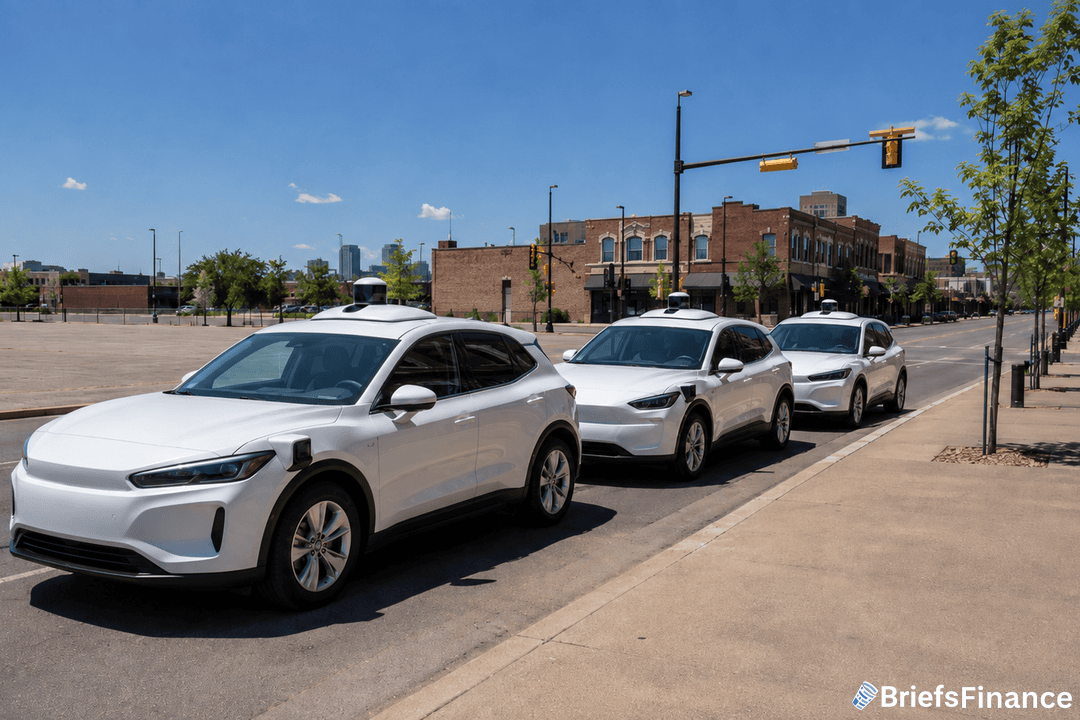
Tesla launched its robotaxi service last June with big promises, and almost a year later it has about 59 cars on the road. Musk still says he will hit 1,000 by the end of the year.
The Math Doesn't Add Up
Getting from 59 cars to 1,000 in roughly seven months means growing the fleet about 17 times over, which is a steep climb in a short window.
It is like a coffee shop promising to open 17 new locations before the holidays, where it looks fine on paper but is much harder in real life.
The service runs across just three Texas cities right now, after starting in Austin and adding Dallas and Houston earlier this year.
We cut through the hype on stories like this every morning in Market Briefs, and a free investing masterclass comes with it when you join.
The Real Holdup Isn't Building Cars
Here is the part that should catch an investor's eye: the robotaxis are just Tesla Model Y cars fitted with self-driving software, so making more of them is not the hard part.
The hard part is the software and the day-to-day operations, since most rides still have a human safety operator in the car and wait times often top 30 minutes.
Adding more cars will not fix those problems on its own, which is why the slow rollout matters more than it might look.
How Tesla Stacks Up
Rival Waymo, which is Google's self-driving car company, runs a Texas fleet about ten times larger than Tesla's.
That gap shows how far Tesla still has to go to catch the leader, even in its home state of Texas.
Tesla's longer-term plan rests on the Cybercab, a car built from scratch to drive itself, but that vehicle still has to scale before the fleet can grow fast.
What To Watch
Whether Tesla is still running fewer than 100 cars by the fall, which would put the 1,000 target out of reach for this year.
The promise is 1,000, and the scoreboard says 59.
Like your market news clear and quick? Join 350,000+ investors reading Market Briefs and get a 45-minute investing course free on the way in.