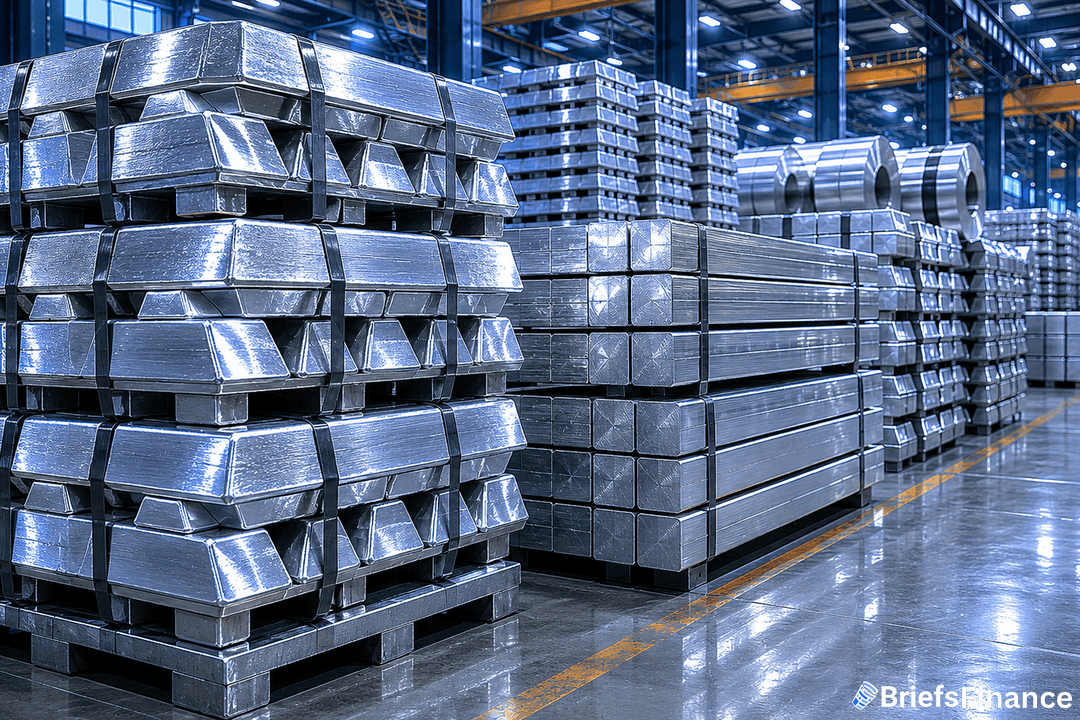
Tariffs are meant to keep foreign metal out. And yet Rio Tinto just found its way back in. The mining giant says its U.S. aluminum shipments have climbed back to pre-tariff levels.
Rio Tinto is one of the world's largest miners. Its aluminum business runs mostly out of Canada. That setup made it an easy target for a new U.S. trade tax.
The Bounce-Back
First, the setup. Last year the White House raised the tax on aluminum to 50%. That kind of tax on imported goods is called a tariff.
That hit Rio Tinto hard. Canada is the top source of aluminum for the U.S. So the new tax fell right on its main route into the country.
So Rio pivoted. It shipped more of that metal to Europe instead. And its share of sales to North America fell to the mid-60% range.
The shift to Europe was a quick fix. But Europe could not soak up all the metal Rio used to send south.
That share has now bounced back. It sits near 80% again. The U.S. buyers returned.
Trade fights reshape whole industries, and the winners aren't always the obvious ones. Market Briefs explains moves like this every morning in five minutes, plus a free investing masterclass when you join.
It Wasn't Cheap
Getting back in came with a price tag. The higher tariff cost Rio Tinto almost $1 billion in extra U.S. taxes. The loss of an old break added to the bill.
The tax first jumped to 50% in mid-2025. Rio spent months working around it. The rebound shows that workaround had limits.
The lesson is one investors keep relearning. Tariffs rarely stop trade. They reroute it. And someone pays the toll along the way.
Why The Metal Came Back
Here's the simple reason. America does not make enough of its own aluminum. The country uses far more than it can pour. So buyers often have little choice. They pay the 50% tariff and bring in the metal anyway.
The U.S. has shut many of its own smelters over the years. Cheap power moved overseas, and the plants followed.
A new plant can't fix that fast. It takes years to build and a ton of power to run. A tax can change who sells the metal and what it costs. But it can't make a factory appear overnight.
What It Means For Buyers
Someone always pays for a tariff. Here, U.S. buyers help foot the bill.
Aluminum goes into far more than soda cans. It shows up in cars, planes, and power lines. Higher import costs tend to show up in those prices. So a trade tax has a way of reaching the checkout.
Worth Noting
A 50% tariff was supposed to be a wall. For Rio Tinto, it turned out to be a tollbooth.
Join 350,000+ investors reading Market Briefs for the daily story behind the headlines, and a 45-minute investing course is included.