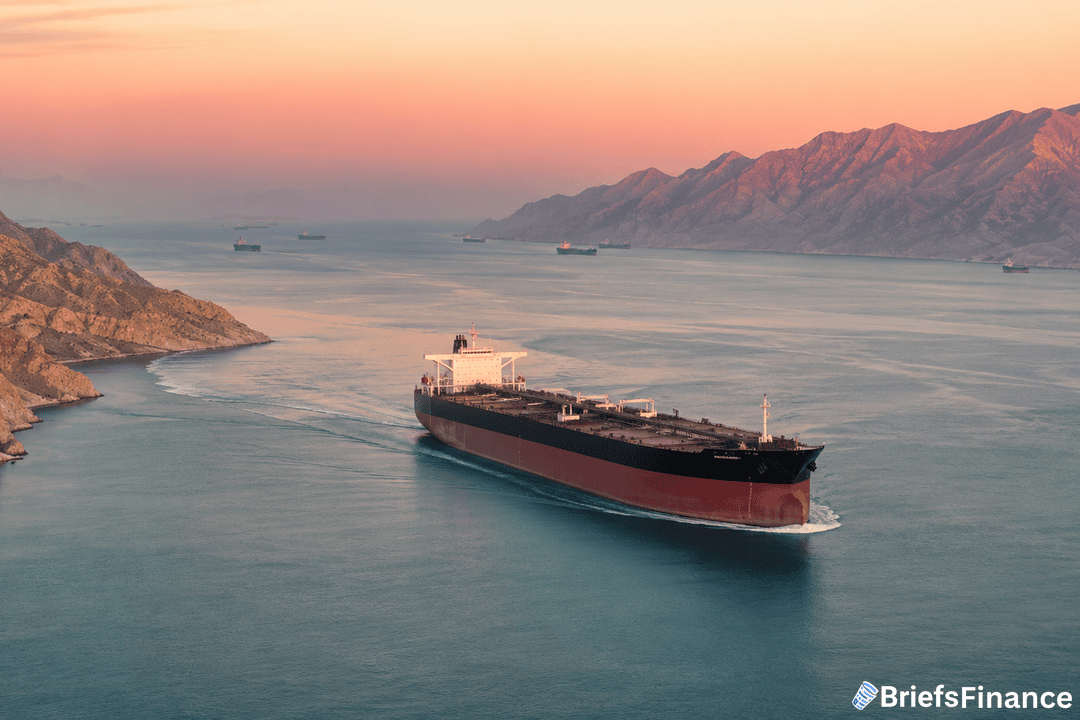
For three months, a closed shipping lane in the Middle East helped keep oil prices high. Now that it's set to reopen, oil fell about 4% the moment the news hit.
The Real Market Story Is A Waterway
The U.S. and Iran agreed Sunday to end their war after more than three months of fighting. The headlines are about peace. The market's reaction was about oil.
Brent crude, the global price, fell about 4% to $83 a barrel. U.S. crude dropped 4.8% to $80.80.
The reason is the Strait of Hormuz. It's a narrow stretch of water that a huge share of the world's oil passes through.
It's been mostly closed during the war. The draft deal has Iran reopening it within 30 days.
Picture a single on-ramp that most of the world's oil trucks have to use. Close it and prices spike. Reopen it and the pressure comes off.
We turn big global headlines into what they mean for your money over at Market Briefs, and new readers get a free investing masterclass too.
Why Everyone Wants It Open
World leaders lined up to back the deal. The U.K., France, Germany, and Italy called it a chance to steady the global economy.
They also said they're ready to lift some sanctions on Iran. The catch: Iran has to follow through on its nuclear program first.
Japan and the EU made the same point. Keep Hormuz open and freely moving.
The shared interest is simple. Open shipping lanes mean more oil, lower prices, and less pressure on prices worldwide.
The Bigger Picture
The deal is landing at a loud moment. World leaders are gathering for the G7 summit in France this week.
China welcomed the news too. So did the U.N., which thanked Pakistan and Qatar for helping broker the peace.
Markets had braced for the worst for months. The war had rattled energy supplies and stirred talk of a global slump.
For drivers, the math is simple. Lower oil tends to mean cheaper gas down the road.
It matters for stocks too. Calmer energy prices take a weight off the whole market.
What Cheaper Oil Could Unlock
Lower oil prices don't just help drivers. They ripple into almost everything, since fuel moves the goods we buy.
A former head of the Bank of France told CNBC that a finished deal could ease inflation a lot. It would also give central banks more room to act.
That's the part investors care about. Cheaper energy could mean cooler inflation, which could put rate cuts back on the table.
What To Watch
The deal isn't signed yet. That's set for Friday in Switzerland, with 60 more days of talks on Iran's nuclear program to follow.
Plenty could still go wrong. The EU warned there's no real peace while Lebanon is still in conflict, and Israel said its forces aren't leaving the region.
Oil markets moved on the promise. The follow-through is what they'll trade on next.
If you want oil and inflation decoded without the jargon, join 350,000+ investors reading Market Briefs and you'll also pick up a 45-minute investing course at no cost.