Free NewsletterPro Login

Oil Just Dropped 4% On The U.S.-Iran Deal To Reopen The Strait Of Hormuz

Published Jun 15, 2026
Share:
Summary:
  • Brent crude, the global oil price, fell about 4% to $83 a barrel and U.S. crude dropped 4.8% to $80.80 after the U.S. and Iran agreed Sunday to end their war.
  • The draft deal has Iran reopening the Strait of Hormuz within 30 days, a sea route that carries a large share of the world's oil.
  • Leaders from the U.K., France, Germany, Italy, Japan, and the EU welcomed the deal, with some ready to lift sanctions on Iran.

For three months, a closed shipping lane in the Middle East helped keep oil prices high. Now that it's set to reopen, oil fell about 4% the moment the news hit.

The Real Market Story Is A Waterway

The U.S. and Iran agreed Sunday to end their war after more than three months of fighting. The headlines are about peace. The market's reaction was about oil.

Brent crude, the global price, fell about 4% to $83 a barrel. U.S. crude dropped 4.8% to $80.80.

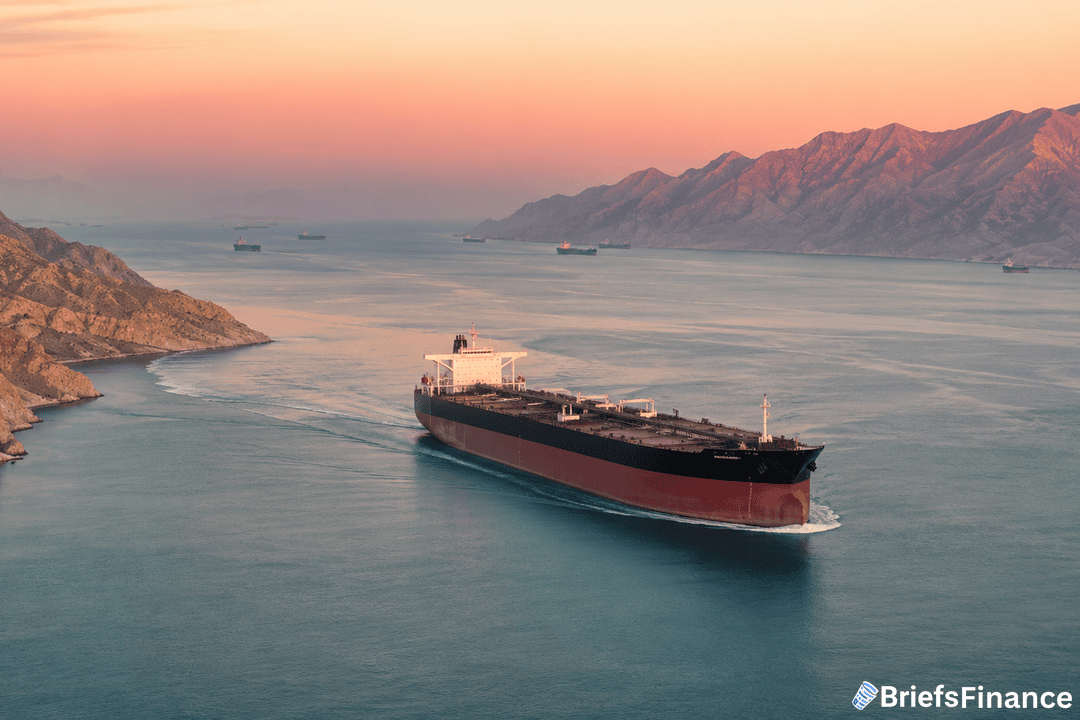
The reason is the Strait of Hormuz. It's a narrow stretch of water that a huge share of the world's oil passes through.

It's been mostly closed during the war. The draft deal has Iran reopening it within 30 days.

Picture a single on-ramp that most of the world's oil trucks have to use. Close it and prices spike. Reopen it and the pressure comes off.

We turn big global headlines into what they mean for your money over at Market Briefs, and new readers get a free investing masterclass too.

Why Everyone Wants It Open

World leaders lined up to back the deal. The U.K., France, Germany, and Italy called it a chance to steady the global economy.

They also said they're ready to lift some sanctions on Iran. The catch: Iran has to follow through on its nuclear program first.

Japan and the EU made the same point. Keep Hormuz open and freely moving.

The shared interest is simple. Open shipping lanes mean more oil, lower prices, and less pressure on prices worldwide.

The Bigger Picture

The deal is landing at a loud moment. World leaders are gathering for the G7 summit in France this week.

China welcomed the news too. So did the U.N., which thanked Pakistan and Qatar for helping broker the peace.

Markets had braced for the worst for months. The war had rattled energy supplies and stirred talk of a global slump.

For drivers, the math is simple. Lower oil tends to mean cheaper gas down the road.

It matters for stocks too. Calmer energy prices take a weight off the whole market.

What Cheaper Oil Could Unlock

Lower oil prices don't just help drivers. They ripple into almost everything, since fuel moves the goods we buy.

A former head of the Bank of France told CNBC that a finished deal could ease inflation a lot. It would also give central banks more room to act.

That's the part investors care about. Cheaper energy could mean cooler inflation, which could put rate cuts back on the table.

What To Watch

The deal isn't signed yet. That's set for Friday in Switzerland, with 60 more days of talks on Iran's nuclear program to follow.

Plenty could still go wrong. The EU warned there's no real peace while Lebanon is still in conflict, and Israel said its forces aren't leaving the region.

Oil markets moved on the promise. The follow-through is what they'll trade on next.

If you want oil and inflation decoded without the jargon, join 350,000+ investors reading Market Briefs and you'll also pick up a 45-minute investing course at no cost.

Disclosure

Get Market Briefs delivered to your inbox every morning for free!

No fluff. No noise. No politics. Just finance news you can read in 5 minutes.

Blogs

June 15, 2026
Top Covered Call ETFs: How to Compare Them
  • Top covered call ETFs are income funds that own stocks and sell call options against them to generate steady cash.
  • The best one for you is the fund whose income, holdings, and fees fit your goals, not simply the one with the flashiest yield.
  • They all share one trade-off: more income today, less upside in a big rally.
Read More
June 15, 2026
What Are Stock Options? A Plain-English Guide
  • Stock options are contracts that give you the right, but not the obligation, to buy or sell a stock at a set price by a set date.
  • There are two kinds: calls (the right to buy) and puts (the right to sell).
  • Options can multiply gains or wipe out your money fast, so they suit investors who already know the basics.
Read More
June 15, 2026
EBITDA Margin: What It Is and How to Calculate It
  • EBITDA margin measures how much core profit a company keeps from each dollar of sales, before interest, taxes, and accounting deductions.
  • The formula is EBITDA divided by revenue, shown as a percent.
  • A higher, steadier EBITDA margin usually signals a more efficient, more durable business.
Read More
June 15, 2026
What Is Taxable Income? A Simple Guide for Investors
  • Taxable income is the portion of your money the government can tax after deductions are applied.
  • Not all income is taxed the same: job income, investment income, and passive income face different rates.
  • Investors and business owners get more tools to legally lower their taxable income, which is a big edge over time.
Read More
June 15, 2026
What Is a Covered Call? How the Strategy Works
  • A covered call is an options strategy where you own a stock and sell someone the right to buy it from you at a higher price.
  • You collect cash, called the premium, up front, and keep it no matter what happens.
  • The trade-off: if the stock soars, your shares get sold at the set price and you miss the extra upside.
Read More
June 15, 2026
What Is Gross Margin? A Simple Guide for Investors
  • Gross margin is the share of each sales dollar a company keeps after paying the direct cost of whatever it sold.
  • The formula is simple: revenue minus cost of goods sold, divided by revenue, shown as a percent.
  • A steady or rising gross margin points to pricing power, and it is one of the first things smart investors check.
Read More
June 15, 2026
What Is a Dividend? A Plain-English Guide for Investors
  • A dividend is a cash payment a company sends you just for owning its stock, usually every three months.
  • Dividends are one of two ways stocks pay you, the other being the share price going up.
  • Dividends are never guaranteed, so the strength of the business behind the payment matters more than the size of the payment.
Read More
May 30, 2026
Financial Literacy Books That Actually Build Wealth
  • The best financial literacy books don't just teach budgeting, they shift how you think about money.
  • Two classics stand out: The Intelligent Investor for valuing investments, and Rich Dad Poor Dad for the owner's mindset.
  • Reading is only step one. The real wealth comes from acting on what you learn.
Read More
May 30, 2026
What Is a Roth Conversion? A Simple Guide
  • A Roth conversion moves money from a traditional retirement account into a Roth account.
  • You pay taxes on the money now, in exchange for tax-free growth and withdrawals later.
  • It can pay off if you expect higher taxes or more income in the future, but the timing and tax hit matter a lot.
Read More
May 30, 2026
Trailing Stop Loss: How to Protect Your Gains
  • A trailing stop loss is an order that automatically sells a stock if it falls a set percentage from its recent high.
  • As the stock rises, the sell point rises with it, locking in gains while capping losses.
  • It's most useful for active strategies like momentum investing, not for long-term buy-and-hold.
Read More
1 2 3 22
Share via
Copy link










