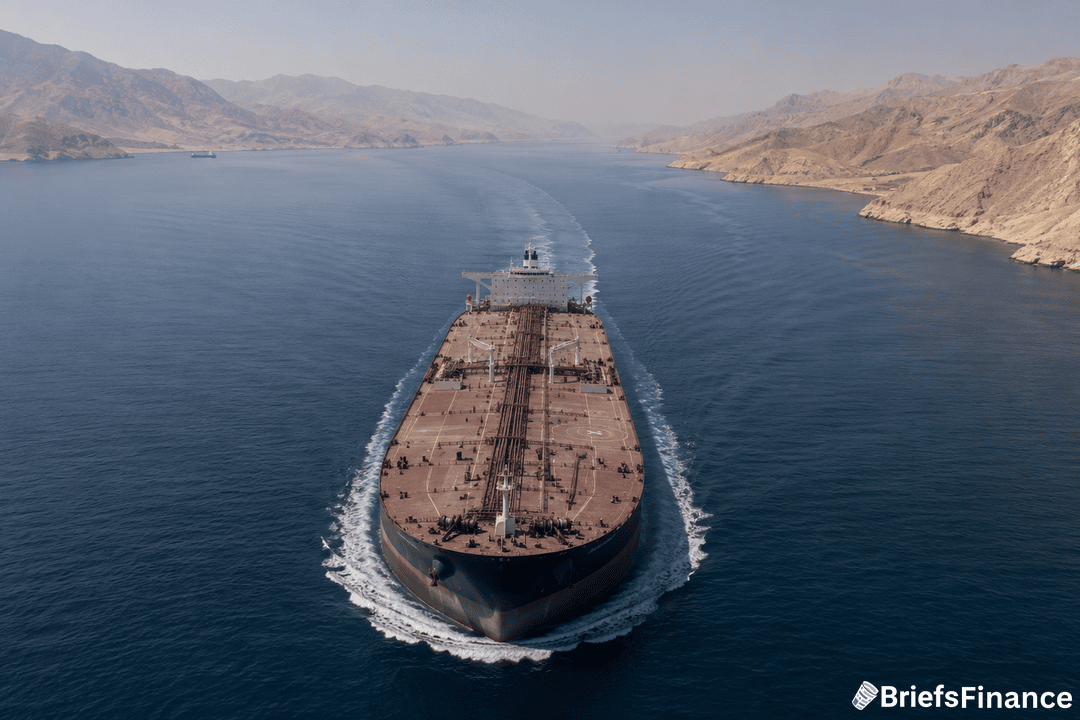
Oil sits near $94 a barrel right now. One economist thinks it could reach $150 within a couple of months.
The fix is surprisingly simple. Getting there is not.
Why Oil Could Reach $150
Claudio Galimberti, chief economist at Rystad Energy, says the math is simple. As long as the fighting goes on, the world keeps draining its oil stockpiles.
And as those stockpiles fall, prices keep climbing. They are now at very low levels, with little room to absorb another shock.
The stockpiles are like a savings account for the world's energy, and the balance is running low. Brent crude, the global price gauge, sat near $94 on Tuesday.
With less cushion left, each new shock pushes prices higher. That is why $150 is now on the table.
Spare supply is almost gone, so the market has little buffer. With demand steady, even small hits to the flow sting.
Oil is the lifeblood of the world economy, so the war's reach goes well past the gas pump. Higher crude trickles into shipping, food, and heating bills.
It has been just over 100 days since the war began. Oil and other markets have swung hard on every twist in the Iran-U.S. talks.
We unpack what oil swings like this mean for your money in Market Briefs - five minutes a day, plus a free investing masterclass when you join.
The Fix Runs Through The Strait Of Hormuz
The whole crisis could ease if more oil moves through the Strait of Hormuz. That is the narrow shipping lane a big share of the world's oil passes through.
Right now only about 2 million barrels a day get through. Galimberti says lifting that to 10 million would solve the crunch.
He thinks it is doable over the next three to six months. But his warning was blunt.
That lane normally carries a huge slice of the world's supply. Today only a trickle is getting out.
Right here, right now, he says, we are nowhere close. The talks remain shaky, and the ceasefire is fragile.
For now, the world is simply short of oil, and the war is the reason. That keeps prices high and nerves on edge.
A breakthrough could cool prices within days. Until then, traders are stuck watching the headlines.
What To Watch
Pricey oil also tends to push up inflation. That is why central banks watch it so closely.
It is also why some investors lean on safe havens when war rattles markets. Here is the part most people miss.
Even if the crunch gets solved, Galimberti says 2027 could bring a huge oil surplus. That is because OPEC is unwinding its cuts, and the UAE has left the group.
So this year of real shortage could flip to a glut next year. That kind of whiplash can make the market hard to read.
He calls 2026 a year of true deficit. But the swing toward surplus could confuse traders all over again.
Read Market Briefs every morning and you'll also get a 45-minute course on finding investments at no charge.