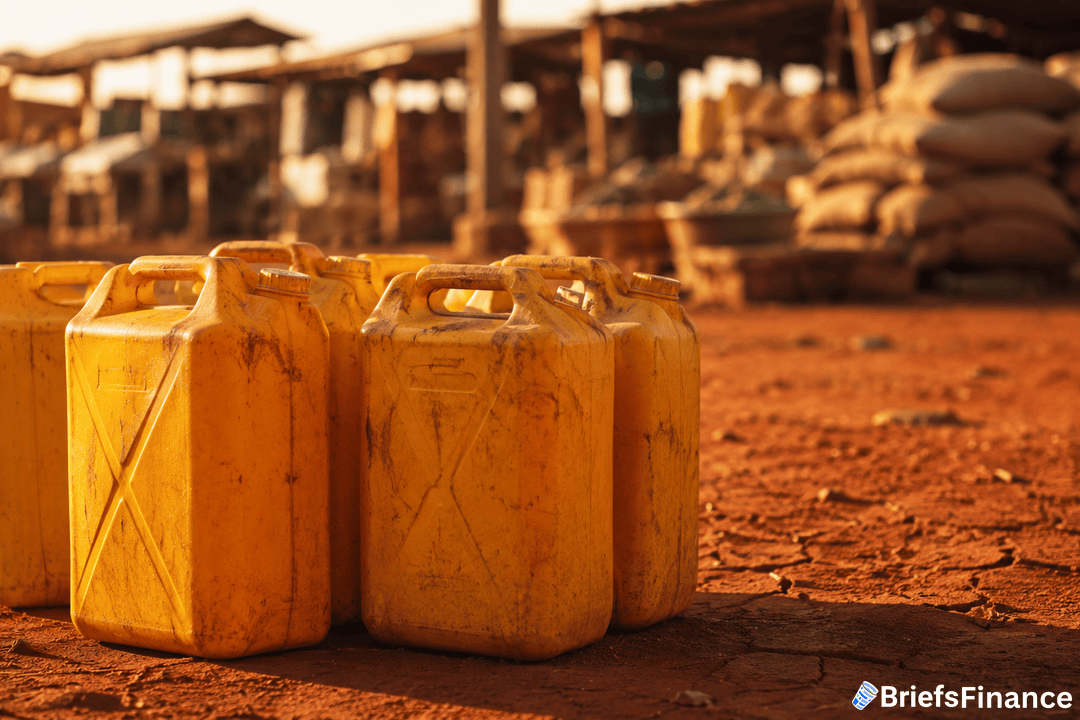
A war thousands of miles away is showing up at gas pumps in Lagos.
Nigeria's yearly inflation ticked up to 15.93% in May. The reason starts in the Middle East.
How A Distant War Reaches Nigerian Wallets
Inflation is just the pace at which prices rise. When fuel costs more, almost everything else follows.
That is because nearly everything has to be trucked somewhere. Higher fuel means higher costs all down the line.
Bus fares climb, and so do prices at the market. Even a bag of rice costs more to move, so the pain spreads fast.
Here is Nigeria's odd spot. It pumps a lot of crude oil.
But it buys most of its finished fuel from abroad. So it sells the raw stuff and buys back the refined kind.
Think of a wheat farmer who sells his grain. Then he still pays for his bread at the store.
When world prices jump, he gets squeezed on the way back in. That is Nigeria right now.
The war lifted crude prices, and that fed straight into pump prices. May's reading of 15.93% came in above April's 15.69%, per the National Bureau of Statistics.
It was the third month in a row that the yearly rate has climbed. Food, transport, and dining out were the main drivers.
Food prices alone rose 16.96% over the year. That was up from 16.06% the month before.
Oil cuts both ways for Nigeria. It earns dollars when crude sells high abroad.
But it pays more for the fuel it ships back in. So a price spike fills one pocket and empties another.
Global stories like this one hit your money in ways that aren't obvious. Market Briefs connects those dots every morning, and tosses in a free investing masterclass when you join.
The Number Is Climbing, But Slower Than It Looks
There is good news hiding in the report. Month to month, prices rose just 1.75% in May.
That was down from 2.13% in April. So the pace is actually easing, even as the yearly figure creeps up.
The main price index rose to 140.7 points. That was up 2.4 points from the month before.
Nigeria recently changed how it builds that index. It now uses 2024 as its base year.
That reset makes old and new readings harder to line up. Still, the direction is clear.
Step back further and the trend looks better still. A year ago, inflation was running at 26.06%.
That makes 15.93% a big drop. Food was still the largest single driver of the yearly rate.
That is the cost households feel first. A jump at the market hits harder than any chart.
Worth Noting
The risk is simple. A longer war keeps fuel high and eats away at the progress Nigeria has made.
For investors in emerging markets, the lesson travels well past one country. The price of oil rarely stays where it starts.
Sign up for Market Briefs to get the daily read on markets at home and abroad, plus a 45-minute investing course included as a bonus.