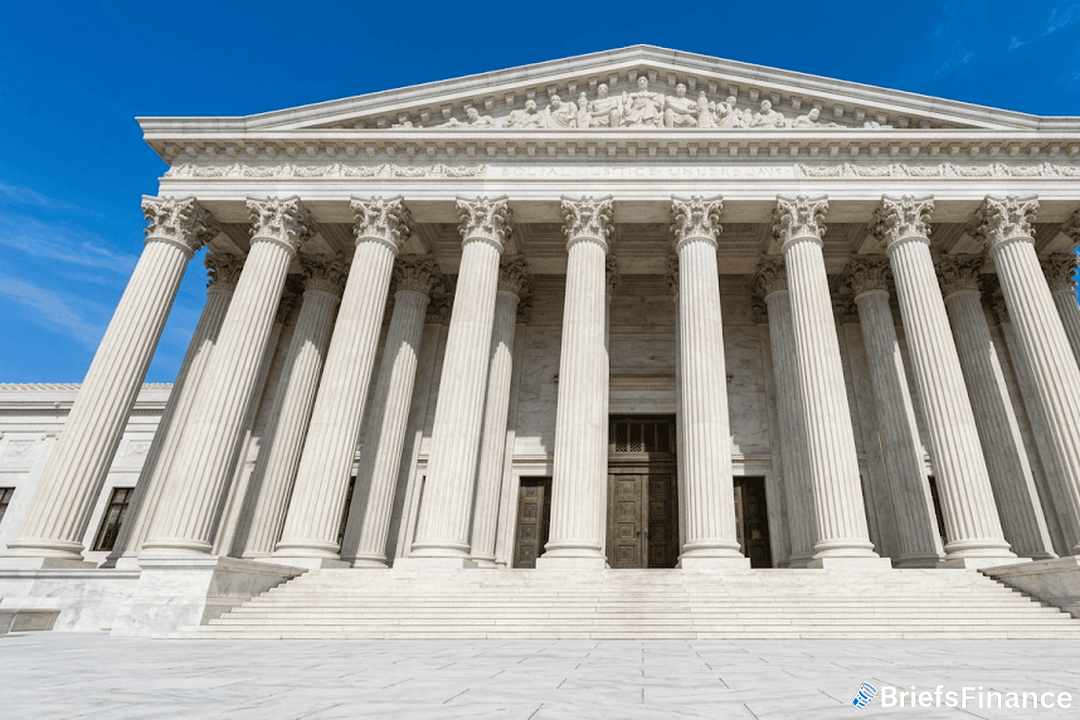
On Thursday, the justices declined to stop the lower-court lawsuit while the appeal is pending.
Justice Elena Kagan turned down Apple's emergency bid to postpone the trial-court proceedings before the Supreme Court resolves a related contempt appeal. The order came without explanation and replaced a temporary hold Kagan had put in place Wednesday while she reviewed Apple's request.
The dispute originated in a federal court in Oakland, California. U.S. District Judge Yvonne Gonzalez Rogers ruled on August 11 that proceedings should continue in her courtroom alongside the Supreme Court appeal. She determined that the high court's review is too limited to alter the factual questions that remain unresolved.
"The Supreme Court's grant of a narrow review of the contempt proceedings does not substantially impact the factual issues that must be resolved to ensure compliance with the injunction," Gonzalez Rogers wrote.
She also rejected arguments for additional delays. "We are approaching the five-year anniversary of this court's decision. Further delay is unwarranted," she said.
Gonzalez Rogers's order observed that the Supreme Court's review covers only a narrow issue in the contempt dispute, and that the appellate ruling left additional factual findings for her to make.
Get the free Always Be Buying eBook and learn the simple system for building wealth on any income
The Central Conflict
The ongoing case examines whether Apple followed the judge's original ruling when it introduced a new 27% commission on sales made outside its App Store. Critics contend that this fee effectively nullifies the original ruling.
The Supreme Court decided in June to take up lower-court rulings that found Apple had deliberately violated the 2021 antitrust injunction. The Supreme Court said it would examine the proper legal standard for civil contempt findings but declined to hear Apple's arguments on other aspects of the case.
Background of the Case
The underlying dispute stems from a 2021 ruling in Epic Games' antitrust lawsuit against Apple. The judge found that Apple's restrictions preventing developers from directing users to alternative payment systems violated California's unfair competition law. The injunction required Apple to allow developers to include external payment links and buttons in their apps.
Apple responded by charging developers a 27% fee for transactions completed outside its App Store. Epic Games argued this fee essentially replicated the commission structure the court had found problematic, making the injunction meaningless. Apple maintained that it was entitled to compensation for its platform services even when transactions occurred outside its payment system.
The case has broader implications for how technology platforms structure their marketplaces and whether court-ordered remedies can be effectively circumvented through creative fee arrangements.
The Supreme Court's review is limited to the legal standard for civil contempt, not the broader antitrust questions. That leaves Judge Gonzalez Rogers responsible for determining whether Apple's current fee structure complies with the injunction. She has said the high court's narrow review does not resolve the factual issues still before her, and she has rejected further delays as the case approaches the five-year mark since her original decision.
What Happens Next
The case now proceeds on two separate tracks. The emergency application is Apple v. Epic Games, docket 26A194, while the appeal accepted for review is docket 25-1311.
Download the free Always Be Buying eBook and start putting your money to work today