Free NewsletterPro Login

JPMorgan, Citi, And Bank Of America Are Building A Shared Blockchain To Defend Deposits

Published Jun 5, 2026
Share:
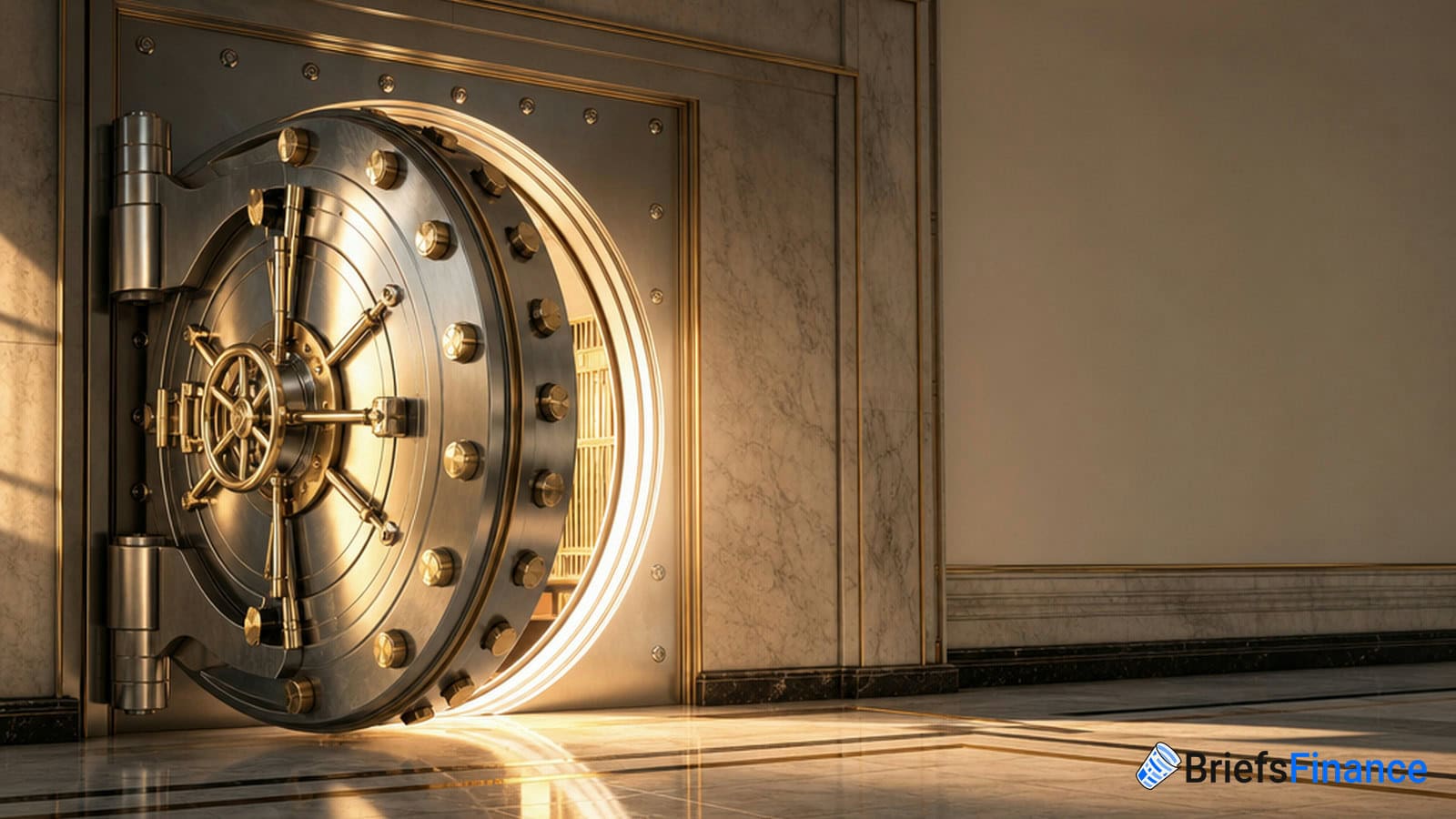
A large, round bank vault door is open inside a marble-walled room, with sunlight illuminating part of the vault and floor.
Summary:
  • JPMorgan, Citi, and Bank of America are building a shared tokenized deposit network on The Clearing House, with a launch target in the first half of 2027.
  • The project is a direct response to stablecoins, which could soon pay returns to holders if the Clarity Act passes through Congress.
  • Deposits are the cheapest funding banks have, and interest-paying stablecoins threaten to pull that funding away by offering customers a faster, higher-yielding alternative.

America's three biggest banks just agreed to build a blockchain together. Not because they want to - because stablecoins are about to start paying interest, and that changes the math on every deposit they hold.

The Plan

JPMorgan, Citi, and Bank of America are teaming up on a shared tokenized deposit network, with a launch target in the first half of 2027, according to a Wall Street Journal report.

Some banks at the table are calling it "the bridge." Others call it "the chain."

The system will run on The Clearing House, the payments company the big banks already own together. The new piece is the tokenized deposit itself - basically a digital version of your money at the bank that can move across a blockchain in seconds, the way a wire transfer can't.

Stories like this are why we read Market Briefs every morning - five minutes on what's actually moving money, plus a free investing masterclass when you sign up.

Why The Banks Are Moving Now

This isn't a tech upgrade. It's defense.

Stablecoins are dollar-pegged tokens issued by crypto companies that live outside the banking system, settle on blockchains, and move faster and cheaper than the wires banks run today.

Until now, they didn't pay interest, so they weren't really competing with a checking account.

That's about to change. The Clarity Act, currently moving through Congress, could let stablecoin issuers pay returns to holders.

A token that moves like crypto and pays like a savings account is a real problem for any bank sitting on cheap deposits.

What's At Stake

Deposits are the cheapest funding banks have. They take in your money at near-zero interest, then lend it back out at much higher rates.

That gap is the business model.

If customers start parking dollars in interest-paying stablecoins instead of checking accounts, that cheap funding dries up.

Less funding means less lending, which means a smaller bank.

The Clearing House is pitching the new network to corporate clients as a way to run programmable treasury operations, manage liquidity in real time, and move money across borders without the usual delays.

CEO David Watson called the shift to onchain payments "radically different" - signaling the banks know they need to move now or get left behind.

What To Watch

The 2027 timeline is the headline, but adoption is what decides this. A bank-owned blockchain only matters if corporate treasurers and retail customers actually use it instead of a stablecoin from a crypto company.

The Clarity Act's final shape will decide a lot of that. If stablecoins are allowed to pay competitive yields, the banks are racing a clock they can't fully see.

Wall Street spent years fighting the blockchain. Now it's trying to own one.

Get the daily read on moves like this by joining 350,000+ investors on Market Briefs - you also get a 45-minute investing course as a bonus.

Disclosure

Get Market Briefs delivered to your inbox every morning for free!

No fluff. No noise. No politics. Just finance news you can read in 5 minutes.

Blogs

May 30, 2026
Financial Literacy Books That Actually Build Wealth
  • The best financial literacy books don't just teach budgeting, they shift how you think about money.
  • Two classics stand out: The Intelligent Investor for valuing investments, and Rich Dad Poor Dad for the owner's mindset.
  • Reading is only step one. The real wealth comes from acting on what you learn.
Read More
May 30, 2026
What Is a Roth Conversion? A Simple Guide
  • A Roth conversion moves money from a traditional retirement account into a Roth account.
  • You pay taxes on the money now, in exchange for tax-free growth and withdrawals later.
  • It can pay off if you expect higher taxes or more income in the future, but the timing and tax hit matter a lot.
Read More
May 30, 2026
Trailing Stop Loss: How to Protect Your Gains
  • A trailing stop loss is an order that automatically sells a stock if it falls a set percentage from its recent high.
  • As the stock rises, the sell point rises with it, locking in gains while capping losses.
  • It's most useful for active strategies like momentum investing, not for long-term buy-and-hold.
Read More
May 30, 2026
5 Types of Wealth: Why Money Is Only One of Them
  • Real wealth is more than a bank balance. It spans your finances, health, mind, purpose, and freedom.
  • Money is powerful, but it amplifies the life you already have rather than fixing a broken one.
  • True financial wealth means your cash flow covers your expenses, so your money works while you live.
Read More
May 30, 2026
How to Invest in Private Equity: A Beginner's Guide
  • Private equity means investing in companies that aren't listed on the stock market.
  • Traditional private equity is built for experienced, high-net-worth investors with large amounts to invest.
  • New rules have opened more accessible paths, like startup crowdfunding and real estate deals, often starting around $100.
Read More
May 30, 2026
What Is a Call Option? A Simple Guide With Examples
  • A call option gives you the right to buy a stock at a set price by a set date.
  • Investors buy calls when they expect a stock to rise, using less money than buying the shares outright.
  • The most you can lose buying a call is the premium, but time works against you, so it's an advanced tool.
Read More
May 30, 2026
EBITDA Formula: How to Calculate It Step by Step
  • EBITDA stands for Earnings Before Interest, Taxes, Depreciation, and Amortization, a measure of a company's core profit.
  • The formula adds those four items back to net income to show what the underlying business earns.
  • Investors use EBITDA to compare companies and to judge how many times earnings a stock is selling for.
Read More
May 30, 2026
What Is a Stock Option? A Plain-English Guide
  • A stock option is a contract giving you the right, but not the obligation, to buy or sell a stock at a set price by a set date.
  • There are two types: calls (the right to buy) and puts (the right to sell).
  • Options are powerful but risky, so they suit investors who already have the basics down.
Read More
May 30, 2026
Put Option: What It Is and How It Works
  • A put option gives you the right to sell a stock at a set price by a set date.
  • Investors use puts to bet a stock will fall, or as insurance to protect shares they own.
  • The most you can lose buying a put is the premium you paid, which makes it a defined-risk tool.
Read More
May 30, 2026
Operating Margin: What It Is and How to Calculate It
  • Operating margin shows how much profit a company keeps from its core business after paying its running costs.
  • The formula is operating income divided by revenue, shown as a percent.
  • A strong, steady operating margin signals a well-run business that controls its costs.
Read More
1 2 3 22
Share via
Copy link










