Wall Street banks don't usually turn their lobbies into ads for their clients. They close the deal, collect the fees, and move on.
This week was different, as Goldman Sachs and Morgan Stanley covered their New York headquarters in SpaceX gear on Wednesday ahead of the rocket maker's IPO.
Wall Street Doesn't Usually Flex Like This
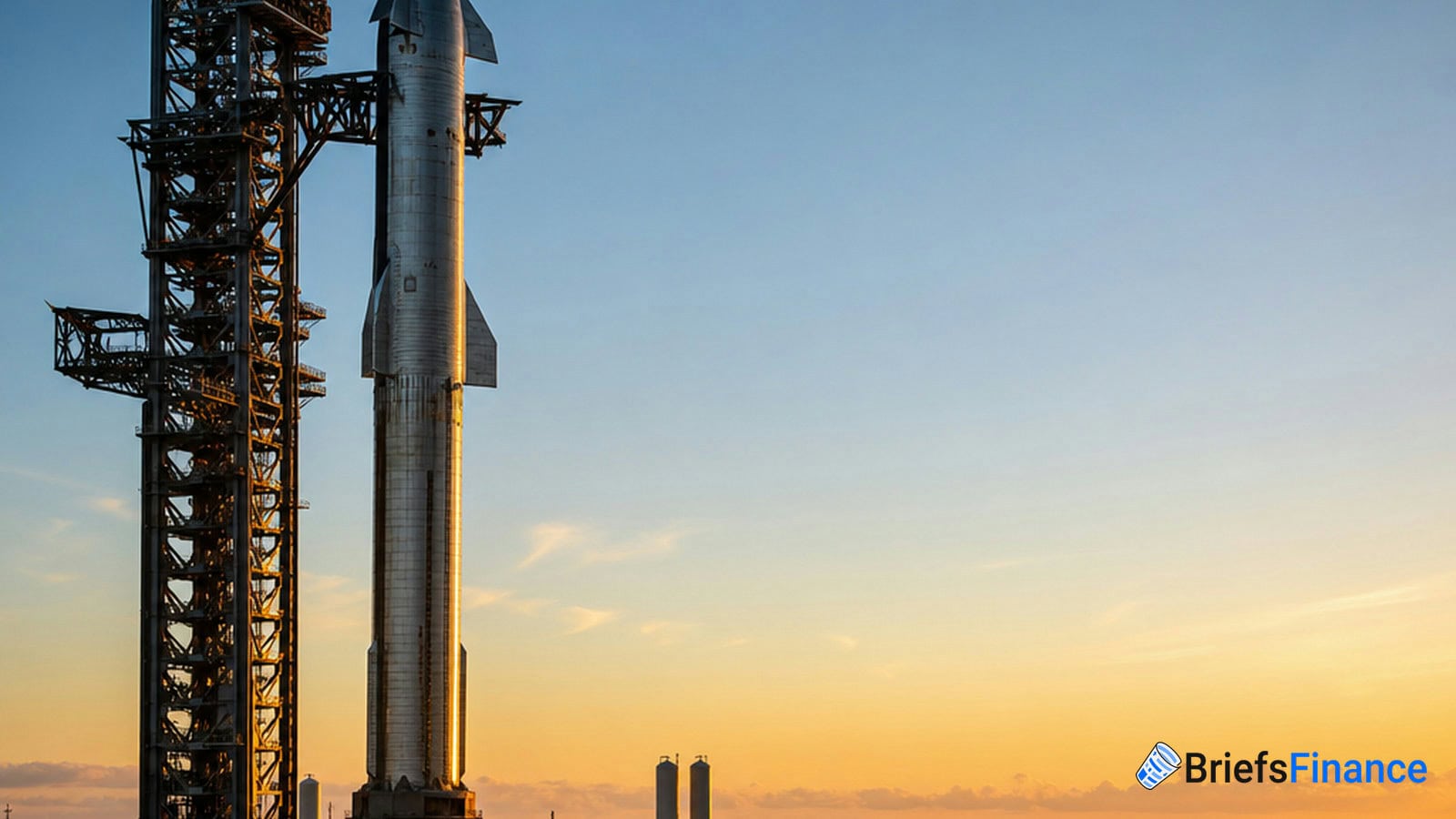
Morgan Stanley draped its lobby gates with SpaceX logos and hung a giant Mars mural on the wall, while Goldman went with renderings of Starship, SpaceX's reusable rocket.
Goldman also made sure to highlight its role as "lead left" bookrunner - the bank that gets top billing on the IPO paperwork. In banker terms, that's the closest thing to a trophy.
The lobby decor isn't really about SpaceX. It's a signal of how much both banks want everyone to know they won the mandate.
Winning a deal this big tends to lead to follow-on business across Musk's other companies, which is why the displays read more like a victory lap than simple decoration.
The biggest market moves don't start at the opening bell - they start in filings like this one. Market Briefs breaks down what investors actually need to watch every morning, and you get a free investing masterclass when you sign up.
A $75 Billion Deal That Could Break The Record
SpaceX is looking to raise $75 billion in the offering, per its SEC filing. That would top Saudi Aramco's 2019 debut as the largest IPO ever pulled off.
The deal would value Elon Musk's rocket company above $1.75 trillion, putting SpaceX in the same room as Apple, Microsoft, and Nvidia from day one of trading.
For context, SpaceX's December 2025 tender offer valued the company at around $800 billion, meaning the IPO would more than double that mark in roughly six months.
Both banks are lead underwriters on the offering, with fees on a deal this size running into the hundreds of millions.
The longer-term tie to Musk - who also runs Tesla and X - is arguably worth more than the fees themselves.
What To Watch
The lobby displays are the easy part. The harder part comes next.
Public investors have never had a chance to own a piece of SpaceX, which has been one of the most coveted private holdings on Wall Street for years.
Much of the demand comes from Starlink, the satellite internet business that now serves millions of subscribers and has become SpaceX's biggest revenue engine.
The question now is whether public investors will pay a $1.75 trillion price tag once shares hit the open market.
Goldman and Morgan Stanley have done their part. SpaceX has to do the rest.
Want this kind of read on every big market story? Join 350,000+ investors reading Market Briefs every weekday morning - a 45-minute investing course is thrown in as a bonus.