Free NewsletterPro Login

GE Vernova Orders Jump 71% on AI Power Demand

Published Apr 22, 2026
Share:
Summary:
  • GE Vernova reported Q1 revenue of $9.34 billion, beating the $9.26 billion forecast.
  • Orders surged 71% year over year to $18.3 billion, driven by AI data center demand.
  • Shares rose about 7.8% in premarket trading on the results.

GE Vernova (GEV) delivered one of the cleanest AI-infrastructure earnings reports of the season on Wednesday, sending shares almost 8% higher before the open. Revenue hit $9.34 billion for the quarter, a 16% increase and ahead of the $9.26 billion analysts wanted.

Diluted earnings per share landed at $17.44, though a big chunk of that came from one-time items. The real headline sat below revenue in the orders line.

Why Orders Matter Most

Orders jumped 71% year over year to $18.3 billion, giving GE Vernova a book-to-bill ratio of about 2.0. That means the company is booking future work at twice the pace of what it is currently delivering, which most power equipment makers aim to keep just above 1.

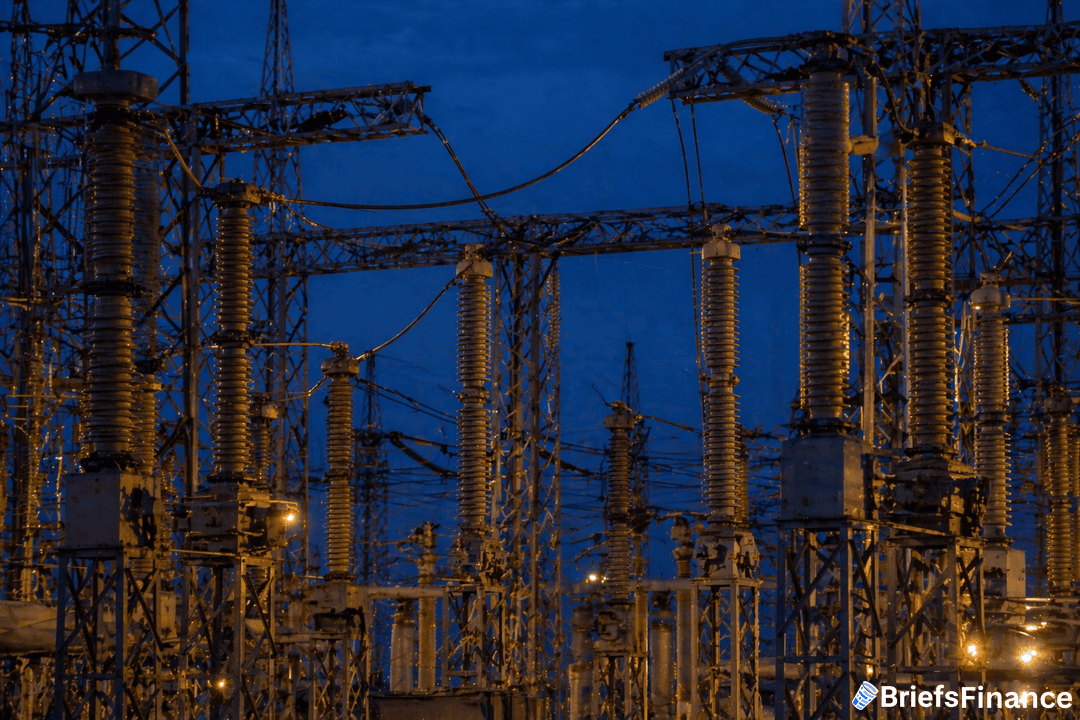
The surge is being driven by data center demand, because training and running large AI models takes massive amounts of electricity. Companies like Microsoft, Meta, Amazon, and Google are signing long-term contracts for turbines, grid gear, and power generation, with GE Vernova sitting at the top of the preferred supplier list.

The One-Time Items

Q1 earnings per share were flattered by two big non-recurring gains, so the headline number is not the run rate. The company booked a $4 billion pre-tax gain from remeasuring its prior stake in Prolec GE, plus a $330 million gain from selling its Proficy software business.

What that means: strip out the gains, and the underlying growth still looks strong, just not eye-popping. The Prolec transaction also gives GE Vernova fuller control over a key North American electrical equipment maker at a moment when grid demand is spiking.

Why Investors Like the Setup

GE Vernova has quietly become one of the clearest AI plays on the market without being labeled as a chip or cloud stock. Investors who do not want to keep adding to Nvidia or Microsoft positions can instead buy the company providing the power that keeps those chips on.

The combination of utility-style long contracts and hyperscaler growth is unusual, because most power equipment makers grow with GDP, not at AI speeds. That dynamic is what is pulling the stock higher.

The Grid Bottleneck

U.S. utilities are signaling multi-year waits for large transformers and grid equipment, which is exactly GE Vernova's sweet spot. Those lead times are pushing customers to lock in capacity years ahead, driving up both backlog quality and pricing power.

Grid modernization spend is also getting a boost from federal money flowing through infrastructure programs, which adds a non-AI tailwind on top of hyperscaler demand. That dual driver is why analysts have been raising price targets through the quarter.

What to Watch

The next read is whether that 2.0 book-to-bill ratio holds into Q2 or was front-loaded by a few very large contracts. Management commentary around data center pipelines and international orders will tell investors which way the trend is going.

Any sign that hyperscaler capex plans are softening would hit GE Vernova faster than most power names.

Disclosure

Get Market Briefs delivered to your inbox every morning for free!

No fluff. No noise. No politics. Just finance news you can read in 5 minutes.

Blogs

June 15, 2026
Top Covered Call ETFs: How to Compare Them
  • Top covered call ETFs are income funds that own stocks and sell call options against them to generate steady cash.
  • The best one for you is the fund whose income, holdings, and fees fit your goals, not simply the one with the flashiest yield.
  • They all share one trade-off: more income today, less upside in a big rally.
Read More
June 15, 2026
What Are Stock Options? A Plain-English Guide
  • Stock options are contracts that give you the right, but not the obligation, to buy or sell a stock at a set price by a set date.
  • There are two kinds: calls (the right to buy) and puts (the right to sell).
  • Options can multiply gains or wipe out your money fast, so they suit investors who already know the basics.
Read More
June 15, 2026
EBITDA Margin: What It Is and How to Calculate It
  • EBITDA margin measures how much core profit a company keeps from each dollar of sales, before interest, taxes, and accounting deductions.
  • The formula is EBITDA divided by revenue, shown as a percent.
  • A higher, steadier EBITDA margin usually signals a more efficient, more durable business.
Read More
June 15, 2026
What Is Taxable Income? A Simple Guide for Investors
  • Taxable income is the portion of your money the government can tax after deductions are applied.
  • Not all income is taxed the same: job income, investment income, and passive income face different rates.
  • Investors and business owners get more tools to legally lower their taxable income, which is a big edge over time.
Read More
June 15, 2026
What Is a Covered Call? How the Strategy Works
  • A covered call is an options strategy where you own a stock and sell someone the right to buy it from you at a higher price.
  • You collect cash, called the premium, up front, and keep it no matter what happens.
  • The trade-off: if the stock soars, your shares get sold at the set price and you miss the extra upside.
Read More
June 15, 2026
What Is Gross Margin? A Simple Guide for Investors
  • Gross margin is the share of each sales dollar a company keeps after paying the direct cost of whatever it sold.
  • The formula is simple: revenue minus cost of goods sold, divided by revenue, shown as a percent.
  • A steady or rising gross margin points to pricing power, and it is one of the first things smart investors check.
Read More
June 15, 2026
What Is a Dividend? A Plain-English Guide for Investors
  • A dividend is a cash payment a company sends you just for owning its stock, usually every three months.
  • Dividends are one of two ways stocks pay you, the other being the share price going up.
  • Dividends are never guaranteed, so the strength of the business behind the payment matters more than the size of the payment.
Read More
May 30, 2026
Financial Literacy Books That Actually Build Wealth
  • The best financial literacy books don't just teach budgeting, they shift how you think about money.
  • Two classics stand out: The Intelligent Investor for valuing investments, and Rich Dad Poor Dad for the owner's mindset.
  • Reading is only step one. The real wealth comes from acting on what you learn.
Read More
May 30, 2026
What Is a Roth Conversion? A Simple Guide
  • A Roth conversion moves money from a traditional retirement account into a Roth account.
  • You pay taxes on the money now, in exchange for tax-free growth and withdrawals later.
  • It can pay off if you expect higher taxes or more income in the future, but the timing and tax hit matter a lot.
Read More
May 30, 2026
Trailing Stop Loss: How to Protect Your Gains
  • A trailing stop loss is an order that automatically sells a stock if it falls a set percentage from its recent high.
  • As the stock rises, the sell point rises with it, locking in gains while capping losses.
  • It's most useful for active strategies like momentum investing, not for long-term buy-and-hold.
Read More
1 2 3 22
Share via
Copy link










