Free NewsletterPro Login

Gas Crosses $4 a Gallon While Interest Payments Hit $88 Billion a Month

Published Apr 19, 2026
Share:
Summary:
  • Gas prices hit $4.12 a gallon in March after the Iran war shut down most traffic through the Strait of Hormuz.
  • March CPI rose 3.3% from a year ago, driven by a 21.2% monthly jump in gas prices - the biggest since 1967.
  • The U.S. now spends $88 billion a month on interest on its $39 trillion debt - more than it spends on defense.

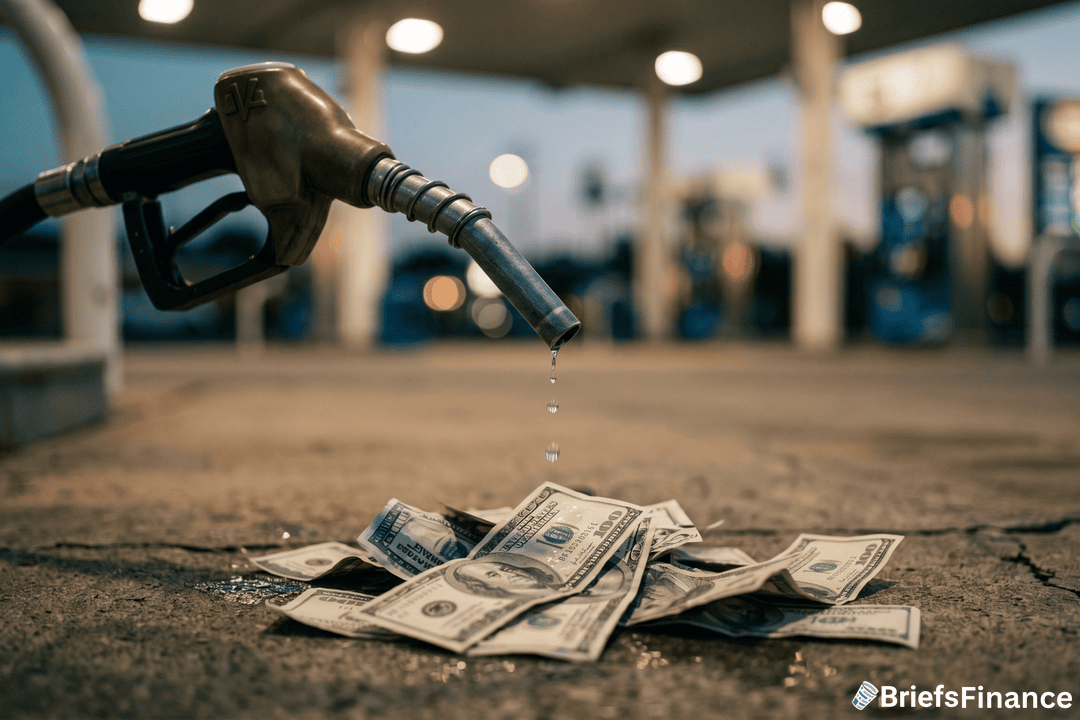
Gas crossed $4 a gallon for the first time since 2022. The jump came after the Iran war shut down the Strait of Hormuz.

That conflict sent Brent crude above $120 a barrel in early April. But the pump price only tells half the story.

Behind it sits a record interest bill. That bill limits what the government can do about rising costs.

March Prices Report

March CPI hit 3.3% from a year ago, the highest since May 2024. That gain came from a 0.9% rise in just one month.

The monthly move was the biggest in four years. Gas drove most of it, climbing 21.2% in a single month.

That jump - the biggest since 1967 - made up three-fourths of the total rise. The Iran war kicked off on February 28, and March was the first full month of fighting.

The cause: That conflict sent energy costs up 10.9%. The hit cut real wages by 0.6%, since paychecks could not keep up.

Core prices - which strip out food and energy - rose just 2.6%. That gap shows the war is pushing costs up through energy, not the wider economy.

But the longer it runs, the more likely that spread becomes. Economists are using the word "stagflation" again as a result.

The term means slow growth and rising prices at the same time. That same mix hit the U.S. in the 1970s.

The parallel is getting harder to ignore with each new data point.

Interest Payments Top $88 Billion a Month

The number: The U.S. now spends $88 billion a month on interest. That's as much as it spends on defense and schools put together.

Interest is the second-biggest item in the budget, behind only Social Security. The first half of this fiscal year came to $529 billion - up about 7% from a year ago.

That total is nearly three times the $345 billion paid in 2020. About $10 trillion in old debt rolls over this year at higher rates.

Each bond that comes due gets swapped well above the old rate. The average on all that debt has hit 3.4% - the highest since 2010.

At that level, every point higher adds about $100 billion a year. The full-year tab is on track to hit $1 trillion for the first time.

Every dollar going to that bill can't go to roads, schools, or defense. The tab was just $375 billion in 2019.

In seven years it has nearly tripled. That pace shows no sign of slowing down.

What to Watch

The Fed held rates at 3.5% to 3.75% at its last meeting. Most forecasts still call for one cut this year.

But if the Strait stays shut and gas keeps rising, the Fed faces a bind. It has to pick between fighting prices and backing a government deep in debt.

That choice is harder now than in the 1970s. Back then, debt sat at 35% of GDP.

Today it sits above 120%, with far less room to take the blow. The gap between then and now is the size of the debt.

Disclosure

Get Market Briefs delivered to your inbox every morning for free!

No fluff. No noise. No politics. Just finance news you can read in 5 minutes.

Blogs

June 15, 2026
Top Covered Call ETFs: How to Compare Them
  • Top covered call ETFs are income funds that own stocks and sell call options against them to generate steady cash.
  • The best one for you is the fund whose income, holdings, and fees fit your goals, not simply the one with the flashiest yield.
  • They all share one trade-off: more income today, less upside in a big rally.
Read More
June 15, 2026
What Are Stock Options? A Plain-English Guide
  • Stock options are contracts that give you the right, but not the obligation, to buy or sell a stock at a set price by a set date.
  • There are two kinds: calls (the right to buy) and puts (the right to sell).
  • Options can multiply gains or wipe out your money fast, so they suit investors who already know the basics.
Read More
June 15, 2026
EBITDA Margin: What It Is and How to Calculate It
  • EBITDA margin measures how much core profit a company keeps from each dollar of sales, before interest, taxes, and accounting deductions.
  • The formula is EBITDA divided by revenue, shown as a percent.
  • A higher, steadier EBITDA margin usually signals a more efficient, more durable business.
Read More
June 15, 2026
What Is Taxable Income? A Simple Guide for Investors
  • Taxable income is the portion of your money the government can tax after deductions are applied.
  • Not all income is taxed the same: job income, investment income, and passive income face different rates.
  • Investors and business owners get more tools to legally lower their taxable income, which is a big edge over time.
Read More
June 15, 2026
What Is a Covered Call? How the Strategy Works
  • A covered call is an options strategy where you own a stock and sell someone the right to buy it from you at a higher price.
  • You collect cash, called the premium, up front, and keep it no matter what happens.
  • The trade-off: if the stock soars, your shares get sold at the set price and you miss the extra upside.
Read More
June 15, 2026
What Is Gross Margin? A Simple Guide for Investors
  • Gross margin is the share of each sales dollar a company keeps after paying the direct cost of whatever it sold.
  • The formula is simple: revenue minus cost of goods sold, divided by revenue, shown as a percent.
  • A steady or rising gross margin points to pricing power, and it is one of the first things smart investors check.
Read More
June 15, 2026
What Is a Dividend? A Plain-English Guide for Investors
  • A dividend is a cash payment a company sends you just for owning its stock, usually every three months.
  • Dividends are one of two ways stocks pay you, the other being the share price going up.
  • Dividends are never guaranteed, so the strength of the business behind the payment matters more than the size of the payment.
Read More
May 30, 2026
Financial Literacy Books That Actually Build Wealth
  • The best financial literacy books don't just teach budgeting, they shift how you think about money.
  • Two classics stand out: The Intelligent Investor for valuing investments, and Rich Dad Poor Dad for the owner's mindset.
  • Reading is only step one. The real wealth comes from acting on what you learn.
Read More
May 30, 2026
What Is a Roth Conversion? A Simple Guide
  • A Roth conversion moves money from a traditional retirement account into a Roth account.
  • You pay taxes on the money now, in exchange for tax-free growth and withdrawals later.
  • It can pay off if you expect higher taxes or more income in the future, but the timing and tax hit matter a lot.
Read More
May 30, 2026
Trailing Stop Loss: How to Protect Your Gains
  • A trailing stop loss is an order that automatically sells a stock if it falls a set percentage from its recent high.
  • As the stock rises, the sell point rises with it, locking in gains while capping losses.
  • It's most useful for active strategies like momentum investing, not for long-term buy-and-hold.
Read More
1 2 3 22
Share via
Copy link










