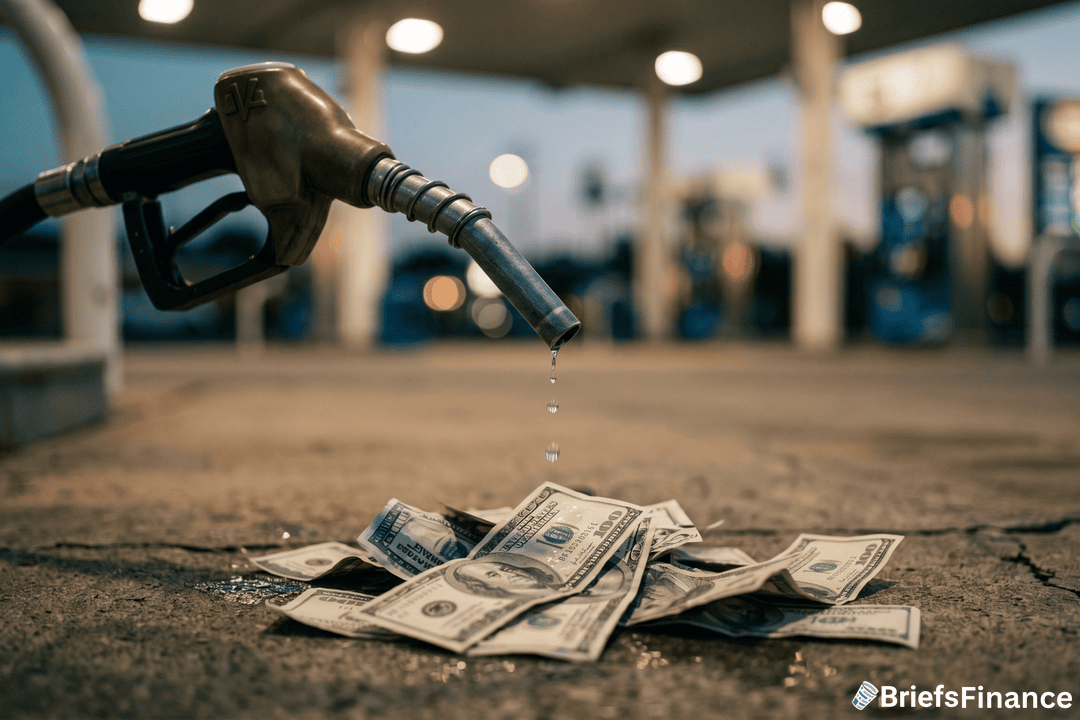
Gas crossed $4 a gallon for the first time since 2022. The jump came after the Iran war shut down the Strait of Hormuz.
That conflict sent Brent crude above $120 a barrel in early April. But the pump price only tells half the story.
Behind it sits a record interest bill. That bill limits what the government can do about rising costs.
March Prices Report
March CPI hit 3.3% from a year ago, the highest since May 2024. That gain came from a 0.9% rise in just one month.
The monthly move was the biggest in four years. Gas drove most of it, climbing 21.2% in a single month.
That jump - the biggest since 1967 - made up three-fourths of the total rise. The Iran war kicked off on February 28, and March was the first full month of fighting.
The cause: That conflict sent energy costs up 10.9%. The hit cut real wages by 0.6%, since paychecks could not keep up.
Core prices - which strip out food and energy - rose just 2.6%. That gap shows the war is pushing costs up through energy, not the wider economy.
But the longer it runs, the more likely that spread becomes. Economists are using the word "stagflation" again as a result.
The term means slow growth and rising prices at the same time. That same mix hit the U.S. in the 1970s.
The parallel is getting harder to ignore with each new data point.
Interest Payments Top $88 Billion a Month
The number: The U.S. now spends $88 billion a month on interest. That's as much as it spends on defense and schools put together.
Interest is the second-biggest item in the budget, behind only Social Security. The first half of this fiscal year came to $529 billion - up about 7% from a year ago.
That total is nearly three times the $345 billion paid in 2020. About $10 trillion in old debt rolls over this year at higher rates.
Each bond that comes due gets swapped well above the old rate. The average on all that debt has hit 3.4% - the highest since 2010.
At that level, every point higher adds about $100 billion a year. The full-year tab is on track to hit $1 trillion for the first time.
Every dollar going to that bill can't go to roads, schools, or defense. The tab was just $375 billion in 2019.
In seven years it has nearly tripled. That pace shows no sign of slowing down.
What to Watch
The Fed held rates at 3.5% to 3.75% at its last meeting. Most forecasts still call for one cut this year.
But if the Strait stays shut and gas keeps rising, the Fed faces a bind. It has to pick between fighting prices and backing a government deep in debt.
That choice is harder now than in the 1970s. Back then, debt sat at 35% of GDP.
Today it sits above 120%, with far less room to take the blow. The gap between then and now is the size of the debt.