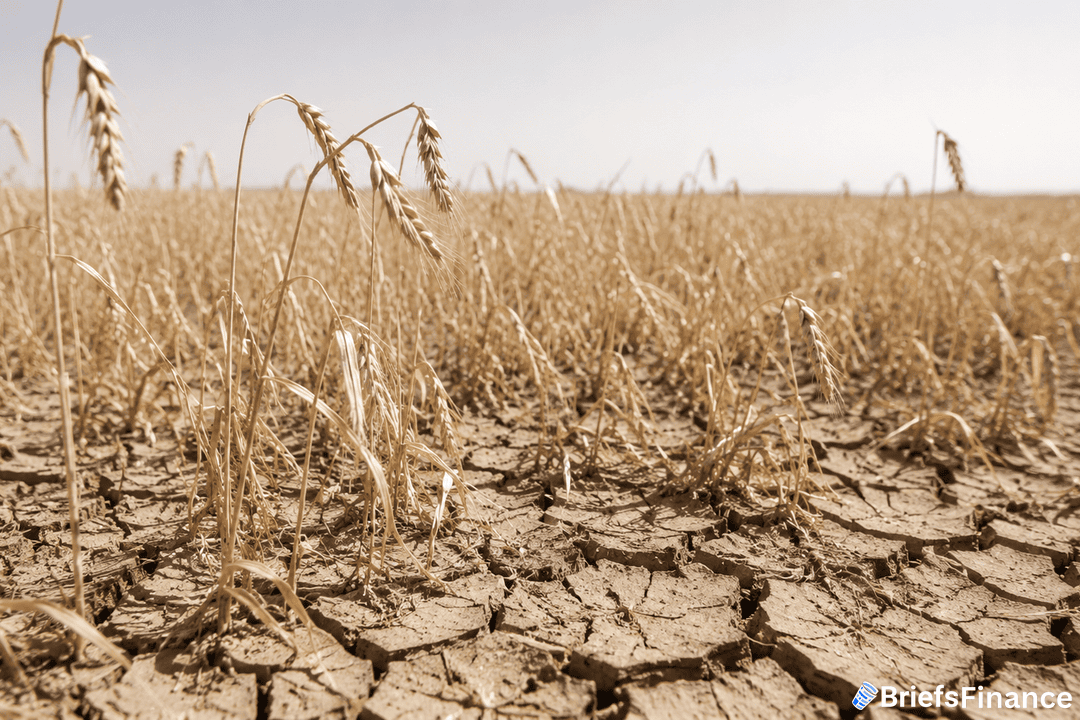
The part of the world that talks the most about climate change may feel it first. The place it shows up? The grocery store.
A new forecast has a clear warning. Europe is more open to weather-driven food costs than any other rich economy.
The Number That Matters
A research firm named Oxford Economics ran the math. It looked at what wild weather does to food prices.
The finding is stark. A bad weather shock could push euro-area food prices up by as much as 1.6 points a year.
Food is a big part of what people buy. So that jump spreads. The same shock could add up to 0.6 points to the region's total inflation.
Now stack Europe up against the rest of the G7. That's the group of seven large rich economies. Europe takes the hardest hit of them all.
Inflation in one corner of the world shapes where investors put money everywhere else. Market Briefs connects those dots every morning in five minutes, plus a free investing masterclass when you join.
Why Europe Is More Open To It
Weather does not care about borders. But grocery bills do.
Europe leans more on crops and farm goods. And bad weather hits those goods head-on. When a harvest fails, prices climb. It works like a tax no one voted for. It just shows up on the receipt.
Food prices also make up a big share of the local shopping cart. So that climb shows up faster in the numbers.
Where The Pressure Comes From
It is not just heat. Higher energy costs feed into food too.
It takes fuel to grow, ship, and store food. The war involving Iran has pushed fuel costs up. So the bill at the farm goes up as well.
Put the two together and Europe gets squeezed from both sides. Bad weather on one side. Pricey energy on the other.
Not every country feels it the same way. The ones that import the most food feel it first.
Food costs in Europe are expected to keep building through 2026. Some forecasters think the squeeze gets worse in 2027.
The Heat Is Not Slowing
This is not a one-off worry. Forecasters see a 75% chance of a hotter world from 2026 to 2030. They expect the heat to run more than 1.5 degrees above old levels.
Hotter years bring more wild weather. And wild weather wrecks crops. That turns climate into a money story. It becomes a line that moves prices.
Banks watch prices closely when they set rates. So a warmer world quietly lands on a policy desk.
What To Watch
Food costs are the kind of price pressure a central bank can't fix by moving rates.
That makes Europe's grocery bill a headache for rate-setters, not just for shoppers.
Join 350,000+ readers of Market Briefs for the daily money story in plain English, and a 45-minute investing course comes right along with it.