Pro Login

Companies Are Hoarding Bitcoin Like Gold - And It's Changing Everything

A stylized illustration of a cylindrical cup with blue arrows and lines indicating a swirling or rotational motion inside the cup.
Briefs Finance
Published Oct 21, 2025
Share:
Summary:
  • Nearly a quarter of CFOs now plan to add cryptocurrency to their company treasuries within two years, with large companies (over $10 billion in revenue) leading the way at 40% adoption
  • Businesses now hold over 6% of all Bitcoin that exists - a massive 21-fold increase since January 2020 - and they're buying it faster than miners can create new coins
  • Countries like El Salvador and Brazil are adding Bitcoin to their national reserves, treating it like a modern alternative to gold that can't be manipulated by governments

What Happened?

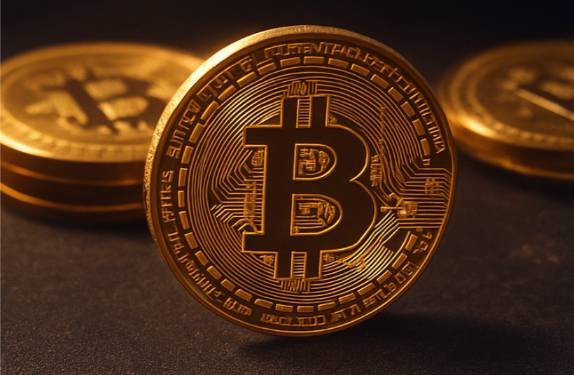
Corporate America is buying Bitcoin - a lot of it. Companies now collectively hold 1.02 million Bitcoin (worth over $100 billion), representing 6.2% of the total supply that will ever exist.

Here's how fast this is happening: Businesses bought an average of 1,755 Bitcoin every single day in 2025. That's more than Bitcoin miners are producing, which means corporate demand is actually outpacing the creation of new supply.

This isn't just tech startups or crypto companies anymore. A Deloitte survey found that 23% of Chief Financial Officers plan to add cryptocurrency to their corporate treasuries within the next two years. For the biggest companies (those with over $10 billion in revenue), that number jumps to 40%.

Even whole countries are getting in on it. El Salvador holds 5,944 Bitcoin worth $560 million, and Brazil is proposing to put up to 5% of its national reserves into Bitcoin. U.S. policymakers have even discussed creating a "Strategic National Bitcoin Stockpile."

Why This Matters

Companies are treating Bitcoin less like a speculative bet and more like digital gold. Just as corporations hold treasury bonds or gold reserves, they're now adding Bitcoin to their balance sheets as a long-term strategic asset.

Why the shift? A few big reasons. First, inflation keeps eating away at cash sitting in bank accounts. Bitcoin's supply is capped at 21 million coins - no government can print more of it, unlike dollars or euros. For CFOs worried about their cash losing value, that fixed supply is attractive.

Second, Bitcoin has gotten more legitimate. Spot Bitcoin ETFs approved in 2024 have pulled in over $50 billion, making it easier for institutional investors to get exposure. The infrastructure has improved too - upgrades like the Lightning Network make Bitcoin more practical for actual business use, from cross-border payments to supply chain tracking.

Third, regulatory clarity is finally emerging. After years of uncertainty, new rules governing crypto (like the 2024 GENIUS Act for stablecoins and 2025 ETF approvals) have given companies more confidence they won't get blindsided by sudden regulatory changes.

Some experts think this is just the beginning. Stelian Balta of HyperChain Capital predicts Bitcoin could actually surpass gold as the world's leading store of value within a decade, potentially hitting $1 million per coin.

The Bottom Line

Corporate and institutional adoption is fundamentally changing Bitcoin's role in the financial system. It's moving from the fringes into mainstream finance as a legitimate reserve asset.

For everyday investors, this matters because institutional buying creates sustained demand that could support higher prices over time. When companies and countries treat Bitcoin like a strategic reserve rather than a short-term trade, it reduces some of the wild volatility the market is known for.

The challenges? About 43% of CFOs still worry about Bitcoin's price swings, and 42% cite accounting headaches as reasons to stay away. But as more major players adopt it, those concerns tend to ease - creating what could become a self-reinforcing cycle of legitimacy and demand.

The big takeaway: Bitcoin isn't just for crypto enthusiasts anymore. It's becoming part of how corporations and even governments think about storing value in an era of inflation and economic uncertainty.

Disclosure

Get Market Briefs delivered to your inbox every morning for free!

Market briefs opt-in (#63)
No fluff. No noise. No politics. Just finance news you can read in 5 minutes.

Blogs

April 10, 2026
Micron Stock: The AI Memory Play Most Investors Are Missing
  • Micron (MU) is the only U.S. company that makes HBM chips - the short-term memory layer that AI systems need to run.
  • By early 2026, data centers were using about 70% of all memory chips made in the world, creating an 18-month backlog for new orders.
  • Micron's DRAM - or short-term memory chip - revenue jumped 69% year over year, and the company shifted away from consumer products to focus almost entirely on AI.
Read More
April 10, 2026
What Is Working Capital? A Simple Guide for Investors
  • Working capital is current assets minus current liabilities - it shows if a business can pay its short-term bills.
  • You find it on a company's balance sheet inside its 10-K report.
  • Changes in working capital show up on the cash flow statement and affect how much cash a business really makes.
Read More
April 9, 2026
What Is a Meme Stock? A Simple Guide for New Investors

You've probably heard the term "meme stock" thrown around on […]

Read More
April 9, 2026
Enterprise Value Formula: What It Is and How to Calculate It
  • Enterprise value (EV) shows what a company is really worth - debt and cash included - not just its stock price
  • The enterprise value formula is: Market Cap + Total Debt - Cash and Cash Equivalents
  • Investors use EV with metrics like EBITDA to compare stocks more fairly than market cap alone
Read More
April 8, 2026
Return on Equity: What It Is and How to Use It
  • Return on equity (ROE) measures how much profit a company earns for every dollar of shareholder equity
  • The formula is simple: net income divided by shareholder equity
  • A higher ROE can signal a company that is good at turning investor money into profit - but it is not the full picture
Read More
April 4, 2026
Personal Finance Books That Actually Teach You to Build Wealth

Most investors grow up hearing the same financial advice. Study […]

Read More
April 4, 2026
How to Reduce Taxable Income: 6 Strategies Investors Actually Use

The tax code in the United States is over 2,000 […]

Read More
April 4, 2026
What Is a High-Yield Savings Account - and Is It Worth It?

Most banks pay you almost nothing to hold your money. […]

Read More
April 3, 2026
Best Stocks to Buy Now: A Smarter Way to Think About It

Most investors start their journey the same way. They Google […]

Read More
April 3, 2026
How to Avoid Capital Gains Tax: 7 Legal Strategies Every Investor Should Know

Warren Buffett earned $704 million in dividends in 2021. His […]

Read More
1 2 3 16
Share via
Copy link









