Free NewsletterPro Login

Apple's Foldable iPhone Just Showed Up In Its iOS 27 Code

Published Jun 11, 2026
Share:
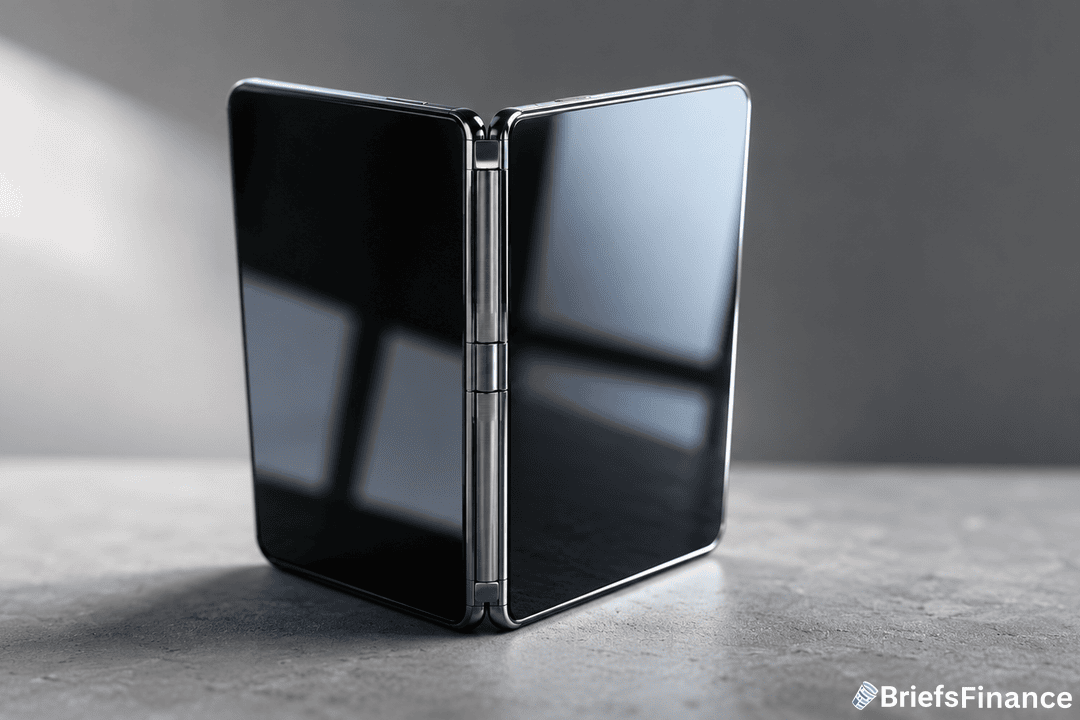
A modern foldable smartphone stands partially open on a gray surface, reflecting window light. The device has a sleek design with a visible hinge in the center. The BriefsFinance logo appears in the image corner.
Summary:
  • A developer found code in Apple's iOS 27 beta that can tell when a phone is folded.
  • The clues point to Apple's first folding iPhone arriving with its new phones this fall.
  • Apple's iPhone Air is just 5.6mm thick, which could make a folded version slimmer than most Samsung foldables.

Apple has never sold a folding phone. But its software just started acting like one is coming.

The clue wasn't a leaked photo. It came from Apple's own code.

The Clues Are In Apple's iOS 27 Code

Someone digging through Apple's new beta software found something strange. There were settings that fit no iPhone on sale today.

One of them is called "foldState." Others read the screen's angle as it opens.

Buried in that iOS 27 code were clues no flat phone would need. The software can tell if a phone is folded shut, and how far it bends.

It can even tell if the phone is using one screen or two. A normal iPhone never has to ask.

The code also points to a hinge that can stop at any angle. Samsung's folding phones work that same way.

Apple made iOS 27 the star of its WWDC keynote on Monday. Most of that show was about its AI plans.

The folding clues were a quieter surprise inside the software. If a folding phone runs iOS 27, the timing fits Apple's fall launch.

We turn signals like a hidden line of code into what it means for your money every morning in Market Briefs - five minutes a day, plus a free investing masterclass when you sign up.

Apple Is Five Years Late, And Thinness Is Its Edge

Samsung and Huawei have sold folding phones for over five years. Huawei is banned in the U.S., so most Americans know Samsung best.

That long head start raises the bar. Apple's first fold has to beat what's already in stores.

Here's where Apple may have set itself up. Last year it launched the iPhone Air.

The Air is just 5.6mm thick. That's about as thick as four dimes stacked.

Fold two of those screens together and you get near 11.2mm. That would beat every Samsung fold but the new Galaxy Z Fold7.

Samsung keeps slimming its folds every year. Apple wants to leap past them on its very first try.

Why Investors Care

A new iPhone shape is a big deal for Apple's business. It's not just a job for the design team.

Phone makers sell the most when buyers get a fresh reason to upgrade. A new shape is exactly that reason.

The code even hints the phone could run two apps side by side. That only works on a bigger, folding screen.

Apple is one of the most widely owned stocks in the world. So any new product cycle grabs attention.

The iPhone is still Apple's best-selling product. A fresh shape could spark its biggest upgrade wave in years.

What To Watch

Apple hasn't confirmed any of this. A line of code is a strong hint, not a promise.

The real answer comes this fall, when Apple shows new phones. Its iOS 27 software is already out as a developer beta.

A version for everyone else is due in the months ahead. If a fold shows up then, this code called it first.

Want this kind of read on Apple and the rest of the market before the crowd catches on? Join 350,000+ investors getting Market Briefs - it's free, and a 45-minute investing course comes with it.

Disclosure

Get Market Briefs delivered to your inbox every morning for free!

No fluff. No noise. No politics. Just finance news you can read in 5 minutes.

Blogs

May 30, 2026
Financial Literacy Books That Actually Build Wealth
  • The best financial literacy books don't just teach budgeting, they shift how you think about money.
  • Two classics stand out: The Intelligent Investor for valuing investments, and Rich Dad Poor Dad for the owner's mindset.
  • Reading is only step one. The real wealth comes from acting on what you learn.
Read More
May 30, 2026
What Is a Roth Conversion? A Simple Guide
  • A Roth conversion moves money from a traditional retirement account into a Roth account.
  • You pay taxes on the money now, in exchange for tax-free growth and withdrawals later.
  • It can pay off if you expect higher taxes or more income in the future, but the timing and tax hit matter a lot.
Read More
May 30, 2026
Trailing Stop Loss: How to Protect Your Gains
  • A trailing stop loss is an order that automatically sells a stock if it falls a set percentage from its recent high.
  • As the stock rises, the sell point rises with it, locking in gains while capping losses.
  • It's most useful for active strategies like momentum investing, not for long-term buy-and-hold.
Read More
May 30, 2026
5 Types of Wealth: Why Money Is Only One of Them
  • Real wealth is more than a bank balance. It spans your finances, health, mind, purpose, and freedom.
  • Money is powerful, but it amplifies the life you already have rather than fixing a broken one.
  • True financial wealth means your cash flow covers your expenses, so your money works while you live.
Read More
May 30, 2026
How to Invest in Private Equity: A Beginner's Guide
  • Private equity means investing in companies that aren't listed on the stock market.
  • Traditional private equity is built for experienced, high-net-worth investors with large amounts to invest.
  • New rules have opened more accessible paths, like startup crowdfunding and real estate deals, often starting around $100.
Read More
May 30, 2026
What Is a Call Option? A Simple Guide With Examples
  • A call option gives you the right to buy a stock at a set price by a set date.
  • Investors buy calls when they expect a stock to rise, using less money than buying the shares outright.
  • The most you can lose buying a call is the premium, but time works against you, so it's an advanced tool.
Read More
May 30, 2026
EBITDA Formula: How to Calculate It Step by Step
  • EBITDA stands for Earnings Before Interest, Taxes, Depreciation, and Amortization, a measure of a company's core profit.
  • The formula adds those four items back to net income to show what the underlying business earns.
  • Investors use EBITDA to compare companies and to judge how many times earnings a stock is selling for.
Read More
May 30, 2026
What Is a Stock Option? A Plain-English Guide
  • A stock option is a contract giving you the right, but not the obligation, to buy or sell a stock at a set price by a set date.
  • There are two types: calls (the right to buy) and puts (the right to sell).
  • Options are powerful but risky, so they suit investors who already have the basics down.
Read More
May 30, 2026
Put Option: What It Is and How It Works
  • A put option gives you the right to sell a stock at a set price by a set date.
  • Investors use puts to bet a stock will fall, or as insurance to protect shares they own.
  • The most you can lose buying a put is the premium you paid, which makes it a defined-risk tool.
Read More
May 30, 2026
Operating Margin: What It Is and How to Calculate It
  • Operating margin shows how much profit a company keeps from its core business after paying its running costs.
  • The formula is operating income divided by revenue, shown as a percent.
  • A strong, steady operating margin signals a well-run business that controls its costs.
Read More
1 2 3 22
Share via
Copy link










