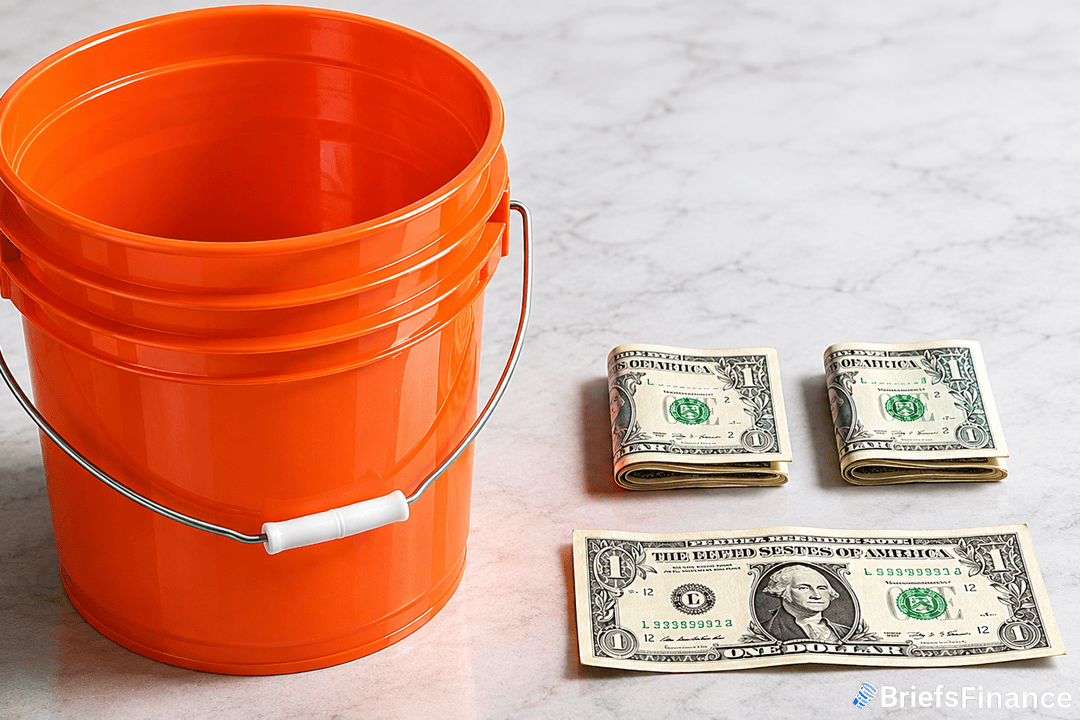
Card A has $1,200 on it at 19%, and Card B has $4,800 at 27%. You have $300 a month to pay both, and after the minimums, you have to decide which card gets the rest.
Pay the higher rate first, and you save about $177 in interest. Pay the smaller balance first, and you pay off your first card 16 months sooner.
Those two choices are called the debt avalanche and the debt snowball. This guide runs both on these exact two cards, month by month, then helps you pick.
It covers the order only, and the full plan to pay off credit card debt covers the rest. For a breakdown on the investing side, join our free investor livestream on November 17, where CEO Jaspreet Singh shows how to use ChatGPT and Claude to research stocks like a pro.
What the debt snowball method is
The snowball gets you a paid-off card sooner, lining up your cards from smallest balance to largest and ignoring the interest rates. You pay the minimum on every card and put all your extra money on the smallest balance.
When that card is paid off, its whole payment moves to the next smallest, so each payment gets bigger as you go. Seeing the first card hit $0 quickly is why people pick it.
The same order works for small buy now, pay later balances too.
What the debt avalanche method is
The avalanche usually costs less in interest, lining up your cards from highest interest rate to lowest. The interest rate here is the APR, or annual percentage rate, which is the yearly cost of carrying a balance.
You pay the minimum on every card and put all your extra money on the highest-rate card. Because the most expensive debt gets paid off first, you usually pay less interest overall.
Debt snowball vs avalanche on two cards
Back to Card A and Card B, with $300 a month going to both cards in total. The avalanche saves about $177 in interest, and the snowball pays off its first card 16 months sooner.
| Card | Balance | APR | Minimum payment |
|---|---|---|---|
| Card A | $1,200 | 19% | $35 |
| Card B | $4,800 | 27% | $120 |
The snowball pays down Card A first, because it has the smaller balance. The avalanche pays down Card B first, because it has the higher rate.
| Month | Snowball: Card A | Snowball: Card B | Avalanche: Card A | Avalanche: Card B |
|---|---|---|---|---|
| 6 | about $195 | about $4,724 | about $1,100 | about $3,803 |
| 8 | $0 | about $4,534 | about $1,065 | about $3,441 |
| 12 | $0 | about $3,715 | about $990 | about $2,664 |
| 18 | $0 | about $2,342 | about $870 | about $1,363 |
| 24 | $0 | about $772 | about $613 | $0 |
| 27 | $0 | $0 | $0 | $0 |
| Result | Snowball | Avalanche |
|---|---|---|
| First card paid off | Card A, month 8 | Card B, month 24 |
| Both cards paid off | Month 27 | Month 27 |
| Total interest | about $2,005 | about $1,828 |
Both finish in month 27 here, with different total interest and different final payments. That won't always happen, so your own cards may finish in different months.
The rates and minimums are examples, not averages. The minimums stay the same to keep the math simple, even though real minimums usually change with the balance and each card company uses its own formula.
Interest is counted monthly as the APR divided by 12, with no new charges or fees, and a paid-off card's payment moves to the other card. Check your own numbers with any snowball vs avalanche calculator before you pick.
Where the $300 a month comes from
The extra $300 a month comes from your budget. The 75/15/10 split Briefs teaches puts at most 75% of your pay toward lifestyle, at least 15% toward investing and at least 10% toward savings, and the guide on how to build a budget shows where to cut inside that 75%.
In the Climb to Wealth class example, one call to negotiate your bills takes a $100 bill down to $75. Canceling a few subscriptions you forgot about adds more.
If you're living paycheck to paycheck or rising prices are making your budget tight, $300 a month may not be possible yet. Both methods work with whatever extra amount you have.
Which debt payoff method fits you
The snowball fits you if:
- You need to see a card hit $0 to stay motivated.
- Your cards have similar rates, so the order barely changes the cost.
- You've started payoff plans before and given up halfway.
The avalanche fits you if:
- You'll stick with it even if the first payoff takes a year or more.
- You want to pay the least interest.
- One card's rate is much higher than the others.
The Climb to Wealth class says the best method is the one you'll actually finish. Saving $177 doesn't help if you quit in month nine.
Questions people ask about the snowball and avalanche methods
Does Dave Ramsey recommend the snowball or the avalanche method?
Dave Ramsey is known for the snowball, and SELCO Community Credit Union notes that he popularized it.
Why does Dave Ramsey recommend the snowball method?
The snowball pays off the smallest balance first, so you get a quick win. The Climb to Wealth class makes the same point, that early wins help some people stick with a long plan.
Can I pay off my credit card with the avalanche method?
Yes. It works with any number of cards, and the Card A and Card B example shows how the payments move from the highest rate to the next.
Why the payoff order matters for your money
High interest is a big reason card balances count as bad debt rather than good debt. Every month you're not paying card interest, that money can go to savings or investing instead, which Briefs covers in managing your money.
The Climb to Wealth order is save your first $2,000, pay off credit card debt in the right order, then automate it.
No savings yet? Start with the guide on how to save your first $2,000, and see why the emergency fund comes first.
Once the cards are paid off, the money you were paying can go into a high-yield savings account to build a full emergency fund, and toward investing.
Investing involves risk including loss, and past performance does not indicate future results.
Snowball or avalanche: how to choose
- The snowball pays the smallest balance first and gives you faster wins.
- The avalanche pays the highest rate first and usually costs less interest.
- Either way, pay every minimum and move each finished card's payment to the next.
For every step beyond the order, see the full plan to pay off credit card debt. And once the cards are paid off, join our free investor livestream on November 17 to see how CEO Jaspreet Singh uses ChatGPT and Claude to research stocks.