The AI boom runs on chips and power. It also runs on water.
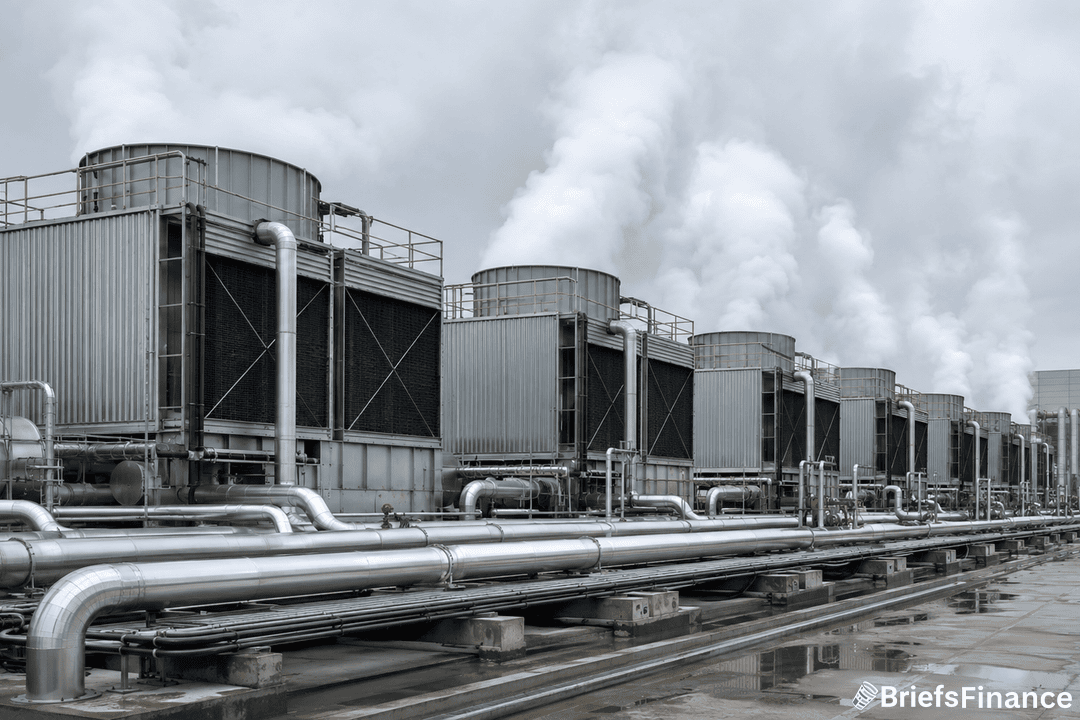
Big data centers get hot. Many of them stay cool by evaporating water, billions of gallons a year.
The numbers are bigger than they sound
A federal lab report found U.S. data centers used about 17 billion gallons of water in 2023, just for cooling. About 84% of that came from the giant "hyperscale" sites.
Those are the centers that run the biggest AI models. The water leaves as steam, so it doesn't flow back into the local supply the way wastewater does.
Google put a number on its own use. It ran through 6.4 billion gallons across its operations in 2023, almost all of it cooling data centers.
The company compared that to keeping about 41 golf courses green for a year. In 2024, it says it replaced 4.5 billion gallons, covering most of the fresh water it used.
We connect the dots between big trends like AI and the assets they quietly depend on, every morning at Market Briefs, and joining gets you a free investing masterclass.
The power bill tells the same story
Data centers used about 4.4% of all U.S. electricity in 2023. That share could reach roughly 7% to 12% by 2028.
In raw terms, their power use hit 176 terawatt-hours in 2023. It was just 58 a decade earlier.
The same report says that load could double or triple by 2028. More power means more heat to shed.
There's a trade-off baked in too. Cooling with less water often burns more power, and saving power often uses more water.
The power plants feeding these centers use water as well. Often they use far more than the cooling itself does.
And the strain is local
More heat usually means more water. So the line on the chart points one way.
That ties the AI trade to the water trade. The buildout everyone is cheering leans on a resource that's already short in much of the country.
Some of that growth will land in dry states like Arizona and Texas. Those are the same places already fighting over water.
Communities have started to push back on new projects. Some now ask for water-use limits before they approve a site.
That's part of why some operators are turning to nuclear power to ease the strain on the grid.
What To Watch
Tech firms are racing to cool their chips with less water. Some have started reporting and even replacing what they use.
The direction is still clear. As AI grows, so does its thirst.
Water and power are now the two limits on how fast AI can spread. Every new data center is also a new water bill.
For investors, water is a quiet part of the AI story. The firms that supply it or save it could matter more over time.
Want the five-minute version of stories like this each morning? Join 350,000+ investors reading Market Briefs and get a free 45-minute investing course when you sign up.