Free NewsletterPro Login

Free Live Investors Workshop

Seats limited

Tue, Sep 29.

The dollar is losing value.

Here’s how investors can still profit.

Hosted By

Jaspreet Singh

Founder, Briefs Finance

X

Warning: Undefined variable $stocks in /var/www/briefs.co/htdocs/wp-content/plugins/oxygen/component-framework/components/classes/code-block.class.php(133) : eval()'d code on line 448

Warning: foreach() argument must be of type array|object, null given in /var/www/briefs.co/htdocs/wp-content/plugins/oxygen/component-framework/components/classes/code-block.class.php(133) : eval()'d code on line 448

Warning: Undefined variable $funds in /var/www/briefs.co/htdocs/wp-content/plugins/oxygen/component-framework/components/classes/code-block.class.php(133) : eval()'d code on line 472

Warning: foreach() argument must be of type array|object, null given in /var/www/briefs.co/htdocs/wp-content/plugins/oxygen/component-framework/components/classes/code-block.class.php(133) : eval()'d code on line 472
/* the link was here */
Home » Deep Briefs »  » Stablecoin Explained: Why Some Cryptocurrencies Actually Aren't Volatile

Stablecoin Explained: Why Some Cryptocurrencies Actually Aren't Volatile

Published: Apr 30, 2026 
Disclosure: Briefs Finance is not a broker-dealer or investment adviser. All content is general information and for educational purposes only, not individualized advice or recommendations to buy or sell any security. Investing involves significant risk, including possible loss of principal, and past performance does not guarantee future results. You are solely responsible for your investment decisions and should consult a licensed financial, legal, or tax professional before acting on any information provided.
Summary:
  • Stablecoins are cryptocurrencies pegged to stable assets like the US dollar, giving crypto-style speed and access without the volatility of Bitcoin or Ethereum.
  • Fiat-backed stablecoins like USDC are the safest option, while algorithmic stablecoins have failed spectacularly and should generally be avoided.
  • Stablecoins fit a portfolio as cash reserves with better yields, a hedge against crypto volatility, and a fast, cheap rail for international transactions.

If you've heard about cryptocurrency, you've probably heard this complaint:

"Bitcoin dropped 20% in a week! Cryptocurrency is too risky!"

That's true for Bitcoin. That's true for Ethereum. But it's not true for stablecoins.

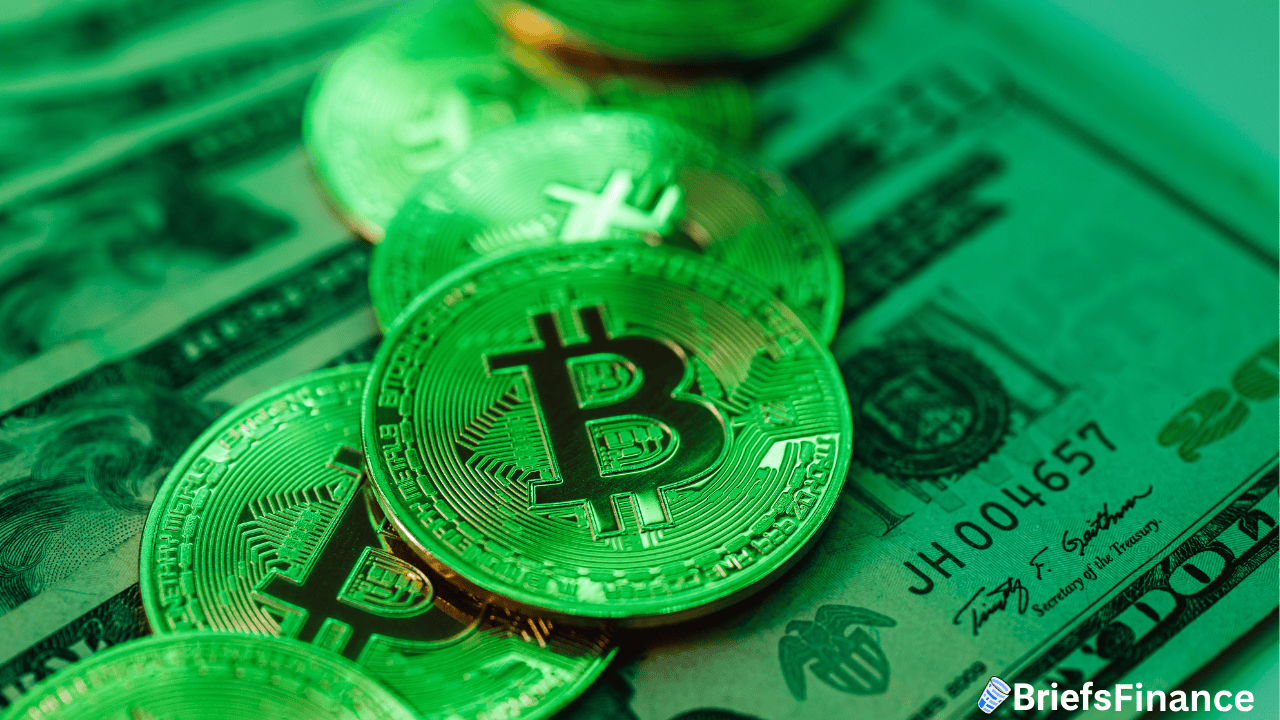
A stablecoin is a cryptocurrency that's designed specifically NOT to be volatile. It's designed to stay at a fixed value.

This might sound boring. But it's actually revolutionary - and important for investors to understand.

Crypto is moving fast - stablecoins, regulation, ETFs, everything. Market Briefs is a free daily newsletter that keeps you up to speed on crypto and the rest of the financial world in a quick morning read. Join 300,000+ readers.

What Is a Stablecoin and How Does It Work?

A stablecoin is a cryptocurrency pegged (attached) to a stable asset, usually the US dollar.

Example:

  • 1 Bitcoin = varies wildly ($30,000 to $60,000+)
  • 1 USDC (a stablecoin) = always approximately $1

The entire design of a stablecoin is: stay at $1. Don't move up. Don't move down.

It does this by being backed by real dollars or dollar-equivalent assets.

How Stablecoin Cryptocurrencies Work (The Basic Version)

Example: USDC

USDC is the most popular stablecoin. Here's how it works:

  1. You give a company (Circle) $1,000 in real money
  2. They give you 1,000 USDC tokens
  3. That $1,000 sits in a bank account, backed by the USDC
  4. If you want to exit, you trade 1,000 USDC back for $1,000 cash

The magic: Circle keeps $1 in reserve for every 1 USDC in circulation.

So USDC stays at $1 (or very close) because it's literally backed by real dollars.

This is radically different from Bitcoin, which has no backing - it's just worth what people will pay for it. Understanding this requires understanding the underlying blockchain technology that powers it.

Different Types of Stablecoin Cryptocurrencies and How They Work

Not all stablecoins work the same way. Understanding the differences matters:

Fiat-backed (Safest):

  • Backed by actual dollars (or euros, etc.)
  • Circle (USDC), Coinbase (USDC), Paxos (USDP)
  • If the company collapses, your money is fine
  • Most trustworthy
  • Most boring

Crypto-backed:

  • Backed by other cryptocurrencies (usually)
  • DAI, MakerDAO
  • If Bitcoin/Ethereum crashes, DAI might not hold $1
  • More complex, more risk
  • Smart contract based

Algorithmic:

  • Backed by... an algorithm (math)
  • Designed to stay at $1 through smart contracts
  • Sounds cool, has failed spectacularly (Terra/Luna)
  • High risk
  • Avoid for now

For a beginner, stick with fiat-backed (USDC, USDT, USDP). They're boring and safe.

Why Stablecoin Technology Exists (And Why It Matters)

This is the important part: why would anyone own a stablecoin?

Reason 1: Speed and Cost

Sending $10,000 internationally:

  • Traditional bank: 3-5 days, $50-200 fee
  • Stablecoin: 10 minutes, $1-5 fee

You send USDC across the world instantly and cheaply. Other person receives USDC. They convert to local currency if they want.

This is revolutionary for international transactions. Countries with weak currencies benefit enormously - similar to how some investors use emerging market exposure to hedge against single-country risk.

Reason 2: Crypto Trading

You're a trader. You want to move money between exchanges quickly.

Old way: Transfer dollars (takes days) New way: Send stablecoins (takes minutes)

You're no longer stuck waiting for bank transfers.

Reason 3: Avoiding Volatility

You believe in Bitcoin but don't want to hold it 24/7.

Bitcoin drops 30% tonight. You move to stablecoins to avoid the crash. Bitcoin recovers, you move back in.

You're using stablecoins as cash within the crypto world.

Reason 4: Yield

You can deposit stablecoins into decentralized finance (DeFi) platforms and earn 4-8% interest.

Better than savings account (0.5%) without the volatility of stocks.

This is the appeal: earn decent returns without crazy risk.

The Big Risk with Stablecoin Investments: Counterparty Risk

Here's the thing about stablecoins backed by dollars: they only work if the company is honest.

What if Circle (USDC) is keeping only $0.80 per $1 USDC in circulation?

What if they're claiming to have the money but they don't?

This actually happened with Terra (the Luna crash). They claimed to have backing. They didn't. Billions lost.

So stablecoins move risk from price volatility (Bitcoin jumping around) to counterparty risk (company is dishonest or incompetent).

USDC is generally considered safe because:

  • Coinbase owns it (regulated, big company)
  • Audited regularly
  • Regulated by FDIC insurance in some cases

But always check: is this stablecoin audited? Who backs it? Do they have the money? It's part of the financial health analysis every investor should do before committing capital.

Stablecoin Allocation Strategy: Where Stablecoins Fit Your Portfolio

Some experts believe alternatives should be a small allocation based on risk tolerance.

Stablecoins are different from Bitcoin/Ethereum because they're not speculative - they're not trying to make you rich. They're trying to be stable.

Where stablecoins fit:

Cash reserve: Instead of dollars in a savings account earning 0.5%, keep stablecoins earning 4-5%.

  • Same safety (stable at $1)
  • Better returns
  • Accessible if opportunity comes

Crypto allocation hedge: You own Bitcoin but want to reduce volatility.

  • Instead of all Bitcoin/Ethereum, 50% crypto + 50% stablecoins
  • Reduces swings without selling crypto
  • Maintains exposure if it shoots up

International utility: You send money internationally frequently.

  • Way cheaper than bank transfers
  • Instant instead of multi-day
  • No exchange rate lockup

Dollar alternative in high-inflation countries: You're in a country with weak currency.

  • USDC stays at $1 regardless of local currency weakness
  • Better preservation of value than local currency

The Stablecoin Reality: Not Boring, But Not Exciting Either

Here's what kills people about stablecoins: they're boring.

Bitcoin goes up 100%, everyone talks about their gains. Stablecoin stays at $1, no one cares.

But boring is the point. Boring is why stablecoins are useful.

You're not trying to get rich on stablecoins. You're trying to:

If you need exciting, buy Bitcoin. If you need functional, use stablecoins.

How to Actually Use Stablecoin Technology (If You Want To)

Step 1: Choose your stablecoin

  • USDC is most reputable and easiest
  • Avoid algorithmic stablecoins (Luna disaster)
  • Stick with top 5 by market cap

Step 2: Buy it

  • On Coinbase, Kraken, or other regulated exchange
  • Exchange $1,000 cash for 1,000 USDC
  • Takes 5 minutes

Step 3: Use it

Step 4: Convert back

  • Whenever you want, trade USDC for dollars
  • Usually instant on regulated exchanges
  • 1,000 USDC = approximately $1,000

It's that simple.

The Stablecoin Regulatory Question: Why It Matters

Governments are debating: should stablecoins be regulated as money? As securities? As something else?

This matters because regulation could:

  • Make stablecoins safer (required audits, insurance)
  • Make stablecoins illegal (government wants control of money supply)
  • Make stablecoins better for business (clear rules)
  • Make stablecoins irrelevant (central bank digital currencies replace them)

The safest stablecoins to use now: USDC, USDT (because they're most regulated and scrutinized).

The ones to be cautious about: new stablecoins promising high yields or backed by unclear assets - the same kind of red flags you'd watch for in meme stocks or other speculative plays.

Stablecoins vs. Central Bank Digital Currencies (CBDCs): The Difference

Governments are building their own digital currencies (CBDCs).

Eventually, you might use digital dollars from the Federal Reserve directly instead of USDC.

But CBDCs might allow governments to:

  • Track every transaction (privacy concerns)
  • Freeze money (political control)
  • Implement negative interest rates (forced spending)

Stablecoins offer an alternative. Decentralized. Harder to control.

This is why some people care about stablecoins: not because they'll make you rich, but because they represent a different way to move money that's outside government control. It's part of the broader shift in how smart money is moving.

Key Takeaway: Boring Can Be Useful

Stablecoins are boring. They're not designed to make you rich.

But they solve real problems:

  • Instant international transactions
  • Better yields than savings accounts
  • Stable crypto trading pair
  • Value preservation in weak-currency countries

In your portfolio, stablecoins fit as:

  • Emergency cash (better than dollars)
  • Yield opportunity (4-8% without volatility)
  • Trading utility (move between exchanges)

Not as a get-rich-quick tool. As a practical utility that happens to be better than traditional alternatives.

Whether it's stablecoins, Bitcoin, or what the Fed did this morning, Market Briefs keeps you in the loop. Free daily newsletter delivering the biggest business and finance stories every morning.

Disclaimer: Stablecoins are still a developing technology. While fiat-backed stablecoins like USDC are generally safe, they carry counterparty risk and are subject to regulation. This content is for educational purposes only and should not be construed as investment advice. Only use stablecoins with money you can afford to lose. Consult with a financial advisor before using any cryptocurrency.



Tag »

More Deep Briefs

An Interest Rate Hike in 2026? The Fed Just Broke Its Own Script

5 Passive Income Ideas That Pay You Whether You Work or Not

The Best Way to Invest 10k: Three Options To Transform 10K into 10 Million

The Tax Write Offs the Rich Are Using in 2026 While the IRS Shrinks

America Is Running Out of Debt Buyers. Treasury Bills Are the Government's Fix

How to Get the Most From Your Guideline 401k

Principal 401k: What to Know About Your Plan

What a Tariff Dividend Means for Your Money

No Tax on Overtime: How Overtime Pay Is Taxed

Reading the Silver Price Forecast for 2026

What to Do When Reddit Stocks Go Viral

Why Is Bitcoin Dropping Right Now?

The Fidelity 500 Index Fund, Made Simple for Beginners

USA Penny Stocks: Risks and Rewards Explained

Finding Cheap Stocks to Buy Now Without Getting Burned

Best Dividend Stocks: A Beginner's Playbook

Roth 401k, Explained for New Investors

How a Roth IRA Calculator Shows Your Future Wealth

Portfolio Diversification: Why Putting All Your Eggs in One Basket Destroys Wealth

Non Taxable Income: What It Is and Why It Matters

Semiconductor Stocks: A Simple Guide for Investors

How Stocks Work: A Simple Guide for Beginners

Stop Loss vs Stop Limit: What's the Difference?

Energy Stocks: A Simple Guide for Investors

What Is a Stop Loss Order? A Simple Guide

Best S&P 500 Index Fund: How to Choose One

What Are Penny Stocks? Risks and Rewards Explained

Best Stocks for Beginners With Little Money

Tech Stocks: A Simple Guide for New Investors

What Is a Joint Stock Company? A Simple Guide

Capital Gains Tax in California: A Simple Guide

Top Covered Call ETFs: How to Compare Them

What Are Stock Options? A Plain-English Guide

EBITDA Margin: What It Is and How to Calculate It

What Is Taxable Income? A Simple Guide for Investors

What Is a Covered Call? How the Strategy Works

What Is Gross Margin? A Simple Guide for Investors

What Is a Dividend? A Plain-English Guide for Investors

Financial Literacy Books That Actually Build Wealth

What Is a Roth Conversion? A Simple Guide

Trailing Stop Loss: How to Protect Your Gains

5 Types of Wealth: Why Money Is Only One of Them

How to Invest in Private Equity: A Beginner's Guide

What Is a Call Option? A Simple Guide With Examples

EBITDA Formula: How to Calculate It Step by Step

What Is a Stock Option? A Plain-English Guide

Put Option: What It Is and How It Works

Operating Margin: What It Is and How to Calculate It

Enterprise Value: What It Is and How to Calculate It

Free Cash Flow: What It Is and Why It Matters

What Is Working Capital? A Simple Guide for Investors

Covered Call: How This Income Strategy Actually Works

Gross Margin: What It Is and How to Calculate It

Backdoor Roth IRA: A Simple Guide for High Earners

Mega Backdoor Roth: A Simple Guide for Big Savers

Dividend Calculator: How to Estimate Your Dividend Income

How to Create Multiple Income Streams: A Beginner's Playbook

The 60/40 Portfolio Explained: A Beginner's Guide

How to Invest in Silver: A Beginner's Guide

Asset Allocation by Age: The Right Portfolio Mix at Every Stage of Life

Stablecoin Explained: Why Some Cryptocurrencies Actually Aren't Volatile

Buy Now, Pay Later Risks: Why This "Easy" Payment Method Is Dangerous to Your Wealth

Dividend Payout Ratio: The Secret Metric That Shows If a Stock Is Safe or Risky

Ethereum for Beginners: What It Is and Why Smart Investors Are Paying Attention

Dollar Cost Averaging Strategy: How to Beat Emotion and Build Wealth Steadily

The BRRRR Strategy: How to Build Real Estate Wealth Without Big Money Down

What Is GDP? A Beginner's Guide to Understanding Economic Growth

What Is Blockchain? A Plain English Guide For Investors

How To Negotiate Bills: The Script That Saves You Hundreds A Year

75 15 10 Rule: The Budget That Builds Wealth On Autopilot

How To Rebalance Portfolio: The Strategy That Forces You To Buy Low And Sell High

How To Buy Treasury Bonds: A Beginner's Guide

Forward Vs Futures Contracts: What's The Real Difference?

Alternative Investments Explained: What They Are And Why They Matter

How To Buy Bitcoin For Beginners: 3 Simple Ways

How To Follow Smart Money: The 5 Market Shifts Framework

Insider Trading Meaning: What It Really Is (And Why Some Of It Is Legal)

Core-Satellite Portfolio: The Best of Both Worlds

Bond Ladder Strategy: The Income Plan With Built-In Flexibility

Silver vs Gold Investing: Which One Belongs in Your Portfolio?

What Is a Dividend Reinvestment Plan? The Wealth Snowball Explained

How Tariffs Affect the Stock Market

What Is a 13F Filing? The Smart Money Tracker

Debt-to-Equity Ratio: The Number That Tells You If a Company Is Drowning

Non-Financial Analysis of Stocks: The 4-Step Method

SEC EDGAR Tutorial: The Free Tool the Pros Use

How to Read a 10-Q (Without Losing Your Mind)

What Is a Put Option? A Simple Guide for Investors

What Is Free Cash Flow? How To Find It & Why It's Important

Non Taxable Income: What It Is and Why Investors Care

Nasdaq Index Fund: A Beginner's Guide to Investing in the Nasdaq 100

What Is Wealth? It's Not What Most People Think

Micron Stock: The AI Memory Play Most Investors Are Missing

What Is Working Capital? What Investors Need To Know

What Is a Meme Stock? A Simple Guide for New Investors

Enterprise Value Formula: What It Is and How to Calculate It

Return on Equity: What It Is and How to Use It

Personal Finance Books That Actually Teach You to Build Wealth

How to Reduce Taxable Income: 6 Strategies Investors Actually Use

What Is a High-Yield Savings Account - and Is It Worth It?

1 2 3

Get Market Briefs delivered to your inbox every morning for free!

No fluff. No noise. No politics. Just finance news you can read in 5 minutes.

Join Free

Blogs

September 11, 2026
How Is the Economy Doing? Washington Says It's Fixed, but the Numbers Don't Agree
  • Treasury Secretary Scott Bessent says the economy is fixed because lower earners' incomes are now rising faster than top earners'.
  • The Atlanta Fed and Bank of America show different numbers, and Hilton, Marriott, and McDonald's can't agree on what they're seeing either.
  • Whichever side is right, the economy is built to make investors rich, and inflation is how it does it.
Read More
September 10, 2026
US National Debt Hits $40 Trillion: Why the Economy Hasn't Collapsed Yet
  • The US national debt crossed $40 trillion in 2026 and is growing faster than the economy. The debt to GDP ratio now sits at 125%, the highest outside the pandemic and higher than World War II.


  • On September 9, 2026, Treasury Secretary Scott Bessent rolled out an emergency plan for the government to lend money to itself. Ray Dalio now says the dollar has roughly three years before real pain.
  • Empires rarely default. They debase. Since 1971, median household income grew about 8x while houses grew 17x and the S&P 500 grew 360x, so investors got richer while workers fell behind.
Read More
September 9, 2026
Your 401k Is Fueling the AI Bubble
  • About $10 trillion of 401k money sits in a $77 trillion stock market, mostly through target date funds and S&P 500 funds. Roughly 30% of every S&P 500 dollar lands in five AI-heavy tech stocks.
  • Four bubble signals run hotter today than before the 2000 crash: top-ten concentration, tech's share of the index, the Buffett Indicator, and how much of the market index funds own.
  • You only lock in an AI bubble loss if you sell. The 2022, 2020, 2008, and 2000 crashes were all buying windows for long-term investors, and the US-China AI race means government money could keep flowing in.
Read More
September 9, 2026
What Is Wealth Preservation? How To Protect Your Money From Anything
  • Wealth preservation is an investing strategy built around keeping the money you've already made instead of chasing growth.
  • It leans on assets that hold steady when markets fall - gold, Treasury bonds, and companies that keep earning through wars, crashes, and pandemics.
  • The tradeoff is real: you give up some upside, and the two key numbers to check are maximum drawdown and correlation to the market.
Read More
September 8, 2026
Why Is Everything So Expensive? Why Prices May Never Come Back Down
  • Official inflation is 3.4% and prices are up 32% since 2020, but rent (41%), gas (47%), car insurance (64%) and ground beef (79%) all outran the 28% median wage.
  • The Federal Reserve targets 2% inflation on purpose. Rising prices push extra dollars to investors and shrink the real cost of a $40 trillion national debt.
  • Investors who simply owned the S&P 500 gained about 150% over the same six years, and the Fed's September 16 decision will show whether it protects the dollar or the economy first.
Read More
September 7, 2026
The U.S. Housing Market Just Flipped: Renting a Home Now Beats Buying One
  • The US is in a buyer's market in 41 of the 50 largest metro areas, but prices sit near record highs and mortgage rates are close to 7%.
  • The same median house costs 27% more than it did in 2021 while the monthly payment costs 90% more, and incomes rose a little more than 10%.
  • A 2008-style crash is not showing up in the data, so the pressure is landing on buyers instead of prices.
Read More
September 4, 2026
An Interest Rate Hike in 2026? The Fed Just Broke Its Own Script
  • The Federal Reserve spent a year signaling cheaper money, and its new chairman just warned that an interest rate hike may be coming instead.
  • The Fed is stuck between high inflation and a weak job market, and fixing one makes the other worse.
  • Higher rates also reprice roughly a third of America's $40 trillion national debt this year, which is why Washington wants cuts so badly.

Read More
September 3, 2026
5 Passive Income Ideas That Pay You Whether You Work or Not
  • School teaches one formula: work, earn, spend. Stop working and the money stops, so the wheel never ends.
  • Five assets pay you without your labor - dividends, rent, interest, royalties, and the things you already own.
  • $80,000 a year of cash flow takes about $1 million invested at 8%, or roughly 20 years of $1,000 a month.
Read More
September 2, 2026
The Best Way to Invest 10k: Three Options To Transform 10K into 10 Million
  • Passive investing in stocks or real estate targets around 10% a year, and time in the market matters more than the price you get in at.
  • Active investing means putting your time in alongside your money, which raises the target to roughly 20% a year and raises the risk of losing it all.
  • Investing in yourself has no ceiling, because a new skill can create a new income that no market return can match.
Read More
September 1, 2026
The Tax Write Offs the Rich Are Using in 2026 While the IRS Shrinks
  • The 2026 tax brackets landed lower than they were headed, and the standard deduction jumped from a planned $8,350 to $16,100 for single filers.
  • New write offs for overtime, tips, seniors and car loan interest are live now, and most of them are written to expire in 2028.
  • About a third of IRS auditors have been fired, and four assets do most of the work for people who want income without a matching tax bill.
Read More
1 2 3 26
Share via
Copy link