Free NewsletterPro Login

Trump Says Iran Wants The Strait Of Hormuz Open. The U.S. Says Not Yet

Published Apr 29, 2026
Share:
Summary:
  • Trump said Iran asked the U.S. to lift its naval blockade so the Strait of Hormuz can reopen.
  • Brent crude is above $111 a barrel and up almost 6% on the week.
  • The UAE just left OPEC, citing an undersupplied market caused by the war.

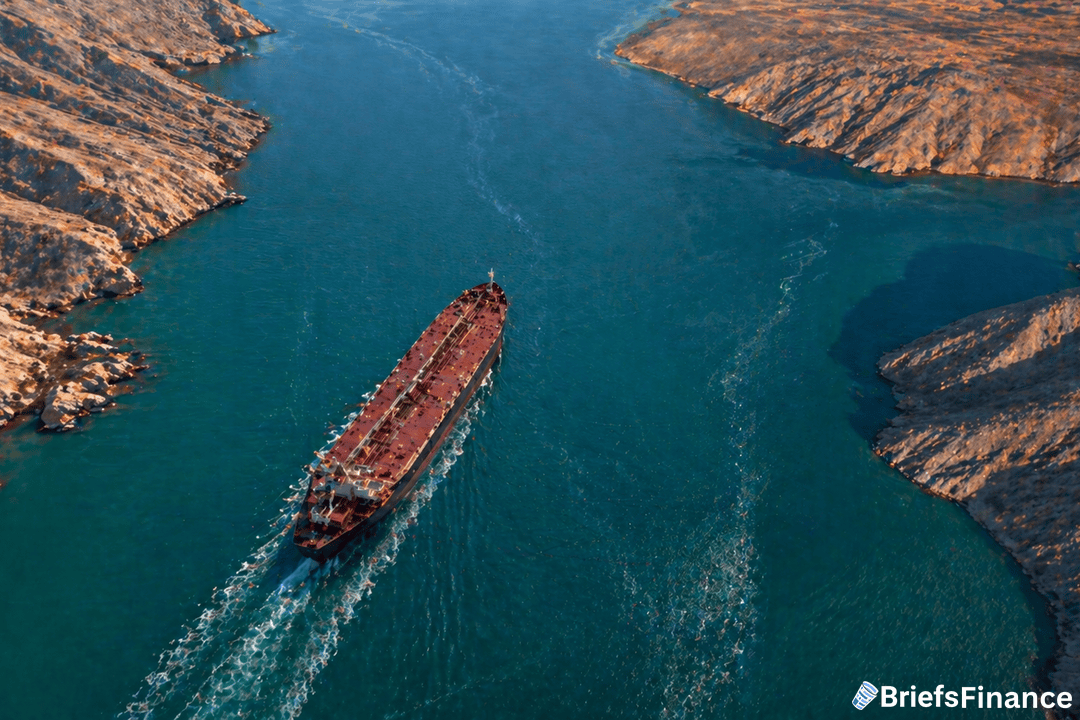
The strait that moves a fifth of the world's oil has been mostly shut for two months, and Iran is now asking the U.S. to back off the blockade so it can reopen.

The U.S. isn't sold yet, and the oil market is reading the standoff as more pain ahead.

What Trump Said

President Trump posted on Truth Social Tuesday that Iran has asked the U.S. to lift its naval blockade of the Strait of Hormuz. Tehran wants the waterway open "as soon as possible, as they try to figure out their leadership situation," Trump wrote.

He added that Iran said it's in a "State of Collapse."

Trump met with his national security team Monday on Iran's proposal, which would reopen Hormuz in exchange for the U.S. lifting its port blockade and pushing nuclear talks off until later. Iran wants to keep partial control over what moves through the strait, which Washington is unlikely to accept.

Trump told advisers he's not satisfied with Iran's offer, the New York Times reported.

The Oil Reaction

Brent crude rose above $111 a barrel Tuesday, with weekly gains pushing close to 6%, as the market priced in a longer-than-expected peace process and an indefinite Hormuz shutdown. The strait normally carries about a fifth of the world's oil and liquefied natural gas, but it's now at a virtual standstill.

The first LNG shipment since the war started, the Mubaraz, finally exited the Persian Gulf and is now passing the southern tip of India, per ship-tracking data.

The OPEC Crack

The UAE chose Tuesday to announce it's leaving OPEC, which is a body blow to the cartel and to Saudi Arabia, which leads it.

"The decision is taken at the right time in our view because it's not going to hugely impact the market: the market is undersupplied," UAE Energy Minister Suhail Al Mazrouei said.

In other words, with Hormuz mostly closed, OPEC's production caps are doing nothing for prices, and the UAE wants to pump more.

Diplomatic Stress

Secretary of State Marco Rubio told Fox News Iran's offer was "better than what we thought they were going to submit," but the White House has "questions about whether the person

submitting it had the authority to submit." That echoes earlier U.S. claims that Iran's leaders are split on negotiation strategy.

German Chancellor Friedrich Merz said the U.S. was being "humiliated" by Iranian leaders. Senator Lindsey Graham, a Trump ally, posted on X that Iran is "playing games."

The April 7 ceasefire is shaky, and hostilities could resume if fresh talks don't get started.

What To Watch

Each day Hormuz stays closed, fuel rationing tightens across Asia and Africa, and the global slowdown risk grows. Oil at $111 is the market's read on whether this gets fixed soon.

Disclosure

Get Market Briefs delivered to your inbox every morning for free!

No fluff. No noise. No politics. Just finance news you can read in 5 minutes.

Blogs

May 30, 2026
Financial Literacy Books That Actually Build Wealth
  • The best financial literacy books don't just teach budgeting, they shift how you think about money.
  • Two classics stand out: The Intelligent Investor for valuing investments, and Rich Dad Poor Dad for the owner's mindset.
  • Reading is only step one. The real wealth comes from acting on what you learn.
Read More
May 30, 2026
What Is a Roth Conversion? A Simple Guide
  • A Roth conversion moves money from a traditional retirement account into a Roth account.
  • You pay taxes on the money now, in exchange for tax-free growth and withdrawals later.
  • It can pay off if you expect higher taxes or more income in the future, but the timing and tax hit matter a lot.
Read More
May 30, 2026
Trailing Stop Loss: How to Protect Your Gains
  • A trailing stop loss is an order that automatically sells a stock if it falls a set percentage from its recent high.
  • As the stock rises, the sell point rises with it, locking in gains while capping losses.
  • It's most useful for active strategies like momentum investing, not for long-term buy-and-hold.
Read More
May 30, 2026
5 Types of Wealth: Why Money Is Only One of Them
  • Real wealth is more than a bank balance. It spans your finances, health, mind, purpose, and freedom.
  • Money is powerful, but it amplifies the life you already have rather than fixing a broken one.
  • True financial wealth means your cash flow covers your expenses, so your money works while you live.
Read More
May 30, 2026
How to Invest in Private Equity: A Beginner's Guide
  • Private equity means investing in companies that aren't listed on the stock market.
  • Traditional private equity is built for experienced, high-net-worth investors with large amounts to invest.
  • New rules have opened more accessible paths, like startup crowdfunding and real estate deals, often starting around $100.
Read More
May 30, 2026
What Is a Call Option? A Simple Guide With Examples
  • A call option gives you the right to buy a stock at a set price by a set date.
  • Investors buy calls when they expect a stock to rise, using less money than buying the shares outright.
  • The most you can lose buying a call is the premium, but time works against you, so it's an advanced tool.
Read More
May 30, 2026
EBITDA Formula: How to Calculate It Step by Step
  • EBITDA stands for Earnings Before Interest, Taxes, Depreciation, and Amortization, a measure of a company's core profit.
  • The formula adds those four items back to net income to show what the underlying business earns.
  • Investors use EBITDA to compare companies and to judge how many times earnings a stock is selling for.
Read More
May 30, 2026
What Is a Stock Option? A Plain-English Guide
  • A stock option is a contract giving you the right, but not the obligation, to buy or sell a stock at a set price by a set date.
  • There are two types: calls (the right to buy) and puts (the right to sell).
  • Options are powerful but risky, so they suit investors who already have the basics down.
Read More
May 30, 2026
Put Option: What It Is and How It Works
  • A put option gives you the right to sell a stock at a set price by a set date.
  • Investors use puts to bet a stock will fall, or as insurance to protect shares they own.
  • The most you can lose buying a put is the premium you paid, which makes it a defined-risk tool.
Read More
May 30, 2026
Operating Margin: What It Is and How to Calculate It
  • Operating margin shows how much profit a company keeps from its core business after paying its running costs.
  • The formula is operating income divided by revenue, shown as a percent.
  • A strong, steady operating margin signals a well-run business that controls its costs.
Read More
1 2 3 22
Share via
Copy link












