Pro Login

Europe's Inflation Was Almost Under Control. Then the War Started.

A stylized illustration of a cylindrical cup with blue arrows and lines indicating a swirling or rotational motion inside the cup.
Briefs Finance
Published Mar 3, 2026
Share:
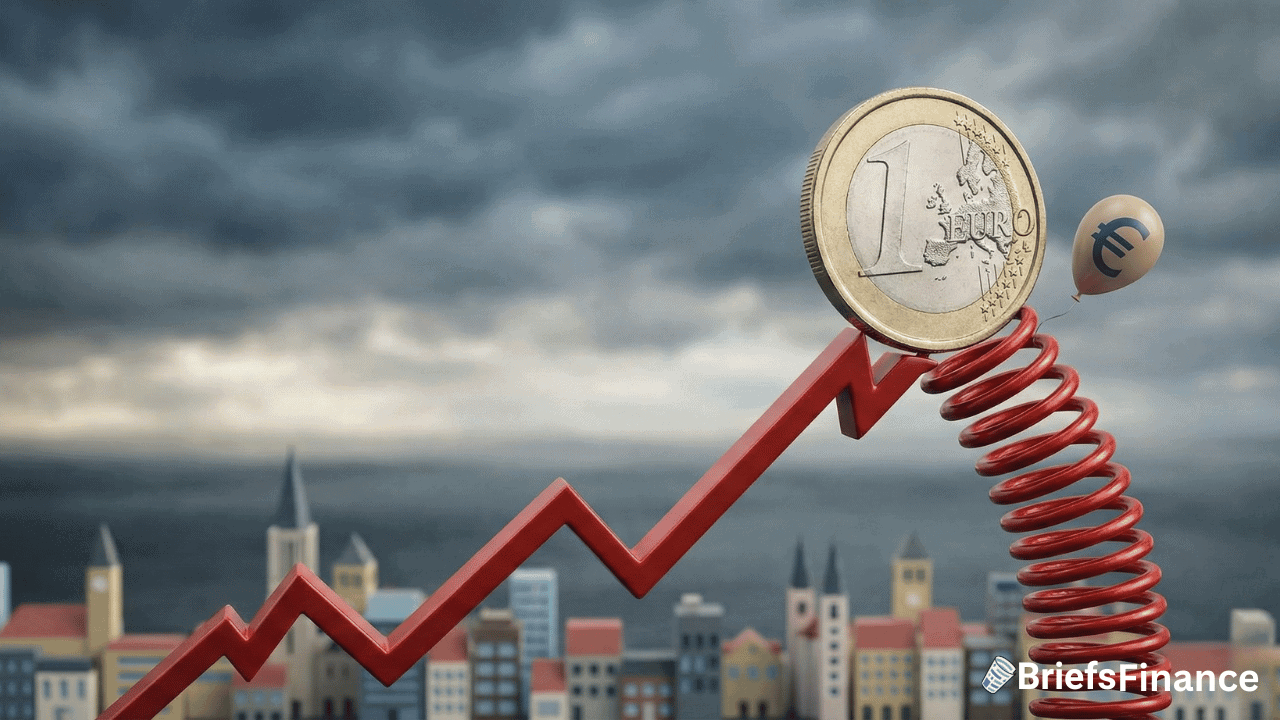
A red upward-trending arrow with a large 1 Euro coin and a compressed spring, set above a cityscape with stormy skies; a floating Euro balloon hints at Europe inflation pressures.
Summary:

  • Eurozone inflation ticked up to 1.9% in February — just before the Iran conflict hit energy markets.
  • Natural gas prices in Europe jumped 50% in two days; the ECB is now caught in a tough spot.
  • The eurozone is the most exposed major economy to an extended Middle East war, analysts warn.

Europe had a clean inflation story heading into March. Then everything changed.

The Data That's Already Outdated

Eurostat's flash estimate showed eurozone inflation rose to 1.9% in February, up from 1.7% in January — an unexpected uptick that already caught economists off guard. Core inflation, which strips out food and energy, climbed to 2.4%. Services inflation ran at 3.4%.

The catch: all of that data was collected before the US and Israel launched strikes on Iran on February 28. The numbers don't capture a single day of the energy shock now unfolding.

Why Europe Has More to Lose

The eurozone is almost entirely dependent on imported oil and gas. That makes it uniquely vulnerable when the Strait of Hormuz — the transit point for 20% of global oil and LNG — gets disrupted.

ING analysts called Europe "the most exposed major economy" to the conflict, noting that in an extended-war scenario, European natural gas prices could spike toward €80–100 per megawatt-hour. European gas prices were already up 50% by Monday. The Euro STOXX 50 fell 3.3% on Tuesday; Germany's DAX dropped to its lowest since December.

The ECB's Impossible Position

ECB Chief Economist Philip Lane told the Financial Times that a prolonged war could push eurozone inflation meaningfully higher while simultaneously weighing on growth — a textbook stagflation setup.

The ECB had been on a rate-cutting path as inflation cooled. Now it faces a scenario where cutting rates feeds inflation, but holding them steady chokes off a fragile recovery.

Europe was almost at the finish line. The timing couldn't be worse.
Disclosure

Get Market Briefs delivered to your inbox every morning for free!

Homepage V1 opt-in (#63)
No fluff. No noise. No politics. Just finance news you can read in 5 minutes.

Blogs

March 2, 2026
General Dynamics Stock (GD): Why Some Investors Are Paying Attention Right Now

For years, the "smart money" in defense went to cyber […]

Read More
March 2, 2026
What Is a Prospectus? The Investor's Simple Guide

If you want to understand what you’re investing in, you […]

Read More
March 1, 2026
Does The Fed Print Money? How The Federal Reserve Works

The Federal Reserve is an independent agency from our government […]

Read More
February 28, 2026
How to Stop Living Paycheck to Paycheck (And Actually Build Wealth)

You know the drill: You got paid Friday. By Wednesday, […]

Read More
February 28, 2026
Investing Mindset: How to Think Like a Real Investor

We live in a capitalist economy - that means the […]

Read More
February 28, 2026
Best Defense Stocks: The Defense Shift Creating New Opportunities

The Old Defense Playbook Is Broken For the last decade, […]

Read More
February 27, 2026
ETN Stock: Why Eaton Could Be A Hidden AI Power Play

Most investors are watching AI stocks and interest rates. But […]

Read More
February 26, 2026
21+ Ways Americans Waste Money - And How To Fix It

Here’s the reality - being financially successful typically has nothing […]

Read More
February 25, 2026
What Is a Stock Split? A Simple Beginner's Guide

Think of a company like a pie. (you can pick […]

Read More
February 25, 2026
Difference Between 10K and 10Q: What Every Investor Needs to Know

Whether you’re a beginner or advanced investor you need to […]

Read More
1 2 3 12
Share via
Copy link










