President Donald Trump said American companies will face a "tremendous tax" for building data centers outside the U.S., adding, "We have a lot of places that want them badly, and they're great places. They have energy, and they have everything."
AI buildouts are vacuuming up electricians, plumbers and other trades, tightening an already short workforce and raising costs and timelines for local construction.
Industry group ABC says construction will need 349,000 net new workers in 2026 to keep pace, and towns like Abilene, Texas are already seeing thousands of arrivals and a surge in RV and temporary housing.
A national push meets a local labor squeeze
Trump's remarks came at the end of a week when major tech stocks sold off, but the more immediate constraint sits on the jobsite. Tech companies say they need huge campuses to train and run foundation models - and those campuses require armies of skilled trades.
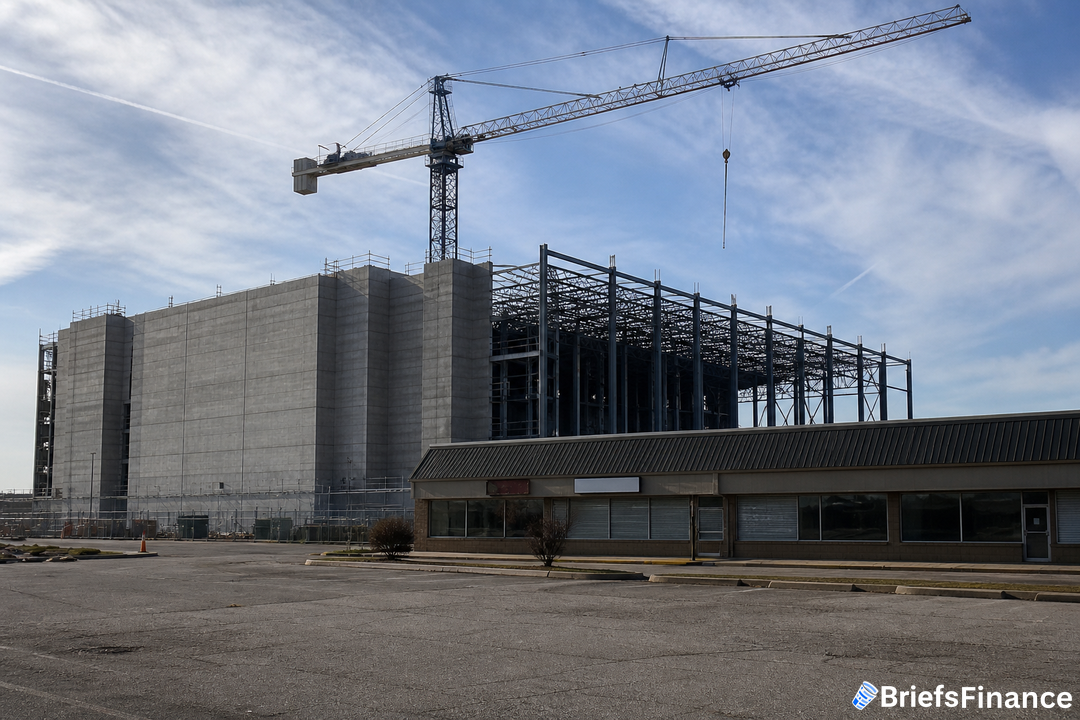
Texas shows the strain in real time. Abilene has seen thousands of workers pour in for massive data center projects, with RV parks and short term housing expanding to fit the influx. On Oct. 13, 2026, an Abilene RV park was housing data center construction crews, a snapshot of how fast the labor market has tilted.
Pay is winning the tug of war
For homebuilder Gene Lantrip, the surge is "a two-edged sword." "The economy of Abilene is great because of the data center," he said, and he is busier than ever building homes for new residents. Yet jobs are taking longer and getting pricier because the hiring pool has thinned.
Master electrician Scotty Wristen, who works with Lantrip, watched some of his electricians peel off to higher paying AI data center gigs. Local commercial electrical firms are feeling it too. "I know of one company that lost 42 guys in one day," he said. "If I was young and didn't have a wife and kids, I would probably do it too, because they pay at least triple what I can pay."
Megaprojects and the talent pipeline
Since 2025, waves of skilled tradespeople have headed to Texas to erect massive data center projects, including the $500 billion Stargate Project for OpenAI, Oracle and Japan's SoftBank. Tech firms are also pulling workers to rural locations such as Richland Parish, Louisiana, where Meta plans its Hyperion data center that will cost over $50 billion. The prairie around Abilene now features mile wide construction zones, with RV parks and mobile homes filling in to house the new blue collar workforce. Companies pitching these campuses as essential for AI are sweetening offers and providing on the job training to speed hiring.
To expand the talent pool, Meta, Google and Amazon have committed millions to training programs that put entrants on data center job sites for paid, hands-on experience. ABC is partnering with Meta on the social network's $115 million American Workforce Academy, described as "a nationwide, unprecedented fast-track to a long-term career in a skilled trade." So far, the effort has "attracted thousands of folks who want to get into construction and learn a trade and to eventually work in data centers," Joel Thames - an ABC vice president responsible for health safety, environment and workforce development - said. Despite those pipelines, ABC projects the sector will require 349,000 net new workers in 2026 simply to keep pace.
When local projects compete for talent, staying informed matters, so sign up for the free Market Briefs newsletter today
Politics is the wild card for buildout timing
What happens after the ribbon cuttings is uncertain, especially as building the next wave could get harder. Following the midterms, voters widely backed limits on data center related projects. In Texas, Democratic Gov.-elect Gina Hinojosa is pushing for a statewide moratorium until rules give residents more say on whether new facilities should be built.
Developers are adjusting. Anita Verma-Lallian, CEO of Arizona Land Consulting, expects tighter rules to accelerate completion of projects already underway. "What's happened in my view, it's just going to make the demand even higher because the supply is going to be so much more constrained," she said. She added there is "going to be some uncertainty" for new Texas proposals and described Arizona as more favorable, noting Democratic incumbent Governor Katie Hobbs is "fairly moderate on data centers." If construction slows in places like Texas, she said the traveling workforce "will go to other states or other projects."
The bottom line: demand for skilled trades is outpacing supply, and data center builders are bidding up wages to secure labor. That can push up costs and stretch schedules for homebuilders and commercial developers, while suppliers tied to power gear, cooling, steel and site services may see steady orders as existing campuses race to finish. Political pushback adds timing risk to new U.S. projects, even as funded sites press ahead in friendlier jurisdictions.
When big construction trends ripple through communities, keep pace with clear context by subscribing to Market Briefs for free daily summaries
Anthropic has gone public at a valuation of about $1.5 trillion, while Amazon went public in 1997 at around $440 million. Anthropic has about $33 billion in revenue this year and no profit, and investors are paying more than 40 times its sales, against about 3 times for Amazon. Briefs Finance CEO Jaspreet Singh says nobody knows what comes next, and that long-term investors use downturns to buy instead of panic selling.
Tech stocks are selling off because investors don't know who will lead Nvidia, the company that has been funding the AI industry and selling it chips.
Inflation has the Federal Reserve planning to raise interest rates, with a hike expected in December, and that puts pressure on homebuyers, private equity and the $40 trillion national debt.
Briefs Finance CEO Jaspreet Singh says nobody has a crystal ball, so his rules are to buy when markets are low, hold long term and invest only what you're willing to lose.
The national debt is above $40 trillion, and the Federal Reserve has gone from sending Washington its profits to losing money.
President Trump's four-part plan leans on shorter-term debt, stablecoin companies buying Treasuries, a bigger balance sheet and government stakes in private companies.
The goal is to outgrow the debt, not pay it off, so Jaspreet Singh points investors to the seven industries where Washington wants growth.
The Fed makes its next rate decision on December 9 and is now talking about jumbo interest rate hikes of 0.5%, though one in December looks unlikely.
Washington will pay a record $1.05 trillion in interest this year on $40 trillion of debt, and that debt resets at higher rates as the Fed hikes.
Jaspreet Singh's five moves are to pay down variable-rate debt, earn interest on your savings, know which stocks feel the pressure, look at value and hedge.
Margin debt, the money investors borrow to buy stocks, is at a record of around 4.6% of GDP, up from 3.9% in 2021.
ETF money has more than tripled in five years to 7% of GDP, while corporate buybacks and 401(k) money sit below their earlier peaks.
Margin calls and panic selling can make the next downturn deeper, so Jaspreet Singh keeps buying broad market funds and says most investors should skip margin debt.
Jensen Huang is out at Nvidia over affairs with multiple people, and the company he founded has been the bank of American AI, with about $30 billion into OpenAI and $10 billion into Anthropic.
A hotter-than-expected inflation report has Fed officials talking about a possible 0.5% hike in December, and gold, silver, and bitcoin fell on the news.
President Trump said the US may not need a deal with Iran, keeping oil prices and inflation risk high. Jaspreet Singh breaks down what it all means for AI stocks and your portfolio.
Stocks are booming at the fastest pace in years, jobless claims just hit a 57-year low, and most investors still feel like nobody is hiring.
The Fed is protecting the dollar over the economy, oil swings on every Iran headline, and a few AI companies are carrying an S&P 500 where four of five stocks sit in a correction.
Jaspreet Singh explains why circular financing between Nvidia, OpenAI, Anthropic, and SpaceX rhymes with 2008's house of cards, and how his three investing pillars handle a stock market bubble.
The Fed has raised rates, cut them, then raised them again only twice in the last 60 years, and both times the economy fell into a recession and stocks crashed.
The same stop-and-go cycle is playing out now, with one big difference: US debt is 125% of GDP today versus about 30% in 1980.
In the 1970s gold rose roughly 24x, real estate 157%, stocks lagged, and cash lost half its value. Jaspreet Singh lays out five assets to consider before the next flip.
The IRS 2027 tax plan keeps the same seven rates but widens every bracket and lifts the married-filing-jointly standard deduction to $33,200.
The 0% long-term capital gains bracket rises to $102,100, so a household living on $135,300 of investment income could owe $0 in federal income tax.
C corporations still pay 21%, small businesses keep the 20% QBI deduction, and the 401(k) limit climbs to $25,500 with an $8,500 catch-up for investors over 50.
Make sure to check your inbox for the first email.
Before you go
We’re hosting our first ever livestream on how investors can use ChatGPT & Claude to invest like a pro. It’s on 11/17 and is hosted by our CEO Jaspreet Singh.