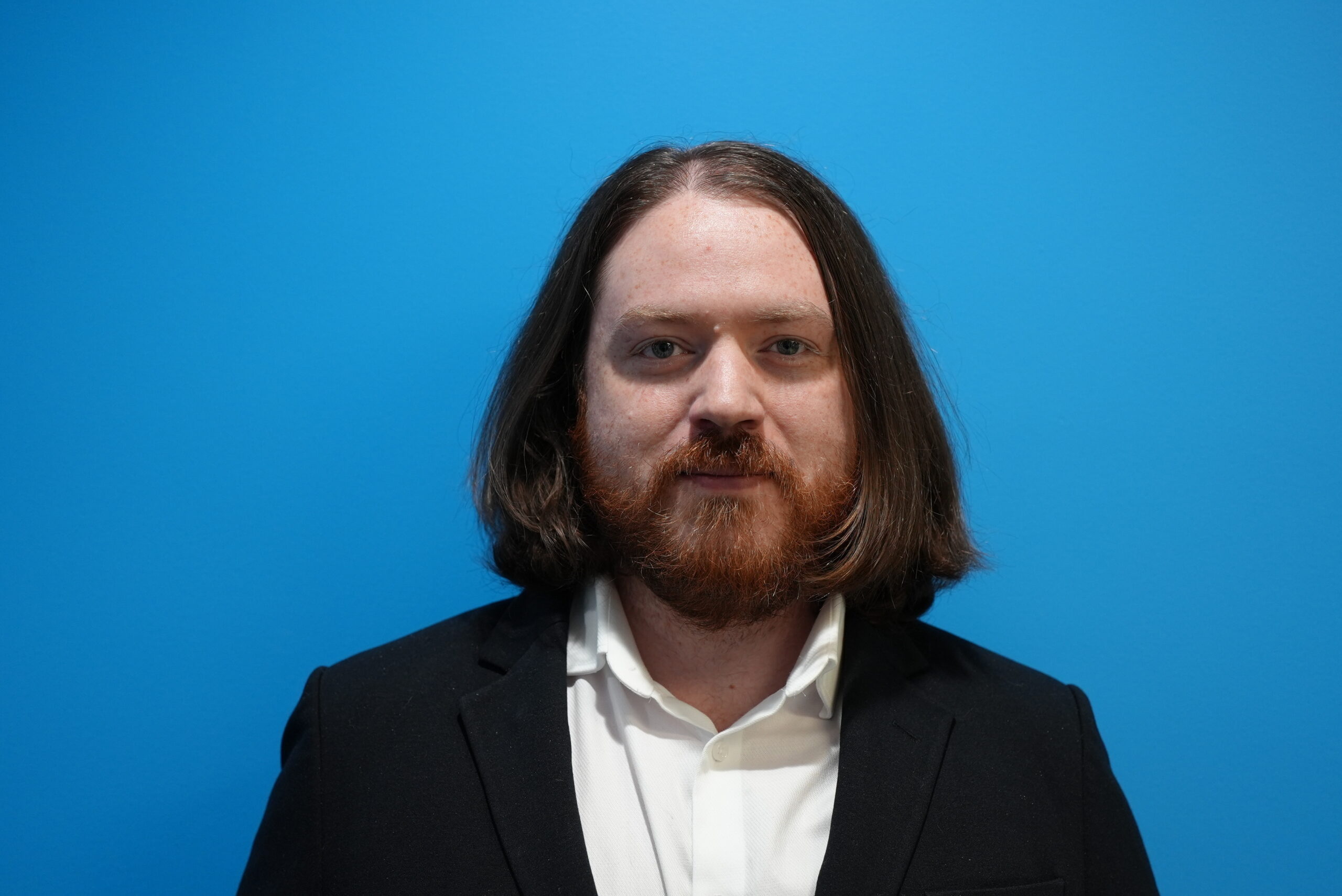
Euro area leaders signaled support for Pablo Hernández de Cos to become the next European Central Bank president.
The appointment still requires consultations with EU lawmakers and the ECB's Governing Council, and neither can veto the choice.
The eight-year term would begin next year, following dealmaking set in motion when Christine Lagarde announced a Feb. 7, 2027 departure.
How the deal came together
European Council leaders have lined up behind Spain's Pablo Hernández de Cos to follow Christine Lagarde at the ECB, capping weeks of bargaining over an eight-year post that demanded a political consensus. The pick now moves to nonbinding consultations with the European Parliament and the ECB's Governing Council, which offer opinions but do not have a blocking vote.
According to Reuters, which cited European diplomatic sources, de Cos emerged as the likely nominee once the Netherlands consented to support Klaas Knot, the sole rival. The broader negotiation also touches other Executive Board roles changing hands in 2027, with Germany's Markus Brunnermeier expected to become chief economist and France's Laurence Boone reportedly in line to run the Markets Portfolio.
Who de Cos is - and why that profile matters
De Cos, 55, is a career central banker who started at the Bank of Spain in the 1990s as a researcher, held several posts, and served as governor from 2018 to June 2024. His tenure as governor ran from 2018 through June 2024. Between 2019 and 2024, he led the Basel Committee on Banking Supervision, and since July 2025 he has served as General Manager at the Basel-based Bank for International Settlements. Both he and Knot were widely viewed as steeped in monetary policy and financial stability, a contrast with early criticism of Lagarde's limited central banking background.
His policy record is pragmatic. Analysts see him as moderately dovish - typically favoring lower rates to support growth - yet flexible. During the energy shock that followed Russia's February 2022 full-scale invasion of Ukraine, he backed sharp hikes, yet earlier had endorsed negative rates and the sizable 2019 stimulus under Mario Draghi.
The balance of power - and why it helped this outcome
The big economies - Germany, France, Italy, Spain and the Netherlands - have been trading influence over who sits on the ECB's six member Executive Board. At Union Investment, Christian Kopf called it a "carefully crafted package deal," with Spain's de Cos taking the presidency, Germany's Brunnermeier slated for chief economist, and France's Boone running market operations, a configuration that balances north and south and is bolstered by Berlin's push to secure the chief economist job.
That split still matters because northern countries are generally seen as more hawkish on inflation while southern ones are viewed as more dovish. John Orchard of OMFIF's Digital Monetary Institute said de Cos, as a "central banker's central banker," had "managed to earn respect from typically hawkish northern observers." Recent outperformance in Portugal, Italy, Spain and Greece has also reshaped perceptions, with tourism, relative political stability, more foreign investment and stronger public finances lifting the south, while Germany has struggled with high industrial costs and a weak autos sector. Orchard added that some believed Lagarde's tenure fostered an "esprit de corps" at the ECB, with the focus on the euro area as a whole, even as debates about national representation repeatedly surfaced and Knot was perceived as the more hawkish option.
When leadership at major institutions shifts, stay informed with our free Market Briefs newsletter that explains it simply
France, fragmentation and the tools de Cos may inherit
If appointed, de Cos would confront a familiar ECB challenge: one policy for 21 economies that do not move in sync. The stress point right now is France. Although politicians are trying to enact a budget aimed at trimming the deficit to roughly 5 percent of GDP, investors have been demanding higher borrowing costs amid concerns about a rising debt to GDP ratio, a large shortfall and a contracting economy. Uncertainty ahead of April's presidential election is weighing on business and rekindling questions about EU cohesion as far right and far left candidates gain ground.
Insiders say the Executive Board's view on what could be done to curb market disorder and the conditions for acting was a key consideration in the leadership talks. Rising French yields and a wider spread over Germany have spurred speculation about whether the ECB might need to use liquidity injections or its never used Transmission Protection Instrument to prevent contagion and support the euro. Any move would likely be contentious unless France accepted strict fiscal conditions similar to those during the sovereign debt crisis, a harder sell if Marine Le Pen, who often clashes with EU institutions, were to win. Ken Egan at KBRA said fragmentation is always an issue for the ECB, but he believes we are "some way from having a serious conversation about ECB intervention." He added, "If anything, sovereign spreads have pulled back a bit and tightened, and some measures of market liquidity have also improved in recent weeks."
What this could mean for your portfolio
Christian Kopf said de Cos has the "strongest technical understanding of monetary policy and central banking," and argued that appointing a career technocrat would signal Europe's commitment to price stability and the euro as a hard currency. He also said we are in a higher inflation environment, with core inflation expected to stay above target through 2029. For positioning in euro assets, watch the inflation path relative to target, the France Germany spread, and any hint that the ECB is preparing contingency tools for stress. Those signals will shape the euro and rate expectations as much as the meetings themselves.
Markets and policy often affect everyday plans, so get concise context each morning from the free Market Briefs
Anthropic has gone public at a valuation of about $1.5 trillion, while Amazon went public in 1997 at around $440 million. Anthropic has about $33 billion in revenue this year and no profit, and investors are paying more than 40 times its sales, against about 3 times for Amazon. Briefs Finance CEO Jaspreet Singh says nobody knows what comes next, and that long-term investors use downturns to buy instead of panic selling.
Tech stocks are selling off because investors don't know who will lead Nvidia, the company that has been funding the AI industry and selling it chips.
Inflation has the Federal Reserve planning to raise interest rates, with a hike expected in December, and that puts pressure on homebuyers, private equity and the $40 trillion national debt.
Briefs Finance CEO Jaspreet Singh says nobody has a crystal ball, so his rules are to buy when markets are low, hold long term and invest only what you're willing to lose.
The national debt is above $40 trillion, and the Federal Reserve has gone from sending Washington its profits to losing money.
President Trump's four-part plan leans on shorter-term debt, stablecoin companies buying Treasuries, a bigger balance sheet and government stakes in private companies.
The goal is to outgrow the debt, not pay it off, so Jaspreet Singh points investors to the seven industries where Washington wants growth.
The Fed makes its next rate decision on December 9 and is now talking about jumbo interest rate hikes of 0.5%, though one in December looks unlikely.
Washington will pay a record $1.05 trillion in interest this year on $40 trillion of debt, and that debt resets at higher rates as the Fed hikes.
Jaspreet Singh's five moves are to pay down variable-rate debt, earn interest on your savings, know which stocks feel the pressure, look at value and hedge.
Margin debt, the money investors borrow to buy stocks, is at a record of around 4.6% of GDP, up from 3.9% in 2021.
ETF money has more than tripled in five years to 7% of GDP, while corporate buybacks and 401(k) money sit below their earlier peaks.
Margin calls and panic selling can make the next downturn deeper, so Jaspreet Singh keeps buying broad market funds and says most investors should skip margin debt.
Jensen Huang is out at Nvidia over affairs with multiple people, and the company he founded has been the bank of American AI, with about $30 billion into OpenAI and $10 billion into Anthropic.
A hotter-than-expected inflation report has Fed officials talking about a possible 0.5% hike in December, and gold, silver, and bitcoin fell on the news.
President Trump said the US may not need a deal with Iran, keeping oil prices and inflation risk high. Jaspreet Singh breaks down what it all means for AI stocks and your portfolio.
Stocks are booming at the fastest pace in years, jobless claims just hit a 57-year low, and most investors still feel like nobody is hiring.
The Fed is protecting the dollar over the economy, oil swings on every Iran headline, and a few AI companies are carrying an S&P 500 where four of five stocks sit in a correction.
Jaspreet Singh explains why circular financing between Nvidia, OpenAI, Anthropic, and SpaceX rhymes with 2008's house of cards, and how his three investing pillars handle a stock market bubble.
The Fed has raised rates, cut them, then raised them again only twice in the last 60 years, and both times the economy fell into a recession and stocks crashed.
The same stop-and-go cycle is playing out now, with one big difference: US debt is 125% of GDP today versus about 30% in 1980.
In the 1970s gold rose roughly 24x, real estate 157%, stocks lagged, and cash lost half its value. Jaspreet Singh lays out five assets to consider before the next flip.
The IRS 2027 tax plan keeps the same seven rates but widens every bracket and lifts the married-filing-jointly standard deduction to $33,200.
The 0% long-term capital gains bracket rises to $102,100, so a household living on $135,300 of investment income could owe $0 in federal income tax.
C corporations still pay 21%, small businesses keep the 20% QBI deduction, and the 401(k) limit climbs to $25,500 with an $8,500 catch-up for investors over 50.
Make sure to check your inbox for the first email.
Before you go
We’re hosting our first ever livestream on how investors can use ChatGPT & Claude to invest like a pro. It’s on 11/17 and is hosted by our CEO Jaspreet Singh.