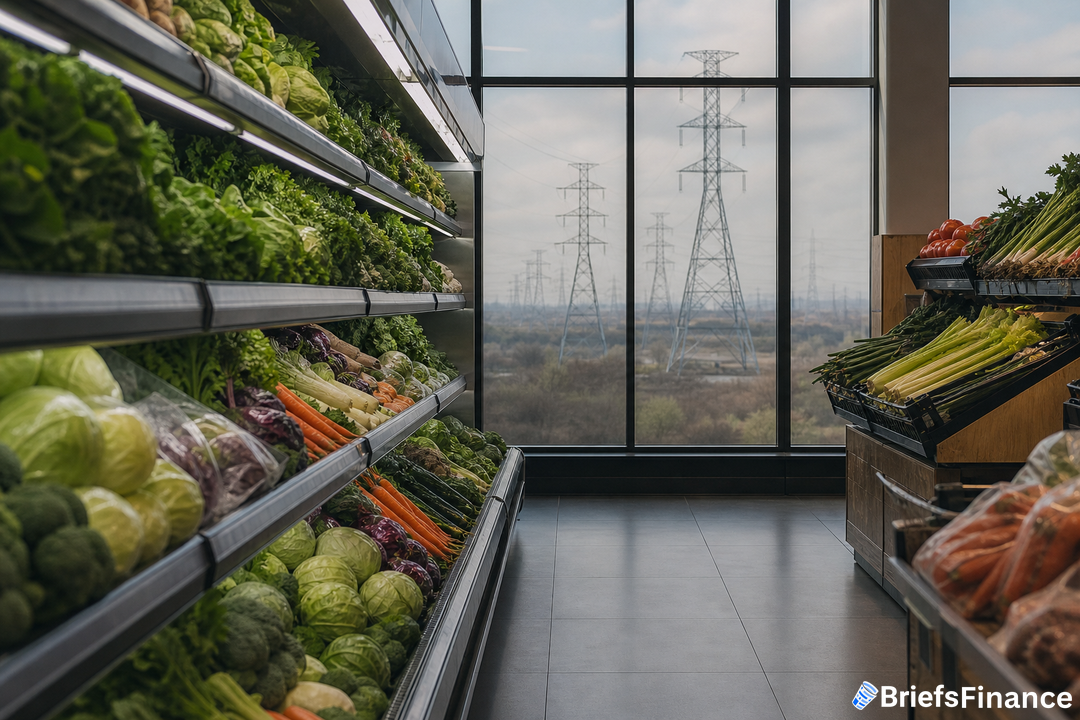
Economists say October's pickup is the start of a broader climb in food inflation.
Bloomberg Price Index year-over-year as of Nov. 23: skirt steak 33.3%, red potatoes 29.9%, Roma tomatoes 27.5%.
AFBF survey: the average cost of a 10-person Thanksgiving meal rose 6% from 2025 to $58.63.
Why food is moving now
Gas relief has arrived, but groceries are catching the delayed effects of earlier energy spikes. Those costs raised diesel for farms, shipping fuel, and plastics for packaging, which are now filtering into store prices after October's move up.
Wholesale signals are pointing the same direction. The producer price index for foods posted its biggest month over month increase since February, and companies from Kraft Heinz to Oatly say they plan to raise prices after holding the line as long as they could. As Oatly Chief Operating Officer Daniel Ordonez put it on Oct. 28, "This latest wave of North America fuel and freight inflation since July has finally outpaced our ability to offset" costs.
The products already feeling it
Fresh items tend to react first, and they are leading the gains. As of Nov. 23, skirt steak is up 33.3% from a year earlier, red potatoes 29.9%, and Roma tomatoes 27.5% in the Bloomberg Price Index. Holiday basics are also climbing, with sweet potatoes and sweet corn both more than 9% higher year over year. Government data show the biggest monthly grocery price rise since April.
Harvest stress adds to the squeeze. Idaho's fall potato crop is down 13% compared with 2025 after reduced planting and a season whipsawed by heat waves and sudden cold, the state's farm bureau says. According to the USDA, output will slip for pears on the West Coast and apples in the Northeast, with Virginia apples down 48% and Pennsylvania's orchards seeing a 58% decline. On the ground, Iowa farmer and trucker Erik Oberbroeckling estimates his diesel costs are about two and a half times last year's. His take: "I would like to think we've seen the peak, but I'd say we could be in for a long hangover period."
Supply forces beyond fuel
A growing super El Niño is reshaping rainfall patterns and threatening key import categories for the US, with cocoa, coffee, and fragrant rice like Thai jasmine among those at risk. Some producers face overlapping shocks from weather and geopolitics. Last month, Del Monte Corp. Chief Executive Officer Mohammad Abu-Ghazaleh warned that selling bananas at persistently low prices is no longer sustainable, and Chiquita Brands International pointed to weather-related supply shortfalls plus higher fuel expenses.
Extreme weather has been a direct hit on fields, too. The hottest summer on record in the contiguous US helped cut yields, and downpours in the Southwest and Southeast recently swamped fields producing tomatoes, corn, citrus, berries, and bell peppers, increasing the odds of patchy losses and shipment delays.
When everyday costs touch our household budgets, sign up for the free Market Briefs newsletter for quick, clear daily context
Policy and input costs are part of the picture. Tariffs are adding to food inflation, particularly on imports such as seafood, said Ricky Volpe of California Polytechnic State University. He added that higher levies are lifting prices for steel, aluminum, paper, cardboard, and plastics, which feed into food costs. Fertilizer prices spiked when the US-Iran war began before later moderating, and although the conflict hasn't seriously disrupted overall global food prices and supplies, timing remains crucial. Farmers absorbed higher nutrient costs at planting; the resulting crops must still go through processing, storage, and conversion into food, and yields may have slipped if growers reduced fertilizer, Volpe said.
The politics and what it could mean for your portfolio
In midterm elections focused on living costs, Democrats regained control of both chambers of Congress and say they will act quickly to undo Republican cuts to food benefits. However, any such push will face limits given that President Donald Trump holds authority over the executive branch and possesses veto power.
For investors, the through line is input costs showing up at checkout and likely sticking around. The American Farm Bureau Federation reports the traditional Thanksgiving dinner rose 6% from 2025 to $58.63. And in the words of RSM US Chief Economist Joe Brusuelas, "We're just starting to get a taste of it," with Americans facing higher food prices through the holidays and a strong chance that the pace accelerates into the first half of 2027. The bottom line: persistent energy pass-through, weather hits, tariffs, and tighter harvests can lift consumer staples prices, pressure household wallets, and reshape margins across the food supply chain.
Staying informed helps you plan for household spending, so try our free Market Briefs in minutes each morning
Anthropic has gone public at a valuation of about $1.5 trillion, while Amazon went public in 1997 at around $440 million. Anthropic has about $33 billion in revenue this year and no profit, and investors are paying more than 40 times its sales, against about 3 times for Amazon. Briefs Finance CEO Jaspreet Singh says nobody knows what comes next, and that long-term investors use downturns to buy instead of panic selling.
Tech stocks are selling off because investors don't know who will lead Nvidia, the company that has been funding the AI industry and selling it chips.
Inflation has the Federal Reserve planning to raise interest rates, with a hike expected in December, and that puts pressure on homebuyers, private equity and the $40 trillion national debt.
Briefs Finance CEO Jaspreet Singh says nobody has a crystal ball, so his rules are to buy when markets are low, hold long term and invest only what you're willing to lose.
The national debt is above $40 trillion, and the Federal Reserve has gone from sending Washington its profits to losing money.
President Trump's four-part plan leans on shorter-term debt, stablecoin companies buying Treasuries, a bigger balance sheet and government stakes in private companies.
The goal is to outgrow the debt, not pay it off, so Jaspreet Singh points investors to the seven industries where Washington wants growth.
The Fed makes its next rate decision on December 9 and is now talking about jumbo interest rate hikes of 0.5%, though one in December looks unlikely.
Washington will pay a record $1.05 trillion in interest this year on $40 trillion of debt, and that debt resets at higher rates as the Fed hikes.
Jaspreet Singh's five moves are to pay down variable-rate debt, earn interest on your savings, know which stocks feel the pressure, look at value and hedge.
Margin debt, the money investors borrow to buy stocks, is at a record of around 4.6% of GDP, up from 3.9% in 2021.
ETF money has more than tripled in five years to 7% of GDP, while corporate buybacks and 401(k) money sit below their earlier peaks.
Margin calls and panic selling can make the next downturn deeper, so Jaspreet Singh keeps buying broad market funds and says most investors should skip margin debt.
Jensen Huang is out at Nvidia over affairs with multiple people, and the company he founded has been the bank of American AI, with about $30 billion into OpenAI and $10 billion into Anthropic.
A hotter-than-expected inflation report has Fed officials talking about a possible 0.5% hike in December, and gold, silver, and bitcoin fell on the news.
President Trump said the US may not need a deal with Iran, keeping oil prices and inflation risk high. Jaspreet Singh breaks down what it all means for AI stocks and your portfolio.
Stocks are booming at the fastest pace in years, jobless claims just hit a 57-year low, and most investors still feel like nobody is hiring.
The Fed is protecting the dollar over the economy, oil swings on every Iran headline, and a few AI companies are carrying an S&P 500 where four of five stocks sit in a correction.
Jaspreet Singh explains why circular financing between Nvidia, OpenAI, Anthropic, and SpaceX rhymes with 2008's house of cards, and how his three investing pillars handle a stock market bubble.
The Fed has raised rates, cut them, then raised them again only twice in the last 60 years, and both times the economy fell into a recession and stocks crashed.
The same stop-and-go cycle is playing out now, with one big difference: US debt is 125% of GDP today versus about 30% in 1980.
In the 1970s gold rose roughly 24x, real estate 157%, stocks lagged, and cash lost half its value. Jaspreet Singh lays out five assets to consider before the next flip.
The IRS 2027 tax plan keeps the same seven rates but widens every bracket and lifts the married-filing-jointly standard deduction to $33,200.
The 0% long-term capital gains bracket rises to $102,100, so a household living on $135,300 of investment income could owe $0 in federal income tax.
C corporations still pay 21%, small businesses keep the 20% QBI deduction, and the 401(k) limit climbs to $25,500 with an $8,500 catch-up for investors over 50.
Make sure to check your inbox for the first email.
Before you go
We’re hosting our first ever livestream on how investors can use ChatGPT & Claude to invest like a pro. It’s on 11/17 and is hosted by our CEO Jaspreet Singh.