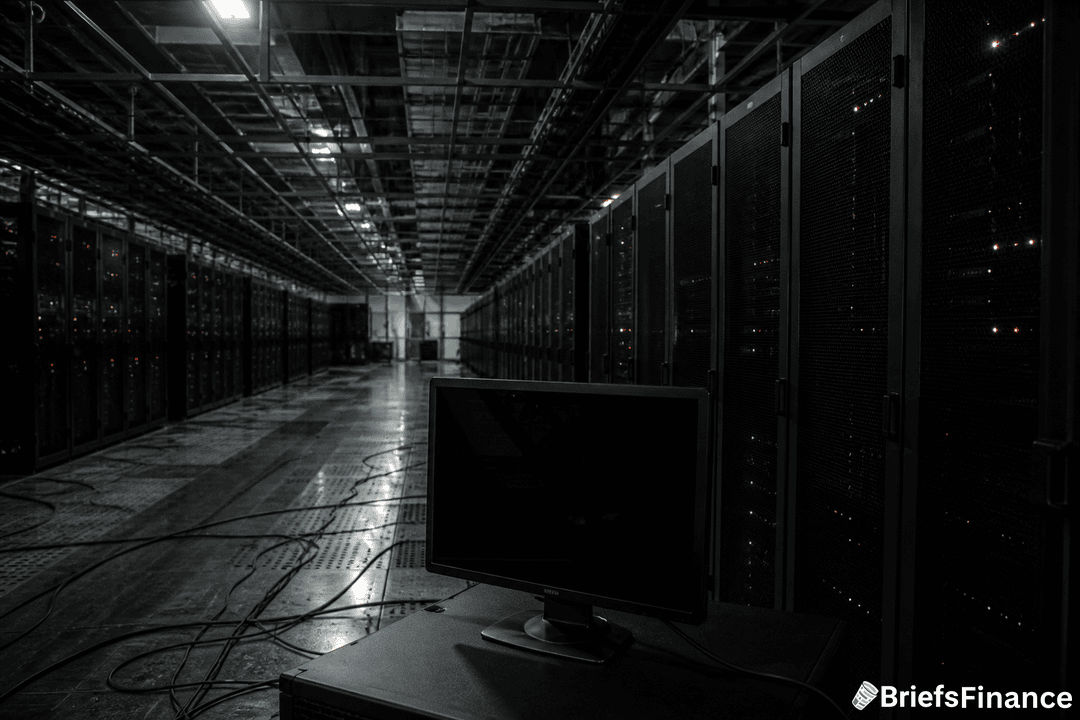
What broke, where, and why
The disruptions kicked off Nov. 11 and reached across tech and transport. Microsoft said an unusually long outage stemmed from a bug that triggered a system failure during a standard reroute of user traffic.
A separate failure snarled travel. US officials said air traffic suffered its worst weekend in decades after a contractor's attempt at an Arkansas outpost to swap old cabling went awry. The fallout: a router overwhelmed other equipment on the air traffic control network. United Airlines also delayed some flights due to equipment issues tied to aging infrastructure.
Government networks felt it too. Electronic communications among NSA staff halted when a classified network failed, and Director of National Intelligence Jay Clayton tied the outage to an update meant to fix a PHP-language vulnerability.
Financial and consumer services were not spared. JP Morgan Chase said on Nov. 16 that transactions were delayed because a defect in its on-premises hardware stack surfaced, emphasizing it was not a cybersecurity incident. Apple was forced to restore portions of its internal staff applications, store workflows, and customer-facing services after an internal update misfired.
Separate incidents, same backdrop of aging tech
Security voices and officials pushed back on the idea of a coordinated strike. Joe Slowik, who heads threat research and cyber engineering at Dataminr, said, "There is no evidence that they are linked whatsoever," "Or that any of these events have been malicious in nature. So my first argument is for caution." Secretary of State Marco Rubio called the events "all separate and distinct" and added, "We are not under systemic attack." Homeland Security Secretary Markwayne Mullin delivered a similar message, saying a cyberattack was not to blame.
Some outages drew extra attention because they landed close together. As Bill Woodcock of Packet Clearing House put it, such clusters can appear when "one gets the public's attention and people start seeing them everywhere."
In uncertain times it's helpful to stay informed about how markets and risks connect, so sign up for free Market Briefs
A key through-line is the strain of updating old systems. The group responsible for PHP said in October it had uncovered two critical flaws that had lingered for roughly a decade, discovered when researchers used AI models to sweep for bugs. After the disclosure, banks, airlines and governments temporarily took websites offline to patch systems before attackers could move in. That episode foreshadowed the recent wave and what may follow.
AI is speeding up bug discovery, but fixes lag
AI is compressing the timeline for finding software holes. Models from Anthropic, OpenAI, Alphabet's Google and others are helping uncover record numbers of flaws in hours rather than weeks. The US National Vulnerabilities Database said AI models were on pace to identify twice as many cyber weaknesses in 2026 as in 2025.
The bottleneck is remediation. At Noma Security, Chris Hughes, the vice president of security strategy, flagged a "human bottleneck" in fixing what AI finds. Following PHP's October disclosures, experts forecast that rolling out upgrades across impacted organizations would take months.
Slowik added, "People have to do more in less time, with fewer resources than a few years ago and that leads to errors," and, "Teams are moving too fast and dealing with too many issues simultaneously." Democratic US Senator Mark Warner, who is the Senate Select Committee on Intelligence's vice chairman, said the unprecedented speed at which new tech exposes vulnerabilities is straining systems not built for that pace. Expect more incidents as AI adoption spreads, said Raj Rajarajan, who leads the Institute for Cybersecurity at City St. George's, University of London. Risk also jumps during the immediate days and subsequent weeks following a serious vulnerability's disclosure, as hurried patches can bring new issues.
The investor angle
In plain English: discovery is accelerating while repairs remain manual and slow. That mismatch is pushing more failures into view across travel, banking and big tech, and it is happening as organizations replace aging parts of critical infrastructure. Consumers already reacted with panic buying of emergency supplies, a reminder that operational hiccups can spill over into behavior and demand.
The bottom line: more glitches can mean more service interruptions and operational costs for companies you own, while vendors of security, observability and modernization tools may see steadier demand as patch queues grow.
With complex stories crossing finance and security, get a clear daily recap by subscribing to the free Market Briefs newsletter