What a week. Jensen Huang, the CEO of Nvidia, is out of the company because of his affairs with multiple people, and some investors are treating it as a family matter.
It isn't, because Nvidia is the largest company on Earth and it has been the defining financier of artificial intelligence in the United States. With Huang gone, the whole financing structure behind American AI is at risk.
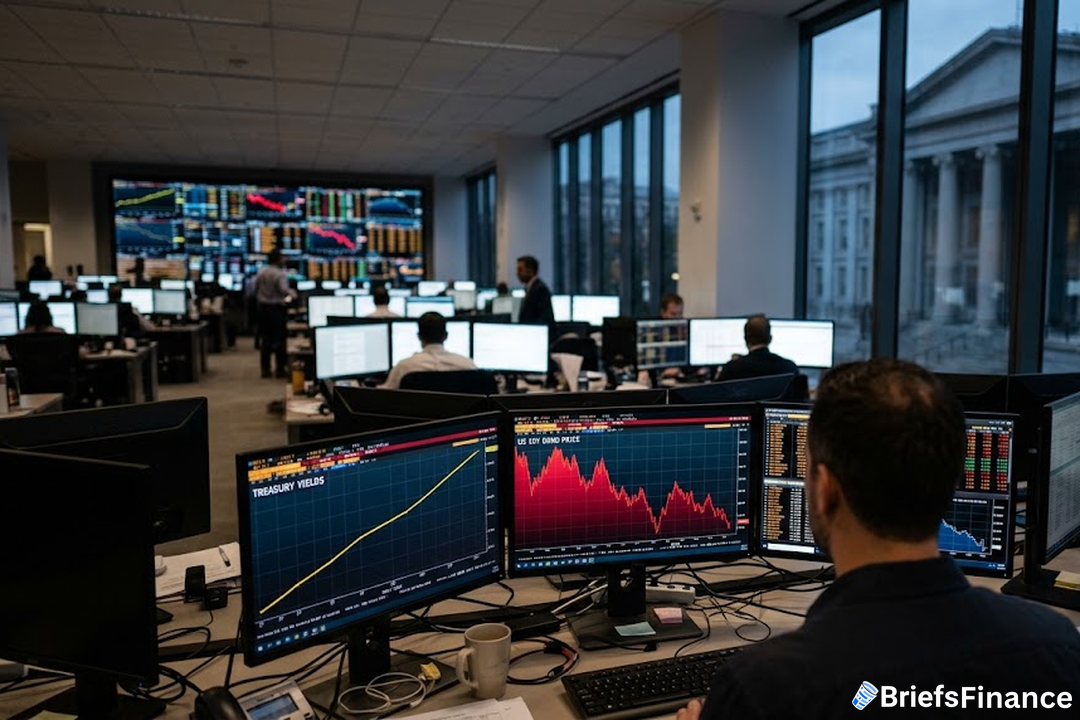
That wasn't the only shock: a new inflation report came in a lot hotter than expected, so the Fed may have to raise rates more aggressively before the year ends. Gold and bitcoin crashed on the news.
Then President Trump posted on Truth Social that maybe the US doesn't need a deal with Iran. Earlier in the week he'd said a deal was close, which had pulled oil prices back down to earth, and now the inflation worry is back.
Briefs Finance CEO Jaspreet Singh's read is that there's a lot of emotion and uncertainty out there, and emotion is the enemy of profits. The job is to cut through the noise and put money where it's moving, not where it was.
Investing has risks, you will lose money at some point, and nobody should take a stranger's word on a stock. Jaspreet's shortcut for the research is AI, and he's showing how he and his analysts use ChatGPT and Claude to research stocks the right way in a free livestream on November 17.
The Biggest Nvidia News Isn't the Scandal. It's the Lending.
Nvidia isn't just a chip company. It's a bank.
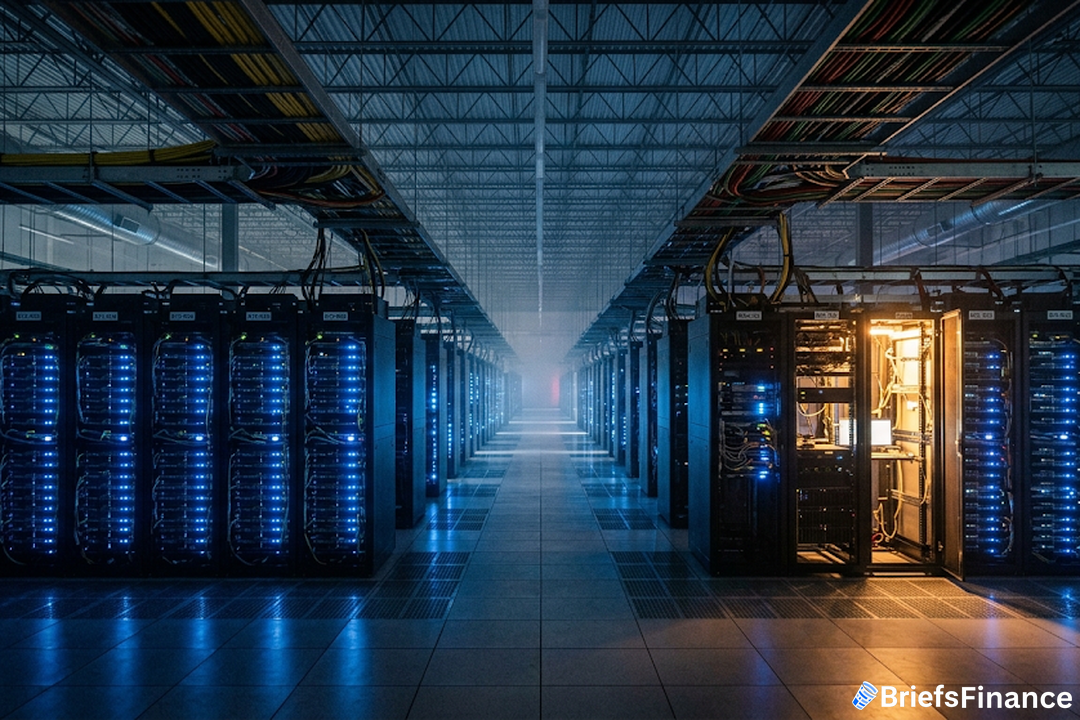
It has pumped about $30 billion into OpenAI, the company behind ChatGPT, and about $10 billion into Anthropic, the company behind Claude. It has put billions into xAI, Elon Musk's AI company, billions into CoreWeave, and more into many others.
Every one of those companies has something in common beyond AI. They all buy chips from Nvidia.
So Nvidia takes its profits, invests them in the top AI companies, and those companies send the money back to Nvidia for chips. That's circular financing, and it matters because about three-fourths of all US economic growth has been attributed to AI, with Nvidia one of the biggest AI spenders outside the government.
A Founder CEO Leaves, and Nvidia Has No Succession Plan
A lot of those deals were pushed aggressively by Huang himself, and a founder CEO is a different animal from a corporate CEO.
Steve Jobs was the founder CEO of Apple, the innovator behind every product that still defines the company. Tim Cook ran Apple like a business and did great as a stock, but the innovation slowed after Jobs left.
There's a second difference: Apple knew Jobs was sick and prepared a succession plan with a transition period. Nvidia has nothing like that, so it now has to find somebody to replace him with no runway.
Picture waking up tomorrow to a brand new President of the United States. The government is the largest spender in the economy, and a leader with a different vision might not fund defense, AI, or rare earths the same way, so different stocks would win.
Nvidia is the largest company in the country, and it has been funding the AI industry while investors already worried about circular financing. Now its leadership is in flux, and nobody knows the next vision or direction.
If pain shows up at Nvidia, it trickles into the companies it funds, and from there into the stock market and economy that AI has been carrying. That's the concern, and that's why the week matters beyond the headline.
Why Gold, Silver, and Bitcoin Are Falling While Inflation Rises
Gold, silver, and bitcoin are known as debasement trades, assets that usually go up when investors worry about the dollar. All three have been falling in 2026, and investors can't figure out why.
Part of the answer is who's buying: before the pandemic, investors bought gold as a hedge or doomsday insurance, an alternative way of saving money. Now a lot of them buy gold to get rich, which is a very different mentality.
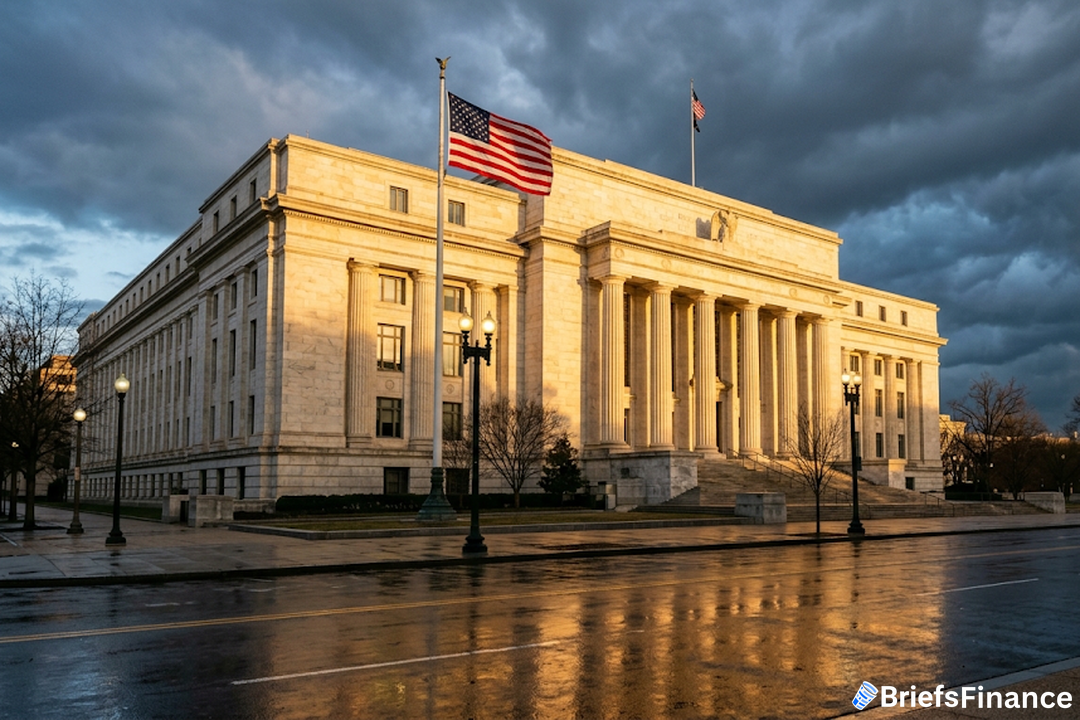
The bigger answer is where the dollar is headed. Investors put money where they think the economy is going tomorrow, and the entity in charge of the dollar is the Federal Reserve.
Kevin Warsh, the new Fed chairman appointed by President Trump, has said repeatedly that the Fed's sole focus is price stability, which means protecting and strengthening the dollar. A stronger dollar is bad news for gold, silver, and bitcoin.
That doesn't make them bad investments. Every asset has its own cycle, and the stock market, real estate, and gold don't always line up, so a 12-month mindset makes any of them hard to hold.
If you own gold as protection against inflation, treat it that way, as hard money you're saving. If you're trading gold to get rich, Jaspreet's advice is simple: good luck, because getting rich trading is nearly impossible no matter the asset.
The Inflation Report Was Hotter Than Expected, and the Fed Noticed
This week's inflation report came in hotter than expected, with an asterisk. The government was shut down 12 months ago and didn't report inflation then, so there's no exact year-over-year number.
Compare last month to the past 30 days, and the months around a year ago, and the estimate is that inflation rose from last month toward 4%. Inflation isn't cooling despite the Fed's recent rate hikes, it's accelerating, and faster than wages.
That means a raise in 2026 still probably leaves you poorer than last year. It also puts a decision in front of the Fed.
Fed officials are now saying they may have made a mistake by not raising rates fast enough. There's discussion of a 0.5% hike in December, which hasn't been approved and probably won't happen based on what's known today.
The tone is what matters. In 2026 the Fed went from "we'll cut" to "we'll hold" to "we'll raise a little" to "maybe we need to get aggressive," and each step came because inflation kept rising.
Three Reasons Inflation Keeps Rising, and Why the Fed Can't Fix One of Them
Why is inflation accelerating? Jaspreet points to three causes:
- Government spending. It isn't slowing down. Every day the government spends money it doesn't have, it borrows, and some of that borrowing comes from the Fed, which has no money and has to print it. Printing lowers the value of each dollar and raises the price of everything.
- Tariffs. They aren't going away.
- Oil. Earlier this week the White House said a deal with Iran was close and oil fell hard. Now the President says maybe no deal is needed, and if oil prices stay higher for longer, inflation follows.
The Fed can't do anything about oil. Raising rates can cool spending, but it can't bring the price of a barrel down.
Prolonged oil spikes have led to downturns before, because the cost spreads. Higher oil means higher gas and diesel, so shipping costs more, and the farmer pays more to move groceries from the farm to the warehouse to the Walmart shelf.
The farmer also pays more for fertilizer, which oil goes into. Three months later a law firm with nothing to do with oil raises its hourly rate from $285 to $300, because its energy costs and everything else went up.
That's how inflation moves through every corner of the economy, and why the oil headlines deserve attention.
What the Nvidia News Means for Your Portfolio
The media sells emotion and hype. Everything is amazing on the way up and heading to zero on the way down, and an investor's job is to cut through it.
That starts with knowing your investing strategy, and Jaspreet's has three pillars:
- Always be buying, or ABB. Buy broad market indexes like the S&P 500 every week, two weeks, or month, when markets are up, down, or crashing, and never stop. Most investors stop and sell when markets fall, which is the one thing not to do.
- POOP. Panic leads to overselling, which leads to opportunity, which leads to profit, and the last 100 years have seen 25 market crashes of 20% or more. The investors who got richer in each one had money set aside and knew what they wanted to buy.
- Market shifts. Find where money is moving before it hits the headlines. It's riskier, it takes real research, and unlike waiting for a crash it works in any market.
ABB alone may not be enough with the cost of living climbing, which is where the other two come in. What you buy in a downturn depends on your goal, since a growth investor, an income investor, and someone protecting $17 million in assets will each pick differently.
Jaspreet's advice for that research is to use AI as a brainstorming and discussion partner rather than a crystal ball. His free livestream on November 17 is built around that, with the ten prompts his analysts use to find opportunities handed to everyone who shows up live.
Higher interest rates reshuffle the deck too. Less money flows into speculative investments and more into value companies, so dividend companies and high-profit companies tend to do better when borrowing gets expensive.
Higher rates also tend to be the needle that pops bubbles, so if you're worried about an AI bubble, this is the pressure that slows it.
Read the headlines that way, as research, and the Nvidia story stops being a reason to panic sell. Panic selling is how investors lose money and make everybody else richer.