What Cotton asked and why
Sen. Tom Cotton, R-Ark., pressed the Trump administration to tighten the screws on ChangXin Memory Technologies, or CXMT. In a Thursday letter first obtained by CNBC, he told Commerce Secretary Howard Lutnick that "CXMT, one of Communist China's national memory chip champions, poses a growing risk to our economic prosperity and military superiority," adding, "The U.S. must take action to prevent CXMT from gaining a stronger foothold in the global market."
His ask was specific: put CXMT on the Commerce Department's Entity List, a move that would greatly limit how U.S. firms can interact with the company. Cotton also highlighted CXMT's push into high-bandwidth memory despite difficult conditions and urged further steps to sever financial and technology lifelines that support its supply chain and, in his words, "undercut American growth."
The technology at issue
Among DRAM makers worldwide, CXMT ranks fourth by size; DRAM - dynamic random access memory - powers core functions in computers and smartphones. DRAM is a "commodity," Counterpoint research director MS Hwang told CNBC, meaning it is built to common standards and is largely interchangeable across makers.
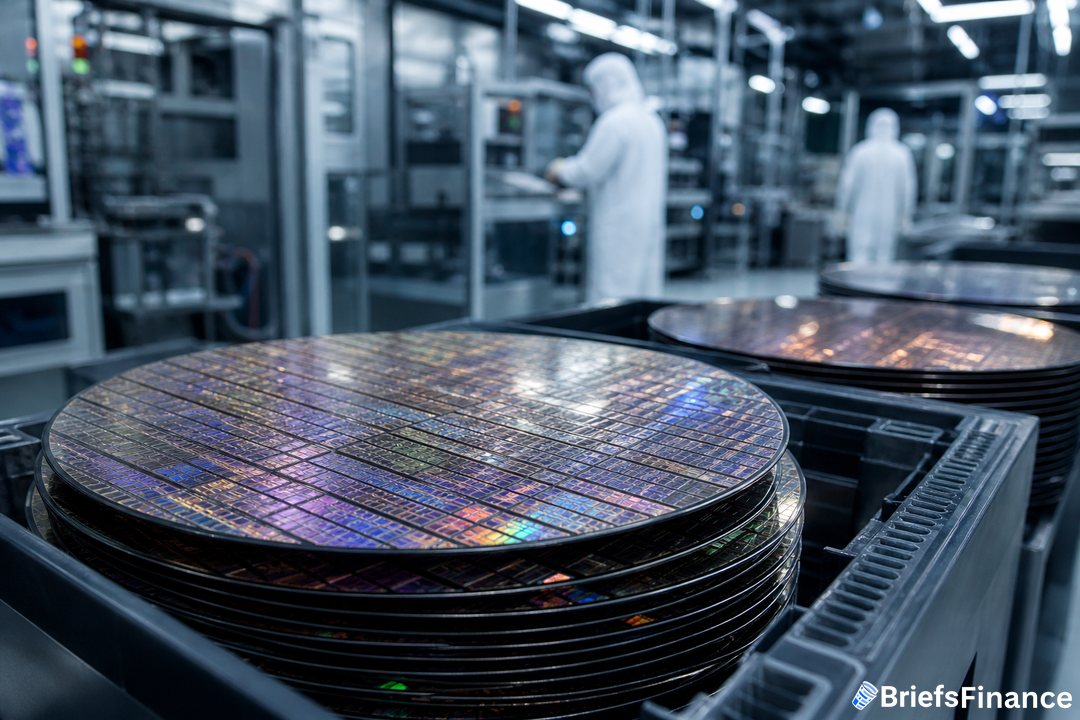
With the right process know-how, DRAM can underpin HBM, short for high-bandwidth memory, which feeds the data needs of AI processors from Nvidia, Google and Amazon Web Services. Those chips power AI leaders including Anthropic and OpenAI. Only three companies currently produce HBM at scale: Samsung, SK Hynix and Micron.
Markets shift when policy and technology collide, and investors seek steady advantage. We're hosting our first ever investor livestream on 11/17 to show you how to use ChatGPT and Claude to invest like a pro, hosted by Briefs Finance CEO Jaspreet Singh. Save your seat.
How CXMT's recent growth factors in
The same trio also dominates DRAM, but CXMT is gaining share. Counterpoint's latest data show CXMT's DRAM revenue share rose from 4% in Q2 2025 to 10% in Q2 2026. In July, CXMT went public and its share price jumped, briefly putting it at the top of China's market by overall valuation.
Counterpoint says CXMT's HBM efforts are still nascent, and Reuters reported the company was set to begin making HBM with yields of only 20% to 30%, which means most chips coming off the line would be unusable. The Wall Street Journal reported on Aug. 9 that Apple was considering CXMT memory for iPhones and Macs amid a global shortage tied to the AI buildout. If it were added to the Entity List, that calculation could shift.
The policy fight and practical effects
What would the Entity List do in practice? "It basically means that U.S. companies are not allowed to do business with that entity-listed company, and that entity-listed company does not get access to U.S. technology," said Kyle Chan, a fellow at the Brookings Institution who studies China's tech development.
A photo dated Sept. 4, 2026 shows facilities tied to Changxin Memory Technologies in Qingdao, Shandong Province.
New developments in tech and policy often create chances for thoughtful investors. On 11/17, our CEO Jaspreet Singh goes live for our first ever investor livestream on how to use ChatGPT and Claude to invest like a pro. Register to join him.