Free NewsletterPro Login

Warning: Undefined variable $stocks in /var/www/briefs.co/htdocs/wp-content/plugins/oxygen/component-framework/components/classes/code-block.class.php(133) : eval()'d code on line 448

Warning: foreach() argument must be of type array|object, null given in /var/www/briefs.co/htdocs/wp-content/plugins/oxygen/component-framework/components/classes/code-block.class.php(133) : eval()'d code on line 448

Warning: Undefined variable $funds in /var/www/briefs.co/htdocs/wp-content/plugins/oxygen/component-framework/components/classes/code-block.class.php(133) : eval()'d code on line 472

Warning: foreach() argument must be of type array|object, null given in /var/www/briefs.co/htdocs/wp-content/plugins/oxygen/component-framework/components/classes/code-block.class.php(133) : eval()'d code on line 472
/* the link was here */
×
Free investor livestream — Nov 17

How To Use ChatGPT & Claude To Research Stocks Like A Pro

01
The prompt we use to break down any stock
02
How to fact-check what AI tells you
03
How to compare two stocks in minutes

Alaska wants residents to own a slice of its data center boom - on blockchain

Published Nov 9, 2026
Share:
Summary:
  • Alaska is partnering with Plural to tokenize investment contracts for data centers and energy projects, with an eventual path for residents to invest directly.
  • The push mirrors Alaska's oil dividend model, but terms, SEC registration or exemptions, liquidity and investor protections are still to be determined.
  • Local resistance is rising, from a three gigawatt North Slope plan to campaign-season attacks and new leaders backing tighter controls on data centers.

What the state is building

Alaska is trying to port its oil-era playbook to the AI build.

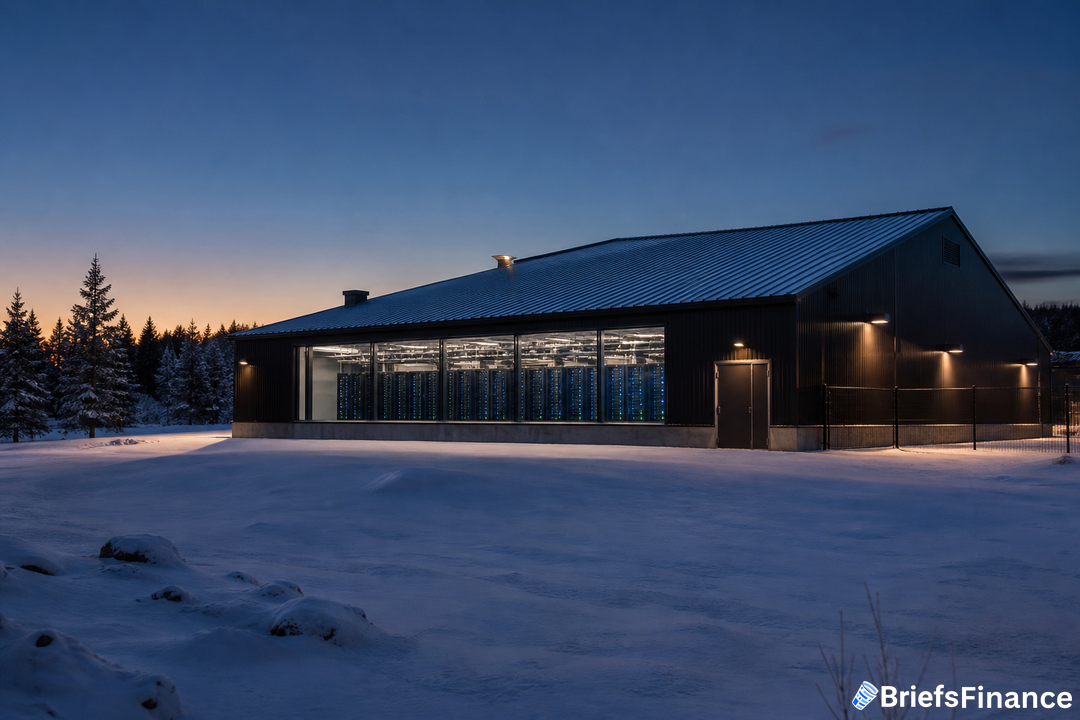
To advance that plan, the state plans to roll out a new system that will coordinate and monitor funding for data centers and energy projects, and it has partnered with Plural to record investment contracts on a blockchain. Tokenizing those contracts lets transactions be recorded and tracked digitally. State officials are unveiling the Alaska Data Corporation, set up as a unit within the current economic development authority to lure private projects, and they anticipate introducing deals for retail investors via a newly formed vehicle named InvestNorth.

Any securities would still need SEC registration or qualify for exemptions, and the structure and terms are not yet defined. Plural CEO Adam Silver said they are embracing the gap between Wall Street's AI enthusiasm and public anxiety over data centers: "That tension is very much present in what we're trying to do and that we're essentially embracing it." As he put it, "You can be the person at the Thanksgiving dinner table and you can be the potential investor that is excited and profiting from it."

How investing could work

Over time, the aim is to enable everyday Alaskans to put money directly into data centers and energy ventures located in the state. That could give residents a share of profits, similar in spirit to the state's permanent fund model.

Tokenization - already employed by numerous Wall Street firms to place assets such as stocks and bonds onto digital ledgers - gets marketed for greater transparency, quicker settlement, and 24/7 trading. Overall assets under management are about $39 billion. Silver said a key draw is that residents will be able to see how money is allocated and how projects perform: "You'll be able to see live how effectively those projects are servicing their obligations, if they're defaulting, if they're underperforming, overperforming," he said. "It'll be visible. It'll all be on the blockchain."

Brandon Brefczynski, who serves as president of Alaska Data Corporation and as the economic development authority's deputy director, described the push toward tokenization as "the next evolution," drawing a line from Alaska's oil exploration era and its permanent fund dividend system. "It's like the next step from that, where Alaskan residents could invest into projects," he said. Dunleavy added that ownership could ease local distrust: "If they could be a partial owner or have a stake in the data farm, then you're in alignment with the communities."

New technologies can give everyday investors a subtle, lasting edge in markets. We're hosting our first ever investor livestream on 11/17 to show you how to use ChatGPT and Claude to invest like a pro, hosted by Briefs Finance CEO Jaspreet Singh. Save your seat.

Politics and local resistance

State officials tout land availability, a cooler climate and access to gas and hydropower as tailwinds, while noting the power grid is relatively fragmented. The industry is still early in Alaska, and new proposals have stirred pushback. A three gigawatt data center plan on the North Slope, with an electricity draw comparable to 2.4 million homes, drew a deluge of critical public comments.

Campaigns are seizing on the issue. Democrat Mary Peltola, ahead in the tally to become Alaska's next US Senator, launched a site portraying incumbent Republican Dan Sullivan's backing of data centers unfavorably, claiming large-scale construction would raise power costs, take over public recreation areas, and endanger fish and caribou.

That fits a wider trend where many municipal initiatives have been approved to curb or halt data-center expansion. Across Texas, Georgia and Ohio - all earmarked for significant AI infrastructure builds - the Democratic candidates poised to take office ran on platforms promising greater community control. Alaska is likely to join them.

Democrat Jonathan Kreiss-Tomkins, currently ahead by a solid margin to succeed the term-limited Dunleavy, has stated he backs a pause on permitting any new data centers until the legislature enacts rules, which would include a mandate for local approval. Kreiss-Tomkins's campaign spokesperson did not answer inquiries regarding his stance on data-center buildouts.

What this means for your portfolio

The pitch is simple: open the data center build to retail investors, track it on chain and try to align developers with communities. The potential benefits are wider access, more transparent cash flows and a new way for residents to participate in capital intensive projects.

The risks are equally clear. Offering terms are undecided, SEC pathways matter, and questions around liquidity and investor protections remain. Critics warn the state could end up both promoting and selling stakes in projects that underperform. Silver said he first connected with the administration roughly a year ago as Alaska looked to attract investment beyond established hubs like Northern Virginia, and Dunleavy remains upbeat: "It is going to gain steam across the country."

Learning how to use smarter tools can change the way you approach investing. On 11/17, our CEO Jaspreet Singh goes live for our first ever investor livestream on how to use ChatGPT and Claude to invest like a pro. Register to join him.

Disclosure

Recent News

1 2 3 … 123

Get Market Briefs delivered to your inbox every morning for free!

No fluff. No noise. No politics. Just finance news you can read in 5 minutes.

Blogs

November 3, 2026
How to Budget Every Payday: 5 Moves So You Never Worry About Money
  • A median earner could make about $4.7 million over a career, yet most retire with closer to $13,000 in the bank because of a keeping problem, not an income problem.
  • Audit your money, save $2,000, pay off credit card debt, then automate a 75/15/10 split across three bank accounts.
  • Earn more only after your system is in place, then protect what you build with an accountant, attorneys, the right insurance, and an estate plan.
Read More
November 3, 2026
How to Invest in Stocks: 5 Things to Do Before You Invest Your First Dollar
  • Paying off credit card debt at around 22% interest beats the stock market's roughly 10% average, and even Warren Buffett's 19%.
  • Save $2,000 in a separate emergency fund, learn to research with AI, and decide whether you're a growth, income, or wealth preservation investor.
  • Write down a plan for buying during market crashes, which have happened 25 times in the last 100 years.
Read More
November 3, 2026
Best ETFs to Buy: 5 Three-ETF Portfolios for Every Investing Goal
  • An ETF is a basket of stocks, so one purchase spreads your money across many companies instead of riding on just one.
  • Jaspreet Singh laid out five portfolios of three ETFs each, built for kids, cash flow, growth, slow and steady growth, and protection from a weaker dollar.
  • Based on 10-year average returns, $500 a month could grow to between about $660,000 and $3.1 million over 30 years, though past returns never guarantee future ones.
Read More
November 3, 2026
Best Investments of a Generation: 5 Market Shifts Backed by Your Tax Dollars
  • Private companies are about to spend $1 trillion a year on AI, and the Trump administration is putting tax dollars behind the same industries.
  • The five shifts are AI and its supply chain, robotics, rare earths, energy, and defense.
  • Each comes with real risk, from an AI bubble to wars ending or a new Congress, so these are ideas to research, not sure things.
Read More
November 3, 2026
How to Get Ahead Financially: 10 Moves to Make While Everyone Else Falls Behind
  • Learning a high-income AI skill, or building AI tools for tradespeople, can raise your earning power in a tough job market.
  • Higher interest rates, the 2025 tax cuts, Trump accounts, and stacked cash back can put more money back in your pocket.
  • Following where government money is moving, keeping cash ready for market crashes, and investing in your own education can speed up your wealth.
Read More
November 3, 2026
National Debt at $40 Trillion: Why Inflation Is the Hidden Tax, and Who Profits From It
  • Time magazine asked President Trump how he'd tackle the $40 trillion national debt, and he suggested inflation could help pay it off, a cost that lands on everyday Americans.
  • From 1971 to 2025, cars, houses, and college outpaced both inflation and incomes, while the S&P 500 grew more than 33,000% with dividends reinvested.
  • The U.S. can default, inflate, or outgrow its debt, and history shows each path rewards different assets.
Read More
November 3, 2026
FOMC Meeting: Why the Fed Is Getting Nervous, and Why AI Stocks Feel It
  • At its latest meeting, the Fed held rates steady but warned it may raise them again, because inflation is running near 3.5% against a 2% target.
  • Oil prices, tariffs, AI's hunger for energy, and government spending are all pushing prices higher, and gold, silver, and bitcoin fell on the Fed's news.
  • Chinese AI stocks are down about 40% in a few months and Google fell more than 10% in a day, raising fears that higher rates could pop an AI bubble.
Read More
November 3, 2026
Midterm Elections: Where the Money Could Move if Republicans or Democrats Win
  • The U.S. government spent about $7.5 trillion last year, and the midterm elections could change which industries get more of that money.
  • A Republican win could favor manufacturing, fossil fuels, banks, and defense.
  • A Democratic win could favor healthcare, weight-loss drugs, clean energy, and infrastructure.
Read More
November 3, 2026
Brazil Stock Market Crash: Why Lula's Win Matters to U.S. Investors
  • Brazil's stock market fell more than 20% in a few days, and its currency dropped 8%, after Lula won a presidential election investors expected him to lose.
  • The shock reaches U.S. investors through coffee and beef prices, the BRICS push away from the dollar, and a market that had become an investor favorite.
  • The last time Lula first won, in 2002, Brazil's stock market fell more than 20% and then grew 12x by 2008, though nobody knows if that will repeat.
Read More
November 2, 2026
Credit Utilization: How Paying Down Cards Can Help Your Score
  • Credit utilization is your card balances divided by your credit limits, checked overall and card by card.
  • Lower is generally better, and Experian says the effect becomes more noticeable around 30%.
  • Paying down balances and keeping new charges off your cards are the main ways to lower it.
Read More
1 2 3 … 32
Share via
Copy link










