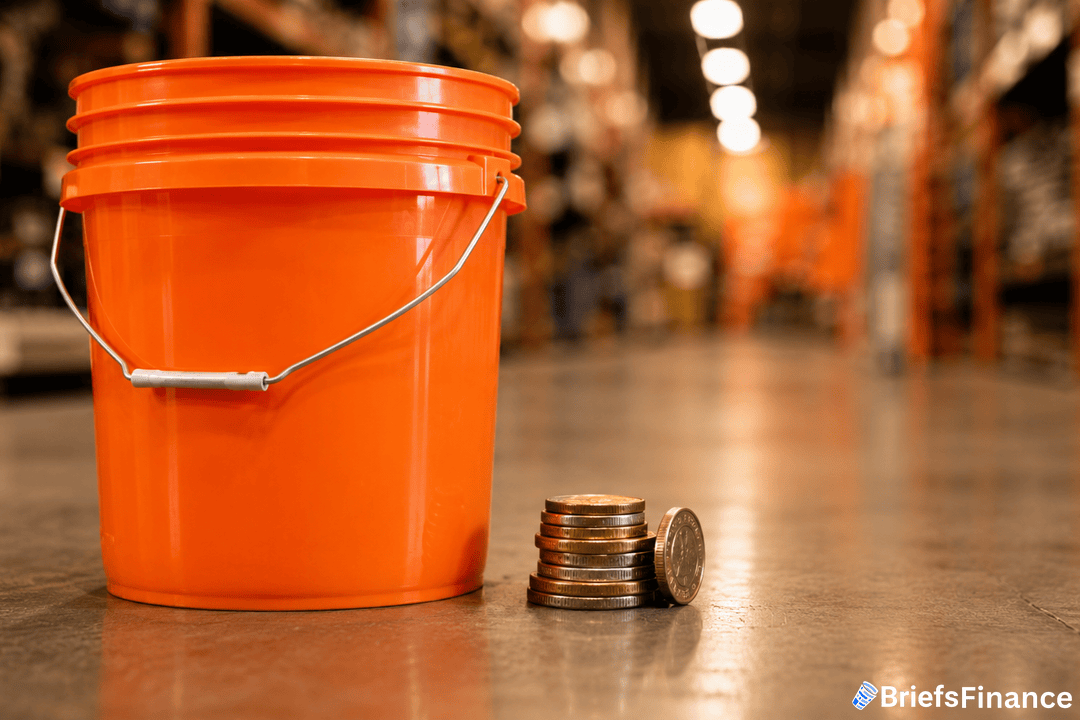
There are two ways to pay for $600 of holiday gifts. You can put all of it on a credit card in December, then start January with a $600 balance that charges interest.
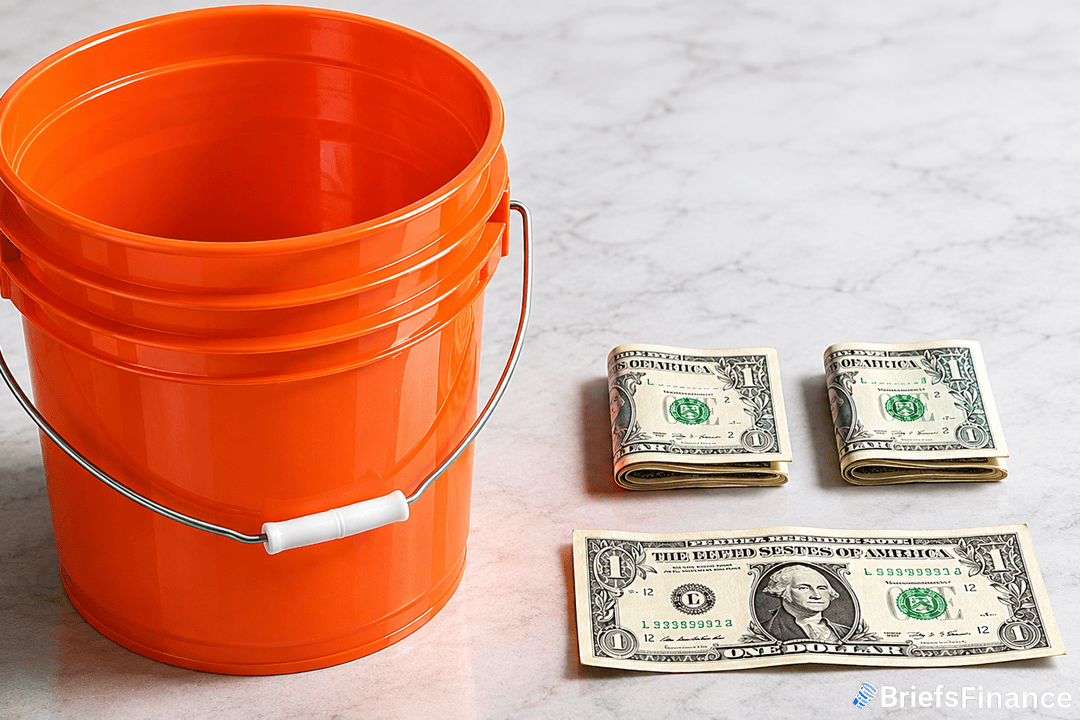
Or you can save $60 a month starting in March. When December comes, the $600 is already in a savings account, and you pay with cash instead of a card.
That second way is called a sinking fund. This guide covers how one works, how to start one in five steps and how much to put in each month, using the personal budget meaning of the term, not the one about bonds.
If you like money tools explained this simply, join our free investor livestream on November 17, where CEO Jaspreet Singh shows how to use ChatGPT and Claude to research stocks like a pro.
How a sinking fund works
Every sinking fund has three parts: a planned cost, a monthly amount and a separate account to keep the money in. You know the bill is coming, so you split it across the months before it's due.
Say your car insurance is $720 and it's due in six months. Instead of coming up with $720 at once, you save $120 a month, and when the bill arrives, you pay it with money you already have.
It's the opposite of buy now, pay later, because you make the payments before you buy instead of after. You also avoid borrowing for a cost you knew was coming, which Briefs covers in good debt vs. bad debt.
How to start a sinking fund, step by step
- List the costs coming up in the next year. Go through your calendar and your budget and look for anything that doesn't come every month.
- Put a price on each one. Use last year's bill and round up, since prices can go up from one year to the next.
- Divide by the months left. That's how much to save each month for that cost.
- Keep the money separate from your spending money. Use a separate savings account, or a labeled savings bucket if your bank offers them.
- Set the transfer to happen on payday. The money moves before you can spend it.
The Climb to Wealth class teaches you to automate your money so you're not relying on willpower, and step 5 does that. Once it's set up, the fund grows every payday without you doing anything.
Many people keep sinking funds in a high-yield savings account, which pays more interest than a standard one while the money sits there.
How much should you put in a sinking fund?
Divide the cost by the number of months until it's due. Wright-Patt Credit Union uses the same basic math to work out the monthly amount.
Say you have three costs coming up:
| Planned cost | Total | Months until due | Save each month |
|---|---|---|---|
| Car insurance | $720 | 6 | $120 |
| Holiday gifts | $600 | 10 | $60 |
| New tires | $480 | 8 | $60 |
| Total | $240 |
These costs are examples. Your list might be longer or shorter, but you do the same math on every line.
If $240 a month feels like a lot, start with your bills. A short call can sometimes lower your monthly bills, and the money you save can go into your sinking funds.
Sinking fund examples
Most sinking funds cover costs that come once or twice a year:
- Car insurance, if you pay every six or twelve months.
- Car repairs and new tires.
- Holidays and gifts.
- Back-to-school clothes and supplies.
- Yearly subscriptions and memberships, like a $139 shopping membership.
- A vacation.
- Home repairs, if you own a home.
You don't need a fund for every item right away. Start with the one or two biggest, add more over time and check a list of common money leaks to find the money.
Sinking fund vs emergency fund
A sinking fund is for costs you can see coming, and an emergency fund is for the ones you can't, like a layoff or a trip to the ER.
Keeping them apart protects the order the Climb to Wealth class teaches: save your first $2,000, pay off credit card debt in the right order, then automate it. If gift money has its own account, holiday shopping can't use up the cushion you worked to save your first $2,000.
Once that cushion is in place, Briefs explains how much your emergency fund should be when it's fully built, and why the emergency fund comes first.
What are the disadvantages of a sinking fund?
Sinking funds do have a cost: money in one can't go toward other goals while it's there, and you have to keep adding to it every month. Capital One covers both sides, along with how a sinking fund is different from an emergency fund.
It also only covers what you planned for. A sinking fund for new tires won't pay for a broken transmission, so you still need an emergency fund.
If you have credit card debt, every dollar going into a sinking fund isn't going toward your balance. One way to handle both is to fund only your one or two biggest planned bills and put the rest of your extra money toward a plan to pay off credit card debt.
Why is it called a sinking fund?
The term also has a business meaning. The Cambridge Dictionary defines it as money a company or government saves over time to pay back future debts, and this guide covers the personal budget version.
Where a sinking fund fits in your budget
If you follow the Briefs split, sinking funds come out of your lifestyle money, not your savings or investing money. In the 75/15/10 split Briefs teaches, at most 75% of your pay goes to lifestyle, at least 15% to investing and at least 10% to savings.
Gifts and tires are lifestyle costs, so they belong in the 75%. That leaves your 10% and 15% alone, and the 15% is covered in the Briefs guide on how much of your paycheck to invest.
Investing involves risk including loss, and past performance does not indicate future results.
Start your first sinking fund this week
- List the costs you know are coming this year and price each one.
- Divide each cost by the months left and add up the monthly total.
- Move that amount to a separate savings account every payday.
With sinking funds in place, the car insurance, the tires and the holiday gifts get paid from savings instead of a credit card, so a big bill doesn't send you back to living paycheck to paycheck. Briefs covers the rest of managing your money, from budgets to investing.
For another set of tools, this time for investing, join our free investor livestream on November 17 and watch CEO Jaspreet Singh research stocks live with ChatGPT and Claude.