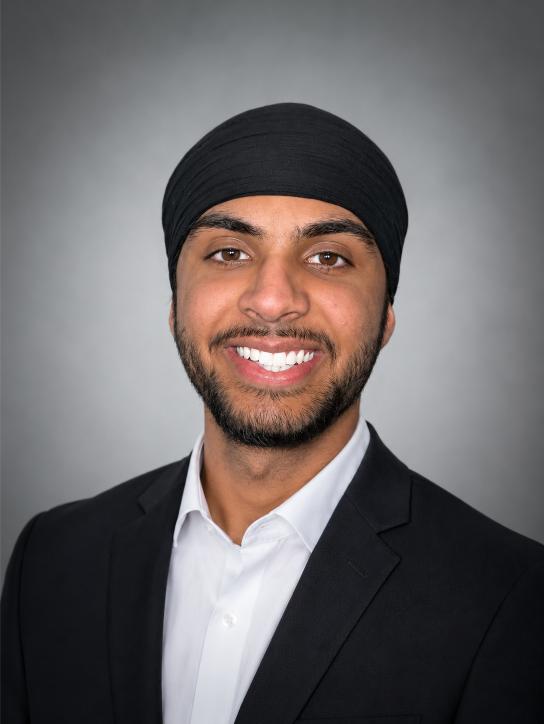
Eric Kutcher, who leads McKinsey's North America business and is a senior partner, is emerging early as a potential successor to Bob Sternfels when his term as global managing partner ends next year.
McKinsey revised its chief election process, with over 700 senior partners set to cast ballots starting in January; anyone exceeding 50% wins immediately, otherwise the pool shrinks to seven, then to three, culminating in a February 2027 final vote.
Kutcher helped drive 2023's Project Magnolia that cut 1,400 jobs, has taken a central role in McKinsey's AI rollout with weekly "red team" reviews, and served as CFO from 2020 to 2024.
Who Eric Kutcher Is
Kutcher runs McKinsey's North America region and has been with the firm for nearly three decades. In his 50s, he previously headed the technology, media and telecommunications practice, was chief financial officer from 2020 to 2024, and serves on the board of directors of the Federal Reserve Bank of San Francisco. Senior partners have credited him with helping tighten costs, including as part of the senior group behind 2023's Project Magnolia, which eliminated 1,400 roles.
How McKinsey Will Pick Its Next Global Managing Partner
The firm recently overhauled how it elects its top leader and plans to kick off voting next year. More than 700 senior partners will begin balloting in January. Any contender who clears a majority on the first vote is in.
If no one does, seven candidates advance to a second round. If there is still no majority, the slate narrows to three, leading to a final vote in February 2027. Serving on the global leadership team is widely viewed internally as a springboard to the top job, and additional contenders are expected from that bench.
In a statement, Shelley Stewart III - a senior partner who oversees McKinsey's insights, reputation and engagement unit - said: "We don't comment on our election, which is a confidential process among our senior partners." Sternfels is in his second three-year term. The next chief will start with a four-year term and may serve another two years, subject to a confirmation vote.
Leadership succession at major firms moves strategy and valuations. The consultants have their tools, and you can have yours: our CEO Jaspreet Singh is hosting our first-ever investor livestream on November 17 to show you how to use ChatGPT and Claude to invest like a pro. Save your seat.
Kutcher's AI Push and What He's Saying Publicly
Inside the firm, Kutcher has become a key operator on AI. He set up "red teams" to challenge how consultants use AI in client-facing work, and said in a recent New York interview that he dedicates 30 minutes per week to each of those teams. Rather than forcing every colleague to adopt AI in lockstep - which he called "a fool's errand" - he is backing a smaller group to prove out the value.
"Not everyone may make the journey," he said. McKinsey's research underscores the challenge: only 6% of organizations say AI has had a "significant" impact on their business, unchanged from the prior year's survey. Even so, Kutcher told Bloomberg TV this month that the firm is adding headcount, calling AI "one of the great opportunities for us." He said McKinsey hired about 12% more consultants in North America last year than the year before, and expects this year's growth to be just below that pace.
Most of those hires are at the entry level, including undergraduates as well as people holding MBAs or other advanced degrees.
The Job Ahead And Why It Matters
The next leader steps into a consulting market being reshaped by AI and geopolitics. The chief will be tasked with showing clients that AI can lift productivity while still justifying premium fees, at a time when clients are reevaluating exposure to sensitive markets. As US-China tensions sharpen over advanced chips, computing power and critical tech, some North America partners have raised doubts about McKinsey's footprint in markets such as China, and some US clients have grown uneasy about firms like McKinsey operating in Mainland China, particularly in technology and defense.
McKinsey has reduced headcount in cities such as Shanghai. Cost control remains a theme across the industry as McKinsey, EY, Accenture Plc and PwC have all cut jobs. Internally, last year McKinsey's leadership spoke with managers in functions that don't face clients about the need to trim roughly 10% of headcount across the business, a move that people familiar with the talks said could amount to a few thousand reductions staggered over 18 to 24 months.
For your money, the signal is simple enough: how a marquee adviser navigates AI, geopolitics and costs can influence where big companies spend on transformation, with ripple effects on the tech, tools and hiring you encounter every day.
Who takes the top job shapes where the capital goes next. To follow that capital yourself, join our first-ever investor livestream on 11/17, where Jaspreet Singh will show you how to use ChatGPT and Claude to invest like a pro. Register here.
Anthropic has gone public at a valuation of about $1.5 trillion, while Amazon went public in 1997 at around $440 million. Anthropic has about $33 billion in revenue this year and no profit, and investors are paying more than 40 times its sales, against about 3 times for Amazon. Briefs Finance CEO Jaspreet Singh says nobody knows what comes next, and that long-term investors use downturns to buy instead of panic selling.
Tech stocks are selling off because investors don't know who will lead Nvidia, the company that has been funding the AI industry and selling it chips.
Inflation has the Federal Reserve planning to raise interest rates, with a hike expected in December, and that puts pressure on homebuyers, private equity and the $40 trillion national debt.
Briefs Finance CEO Jaspreet Singh says nobody has a crystal ball, so his rules are to buy when markets are low, hold long term and invest only what you're willing to lose.
The national debt is above $40 trillion, and the Federal Reserve has gone from sending Washington its profits to losing money.
President Trump's four-part plan leans on shorter-term debt, stablecoin companies buying Treasuries, a bigger balance sheet and government stakes in private companies.
The goal is to outgrow the debt, not pay it off, so Jaspreet Singh points investors to the seven industries where Washington wants growth.
The Fed makes its next rate decision on December 9 and is now talking about jumbo interest rate hikes of 0.5%, though one in December looks unlikely.
Washington will pay a record $1.05 trillion in interest this year on $40 trillion of debt, and that debt resets at higher rates as the Fed hikes.
Jaspreet Singh's five moves are to pay down variable-rate debt, earn interest on your savings, know which stocks feel the pressure, look at value and hedge.
Margin debt, the money investors borrow to buy stocks, is at a record of around 4.6% of GDP, up from 3.9% in 2021.
ETF money has more than tripled in five years to 7% of GDP, while corporate buybacks and 401(k) money sit below their earlier peaks.
Margin calls and panic selling can make the next downturn deeper, so Jaspreet Singh keeps buying broad market funds and says most investors should skip margin debt.
Jensen Huang is out at Nvidia over affairs with multiple people, and the company he founded has been the bank of American AI, with about $30 billion into OpenAI and $10 billion into Anthropic.
A hotter-than-expected inflation report has Fed officials talking about a possible 0.5% hike in December, and gold, silver, and bitcoin fell on the news.
President Trump said the US may not need a deal with Iran, keeping oil prices and inflation risk high. Jaspreet Singh breaks down what it all means for AI stocks and your portfolio.
Stocks are booming at the fastest pace in years, jobless claims just hit a 57-year low, and most investors still feel like nobody is hiring.
The Fed is protecting the dollar over the economy, oil swings on every Iran headline, and a few AI companies are carrying an S&P 500 where four of five stocks sit in a correction.
Jaspreet Singh explains why circular financing between Nvidia, OpenAI, Anthropic, and SpaceX rhymes with 2008's house of cards, and how his three investing pillars handle a stock market bubble.
The Fed has raised rates, cut them, then raised them again only twice in the last 60 years, and both times the economy fell into a recession and stocks crashed.
The same stop-and-go cycle is playing out now, with one big difference: US debt is 125% of GDP today versus about 30% in 1980.
In the 1970s gold rose roughly 24x, real estate 157%, stocks lagged, and cash lost half its value. Jaspreet Singh lays out five assets to consider before the next flip.
The IRS 2027 tax plan keeps the same seven rates but widens every bracket and lifts the married-filing-jointly standard deduction to $33,200.
The 0% long-term capital gains bracket rises to $102,100, so a household living on $135,300 of investment income could owe $0 in federal income tax.
C corporations still pay 21%, small businesses keep the 20% QBI deduction, and the 401(k) limit climbs to $25,500 with an $8,500 catch-up for investors over 50.
Make sure to check your inbox for the first email.
Before you go
We’re hosting our first ever livestream on how investors can use ChatGPT & Claude to invest like a pro. It’s on 11/17 and is hosted by our CEO Jaspreet Singh.