Free NewsletterPro Login
S&P 500 6,287 +0.42%
DOW 44,521 -0.18%
NASDAQ 21,103 +0.71%

Warning: Undefined variable $funds in /var/www/briefs.co/htdocs/wp-content/plugins/oxygen/component-framework/components/classes/code-block.class.php(133) : eval()'d code on line 491

Warning: foreach() argument must be of type array|object, null given in /var/www/briefs.co/htdocs/wp-content/plugins/oxygen/component-framework/components/classes/code-block.class.php(133) : eval()'d code on line 491
/* the link was here */

FDA to Make Companies Disclose Ingredients They Deem Safe

Published Aug 10, 2026
[tts_player]
Share:
FDA to Make Companies Disclose Ingredients They Deem Safe
Summary:
  • HHS proposed a rule that would require food makers to notify the FDA whenever they decide an ingredient is safe under the "generally recognized as safe" exemption.
  • HHS and the USDA sent the government's first draft definition of ultra-processed foods for final review.
  • The moves come as federal officials investigate several summer foodborne illness outbreaks, including a cyclospora outbreak traced to shredded iceberg lettuce.

The Rule That Would End the GRAS Loophole

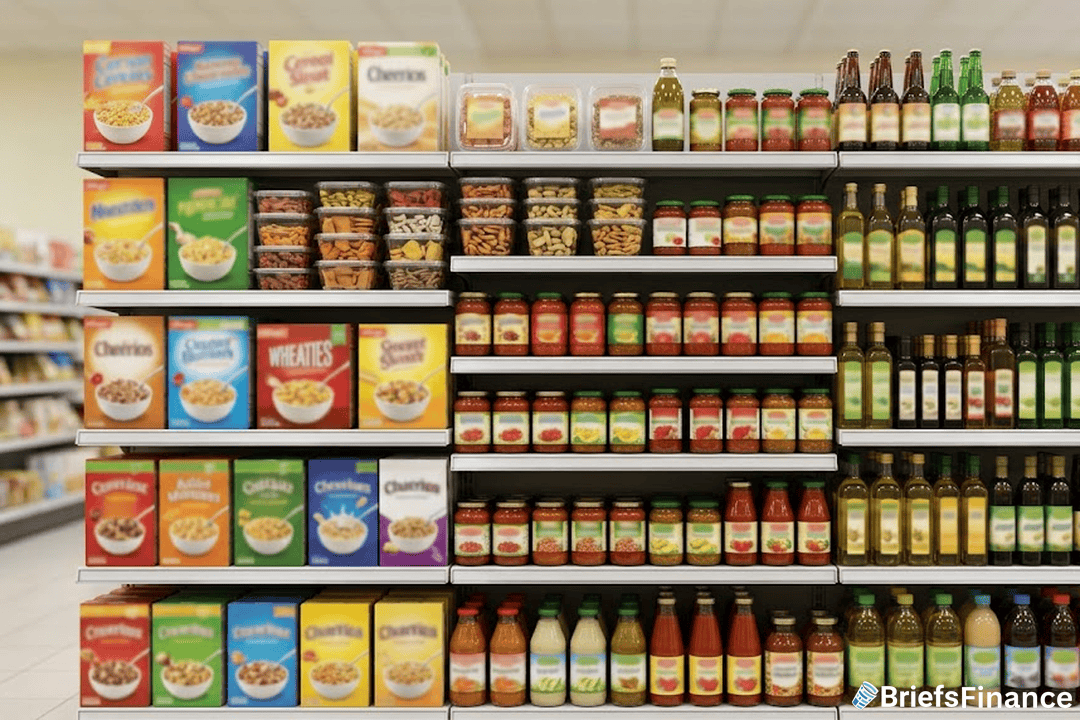
Open any packaged snack and you will find a list of ingredients you do not recognize. Some of those ingredients never got formal government approval, and the agency in charge of food safety wants to change that.

Right now, food additives need FDA approval before they hit the market unless they qualify for an exemption called "generally recognized as safe," or GRAS. That label applies when qualified experts decide an ingredient is safe for its intended use.

But there is a catch: companies were never required to tell the FDA when they made that call. The FDA has run a voluntary GRAS notification system for years, but food makers were free to skip it.

The new rule from HHS, the Department of Health and Human Services, would make that notification mandatory. It would not create a full premarket approval process for GRAS substances, but it would force companies to flag every ingredient they consider safe. The proposal now goes through public comment and standard federal rulemaking, with the comment period running until Aug 10 2026.

Get the free Always Be Buying eBook and learn the simple system for building wealth on any income

The GRAS exemption has long been criticized by food safety advocates because it lets manufacturers decide on their own that an ingredient is safe without having to submit evidence to the FDA. Making those self-assessments visible to regulators would close a transparency gap that has existed for decades.

The Push to Define Ultra-Processed Foods

HHS and the USDA have also sent the government's first draft definition of ultra-processed foods for final review. The two agencies first asked for input on how to define the category back in July 2025.

This matters because ultra-processed foods are everywhere. HHS Secretary Robert F. Kennedy Jr. said in a press release, "Nearly 60% of the American diet is made up of ultra-processed foods, and childhood obesity now affects more than one in five American children." He added, "We cannot reverse America's chronic disease epidemic without transforming our food system."

A formal definition would give regulators, food companies, and researchers a common language. It could also become the basis for future labeling requirements or nutritional guidance, which is why the food industry is watching this closely.

Why Now, and What It Means for Your Money

The timing is not random. The summer's foodborne illness investigations kept federal and state health agencies busy; one multistate cyclospora outbreak was traced to shredded iceberg lettuce, while salmonella and listeria cases also drew attention. Those outbreaks put a spotlight on how ingredients move through the food supply.

Acting FDA Commissioner Kyle Diamantas said the measures would improve the FDA's ability to do its job by giving the agency "greater transparency into the number of ingredients in the food supply." A senior HHS spokesperson called GRAS reform "the preeminent regulatory reform that food advocates on both sides of the aisle have been saying is the most important food reform that the United States needs to do for the past 20 years."

This is not the kind of news that moves stock prices tomorrow, but it is the kind of rule that changes the cost structure of the food industry over time. If companies have to report every ingredient they deem safe, they may think twice about what goes into their products. If the government finally defines ultra-processed foods, that definition could shape labeling rules, marketing claims, and even which products get school lunch contracts.

For investors, the shift is worth watching. Companies that rely heavily on processed ingredients may face new compliance costs, while brands that have already positioned themselves as cleaner or simpler could benefit. It is too early to know exactly how the rules will land, but the direction is clear: the government is asking more questions about what is in your food, and the answers are going to matter.

Download the free Always Be Buying eBook and start putting your money to work today
Disclosure

Recent News

1 2 3 52

Get Market Briefs delivered to your inbox every morning for free!

No fluff. No noise. No politics. Just finance news you can read in 5 minutes.

Blogs

June 29, 2026
Portfolio Diversification: Why Putting All Your Eggs in One Basket Destroys Wealth
  • Real diversification means spreading investments across all 11 economic sectors plus bonds, alternatives, and cash so no single bet can sink the portfolio.
  • Different sectors perform at different times, so a diversified portfolio captures upswings while smoothing the brutal drawdowns that wipe out concentrated bets.
  • Total market index funds offer the simplest path to diversification, and annual rebalancing is what keeps the structure working over time.
Read More
June 29, 2026
Non Taxable Income: What It Is and Why It Matters
  • Non taxable income is money you receive that you don't owe income tax on.
  • The tax code treats workers, investors, and business owners very differently, and investors often come out ahead.
  • Learning how income is taxed is a quiet superpower for keeping more of what you earn.
Read More
June 29, 2026
Semiconductor Stocks: A Simple Guide for Investors
  • Semiconductor stocks are companies that design and make computer chips, the brains inside nearly every modern device.
  • The AI boom has turned chips into one of the market's most important and most watched groups.
  • They offer big growth potential, but come with high valuations and a notoriously cyclical history.
Read More
June 25, 2026
How Stocks Work: A Simple Guide for Beginners
  • A stock is a slice of ownership in a company - buy one, and you own a piece of the business.
  • You make money two ways: the share price rising over time, and dividends paid to shareholders.
  • The simplest path for most beginners is buying into the whole market through a low-cost index fund.
Read More
June 25, 2026
Stop Loss vs Stop Limit: What's the Difference?
  • A stop loss order sells your stock once it hits a trigger price, prioritizing getting you out.
  • A stop limit order only sells within a price range you set, prioritizing price over a guaranteed exit.
  • The trade-off: a stop loss almost always executes; a stop limit might not if the price moves too fast.
Read More
June 25, 2026
Energy Stocks: A Simple Guide for Investors
  • Energy stocks are companies that produce and supply the power the world runs on, from oil and gas to newer sources.
  • They make up one of the 11 sectors of the market and tend to move with energy prices and big-picture shifts.
  • Like any sector, the key is diversification and understanding the forces driving demand.
Read More
June 18, 2026
What Is a Stop Loss Order? A Simple Guide
  • A stop loss order automatically sells a stock once it falls to a price you set.
  • It's a tool to cap losses or lock in gains without watching the market all day.
  • It works best for active strategies, and can backfire if used carelessly on long-term holdings.
Read More
June 18, 2026
Best S&P 500 Index Fund: How to Choose One
  • The best S&P 500 index fund for most investors is simply the cheapest, most established one that tracks the index well.
  • Funds like VOO, IVV, and SPY all hold the same 500 companies, so the biggest difference is the fee.
  • Pick one, automate your buys, and let time do the heavy lifting.
Read More
June 17, 2026
What Are Penny Stocks? Risks and Rewards Explained
  • Penny stocks are very low-priced shares of very small companies, often trading for just a few dollars or less.
  • They promise huge gains but carry huge risks: low liquidity, high failure rates, and wild price swings.
  • Most investors are better served by quality companies and funds than by chasing cheap shares.
Read More
June 17, 2026
Best Stocks for Beginners With Little Money
  • The best stocks for beginners with little money usually aren't individual stocks at all - they're low-cost index funds.
  • You can start with $100 or less and use small, regular investments to build wealth over time.
  • Focus on diversification and consistency, not on picking the next big winner.
Read More
1 2 3 24
Share via
Copy link













