The Federal Reserve is leaning toward raising interest rates to fight inflation instead of cutting them to boost the economy. President Trump does not like that, and he has been demanding lower rates since he entered the White House.
"We should have the lowest interest rate in the world," he has said. His own pick to run the Fed, new chairman Kevin Warsh, put it differently: "We've missed for five years, and we're going to fix that."
The politics of that are somebody else's argument. The useful question for investors is where the money moves when the Fed raises or cuts.
Briefs Finance CEO Jaspreet Singh answers it in two halves: the reasons rates could go higher or lower in 2026, and the assets that tend to win in each case.
Underneath all of it sits the dollar, with inflation eating it, a hawk trying to protect it and rate cuts that would weaken it. How to profit when the dollar is losing value is the subject of Jaspreet's free live investor workshop on September 29, and you can save a free seat here.
Three Reasons Interest Rates Could Go Higher in 2026
Inflation Is Running at Double the Fed's Target
Inflation in the United States has been running around 4%. The Fed's target is 2%, roughly the level where the average person stops noticing prices day to day.
Right now many Americans are feeling the pain, because gas, groceries and housing are all expensive and incomes are not keeping up.
The Oil and Tariff Shock Hasn't Ended
When the United States attacked Iran, it was supposed to be a war of a couple of weeks. Months later, nobody knows when it ends or when prices come back down.
Higher oil pushed up diesel, and diesel is what moves food from the farm to the warehouse to your grocery store. Farmers pay more for fertilizer too, since oil goes into making it.
Then came a new wave of tariffs in 2026, a tax on businesses bringing products in from other countries. Once businesses can no longer absorb it with thinner profits, the higher cost lands on you.
The New Fed Chair Is a Hawk
Kevin Warsh was handpicked by President Trump in 2026 to lead the Fed. He was part of the Fed during the 2008 crash, when it cut rates and printed a lot of money to prop up the economy through a program called quantitative easing.
Warsh was a loud critic of it, arguing the cuts and the printing would cause inflation and hurt the dollar. That makes him a hawk, the term for someone who wants higher rates to protect the dollar rather than stimulate the economy.
Trump spent 2025 and 2026 promising someone who would cut rates, then shocked people by appointing a hawk. Warsh has said he would be open to defying the president who picked him if that is what it takes to fight higher prices.
Three Reasons Interest Rates Could Go Down Instead
The Job Market Is Cracking
People are struggling to find new jobs, and some are being replaced by AI. That matters because of the Fed's dual mandate, which means it has to weigh two things: maximum employment and stable prices.
Picture a teeter-totter with inflation on one side and jobs on the other. Whichever side is causing more pain gets the remedy, so a bigger inflation problem brings hikes and a bigger jobs problem brings cuts.
The Housing Market Froze Before the Fed Did Anything
Buying a house has gotten harder for two reasons at once. Prices are still rising, and mortgage rates have been rising too.
Mortgage rates climbed through 2026 without the Fed raising rates at all, because of the bond market.
The government crossed $40 trillion in national debt, which means the country has spent $40 trillion it did not have. In 2026, when it went to borrow more, it struggled to find lenders, so it offered higher interest to attract them.
A Treasury is a loan to the government, and its yield is the interest rate the government pays you. Those Treasury yields rose to their highest level in decades.
When you apply for a mortgage at JPMorgan Chase, Wells Fargo or Bank of America, the bank sees you as riskier than the government. It can always raise taxes or print money to pay its bills, and you might lose your job or forget to pay.
So the bank charges you more than the government pays. When Treasuries pay almost 6%, it has no reason to hand you a 6% mortgage.
A frozen housing market spreads far past buyers. When people buy houses:
- Realtors get paid
- Mortgage bankers get paid
- Title companies get paid
- Contractors get paid
When people stop buying, none of them do, and that pain nudges the Fed toward cuts.
The National Debt Is Repricing at the Worst Time
That $40 trillion is not locked in like a 30-year fixed mortgage. It readjusts, and almost a third of it readjusts in 2026 at today's much higher rates.
The interest bill goes up even without new borrowing. More tax dollars go to interest and less goes to:
- The military
- Seniors
- Veterans
- Infrastructure
That is the argument for cutting. Lower rates shrink the interest on $40 trillion, which frees up money the government could put toward jobs and the economy.
Whether that is the right reason to cut is a separate question. It is a reason all the same.
Where the Money Moves If Rates Go Higher
Investing has risk, you are never guaranteed to make money, and you will lose money at some point. Nothing below is a recommendation, so do your own due diligence.
The goal is to get you thinking like an investor, so instead of guessing, here is where money has historically gone in each case.
| If the Fed hikes | If the Fed cuts |
|---|---|
| Short-term Treasuries | Gold, silver and Bitcoin |
| Floating-rate senior loans | Real estate |
| Energy and commodities | Small caps and growth companies |
| Banks | The broad economy through the S&P 500 |
| Dividend companies | Speculative investments |
Short-Term Treasuries Pay You to Wait
Buying a Treasury means lending money to the U.S. government. When the Fed raises rates, the government pays more on those loans, and whoever holds the shorter ones collects more interest.
Short-term matters because a 10- or 20-year loan carries a bigger question: what will the dollar be worth by the time you are paid back? Shorter loans skip that risk.
- They are not FDIC insured, but they are backed by the full faith and credit of the U.S. government. You only lose if the government defaults.
- Treasury interest generally skips state and local taxes. A high yield savings account can pay a similar rate, but you owe state and local tax on that income.
SGOV is an ETF, a fund you trade like a stock, that holds short-term Treasuries. Its price barely moves except to pay you monthly interest, and you can buy or sell it through a regular broker whenever you want.
Recently it was paying around 3.7% a year.
Floating-Rate Loans Pay More, With More Risk
Senior floating-rate loans mean lending to bigger companies instead of the government, and senior puts you near the front of the line to get paid if the company goes bankrupt. Floating rate means the interest you collect moves up when the Fed hikes.
Companies are riskier borrowers than the government, so the interest is higher. Many of these borrowers have lower credit ratings, and some are junk, a credit-rating term for companies less likely to pay you back.
In a strong economy these loans pay great rates, because the companies keep growing and keep paying. In a downturn more of them go bankrupt and pay back less, so the value of your investment can fall.
BKLN is one ETF that holds these loans. Recently it was paying roughly 7% a year.
Energy and Commodities Are Where the Pain Starts
Energy means oil and gas. Commodities is the broader bucket: oil, natural gas, wheat, gold.
Prices hurt so much right now partly because higher oil trickles into everything else. Investors can own that trend instead of only paying for it.
XLE is an energy ETF. PDBC gives you broad commodities, which have also gotten pricier partly because of tariffs and shifts in global trade.
Commodities tend to be more volatile than most investments, so they are riskier to hold.
How Do Banks Make Money When Rates Rise?
You deposit money at the bank and earn a little interest. The bank lends that money back out as mortgages, car loans, credit cards and business loans at a much higher rate, and the gap is its margin.
When rates go up, that margin usually widens, so banks make more per loan. The catch is that higher rates can hurt the value of the assets banks already own.
That is what happened in 2022, when the Fed started hiking and Silicon Valley Bank collapsed:
- SVB was holding a lot of Treasuries
- When rates rise, the price of existing bonds falls, a quirk of the bond market, so SVB was suddenly underwater on those Treasuries
- Depositors got scared and pulled their money, which strained the bank and scared more depositors into pulling theirs
There are bank ETFs that give you the big banks, the JPMorgans and Bank of Americas. KRE, a regional bank ETF, gives you the smaller ones.
Dividend Companies Get Popular When Money Gets Expensive
When rates go up, investors who borrow to invest pay more for that money, and expensive money makes them pickier. When borrowing is nearly free, investors can take speculative shots, because a few failures don't matter if one pops off.
When money costs more, the crowd shifts toward value, and one kind of value investment is the dividend company. A dividend company makes a big profit and hands part of it to shareholders as a check or a direct deposit.
Jaspreet likes cash flow for exactly that reason: you get paid without selling anything. Two dividend ETFs fit:
- SCHD, a Schwab fund of strong U.S. dividend payers where every company has been raising its dividend for years. For disclosure, Jaspreet owns SCHD personally.
- An even stricter option is an ETF that holds only S&P 500 Dividend Aristocrats. To qualify, a company has to be in the S&P 500, pay a dividend, and have paid and raised that dividend every year for the last 25 years.
Where the Money Moves If Interest Rates Go Down
If the pain in jobs, housing and the debt wins the argument and the Fed cuts, different assets benefit.
The Debasement Trade: Gold, Silver and Bitcoin
Cutting rates generally makes the inflation problem worse, and that weakens the dollar. The debasement trade is the bet on what goes up when the dollar goes down.
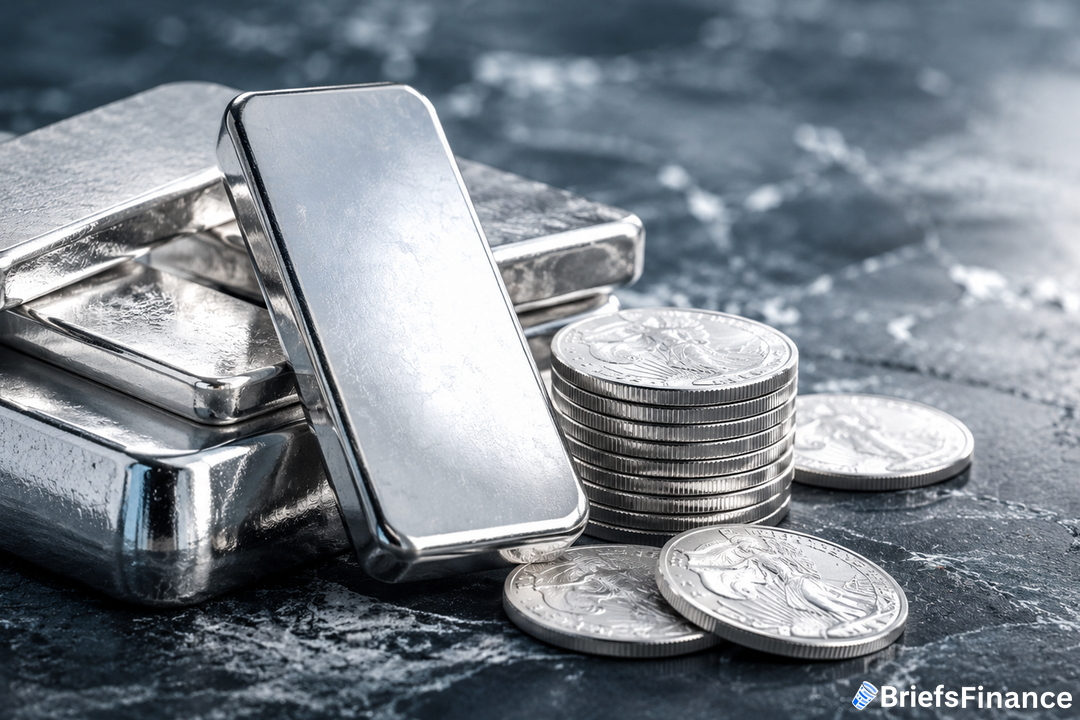
The popular places to hide are gold, silver and Bitcoin, and they are not the same bet.
| Asset | How it behaves |
|---|---|
| Gold | The purest hedge against the dollar |
| Silver | Part hedge, part industrial metal used across the economy, so more speculative and more volatile than gold |
| Bitcoin | Trades more like a tech stock than a dollar hedge, and extremely speculative |
None of the three pay you while you own them, so you hold them for a crisis, not for income.
That dollar-losing-value scenario is exactly what Jaspreet's free live investor workshop on September 29 is built around: how to profit from the dollar falling instead of feeling the pinch. Registration is free here.
Real Estate Wakes Up When Mortgages Get Cheaper
When rates fall, people can borrow cheaply, so they go out and buy more houses and buildings. Think back to the 2020 pandemic, when rate cuts gave us the lowest mortgage rates in history between 2020 and early 2022.
Nobody cared what a house cost because the mortgage was cheap, and housing prices skyrocketed. Great for owners, painful for buyers.
If mortgage rates fall again, more money probably flows into real estate again. You can buy physical property, or use a real estate ETF:
- VNQ, a Vanguard fund, and SCHH hold REITs (real estate investment trusts), the companies that own income-producing property like apartment complexes, senior housing and shopping plazas
- XHB holds homebuilders, on the idea that cheaper mortgages bring more buyers, so builders build more
Small Caps and Growth Stocks Live on Cheap Money
Small caps and growth companies are the businesses trying to grab market share as fast as possible rather than turn a profit today. To do that they need outside money, which flows more freely when it is cheap.
The caveat is that if the Fed is cutting because the economy is breaking, these companies still hurt, because people are losing jobs and not spending. Two ETFs cover the space:
- QQQ tracks the Nasdaq 100, the 100 largest non-financial companies in the market, mostly tech names that lean on outside investment
- IWM is the go-to small cap ETF, holding 2,000 smaller companies
Both grow fast and get hurt just as fast, because when rates rise or the economy slows, their outside money dries up and bankruptcies come faster.
The Broad Economy, Through the S&P 500
The whole point of a cut is to stimulate the economy, so the simplest play is to invest in the S&P 500 itself. The S&P 500 is the 500 largest companies in the stock market, and SPY is one ETF that tracks it.
Owning it here is a bet that the Fed stops worrying about inflation and starts worrying about growth, jobs and housing.
Speculative Bets Get Funded
Cheaper money means more money floating around, and more of it flows into speculative investments. When risk is cheap to take, one big payday can cover a lot of misses.
That covers Bitcoin and other cryptos, startups, and the alternative "assets" Jaspreet doesn't love calling assets: Pokemon cards, trading cards, watches. They do best when money is plentiful and struggle when the Fed is hiking and money is scarce.
The Fed Follows the Pain
The Fed weighs inflation against the job market, and whichever one is hurting more gets its attention. If jobs crack further, the teeter-totter tips toward cuts; if prices keep climbing, it tips toward hikes.
You don't need to guess which. Watch where the pain is building, and you'll know which of these two lists the money is about to move toward.