Everybody wants to know the secret to buying a stock.
When do I buy?
Do I wait for a dip?
Do I wait for good news?
Do I just... go for it?
Here's the truth: There is no secret.
The best time to buy a stock is usually when you've done your homework - not when the headlines feel good.
Buying individual stocks is the cornerstone of active investing - and the reality is, it takes time, effort, and education to do it consistently.
Many investors do not have the time to research individual stocks - which is totally okay, that’s why passive investing and ETFs exist.
But if you want to know when to buy a stock, it comes down to how well you research it beforehand.
Let’s break down when to buy a stock - the signals investors look for, when you may want to consider not buying, and some other key things investors should keep in mind.
Once you know when to buy a stock, the next question is: What stocks do you buy?
Our CEO Jaspreet Singh is hosting a free live investor workshop on March 18th that explains exactly how investors can spot market shifts and potential investing opportunities.
Register here before spots fill up.
First, Know What Kind of Investor You Are
Before you even think about timing, you need to answer one question: Are you a passive investor or an active investor?
Passive investors don't pick individual stocks. They invest in index funds - like the S&P 500 - on a regular schedule, and they let the market do the work over years and decades.
If you're not willing to research individual companies, this path might make more sense for you.
Active investors do the research. They study companies, read financials, and look for stocks that are undervalued relative to what they're actually worth.
This matters because the answer to when to buy is completely different depending on which investor you are.
Some investors may choose a combination of each - in the end, do what makes the most sense for your goals.
If You're a Passive Investor: The Best Time Is Now (And Every Month After That)
Passive investing is about consistency, not timing.
One strategy: Dollar Cost Averaging (DCA).
Here's how it works:
Instead of trying to find the "perfect" price, you invest a fixed amount at regular intervals - weekly, biweekly, or monthly - no matter what the market is doing.
Example: You invest $200 every month into an S&P 500 index fund.
- In a strong month, your $200 buys fewer shares.
- In a down month, your $200 buys more shares.
- Over time, you average out the highs and lows.
This removes emotion from the equation entirely.
You're not watching CNBC trying to decide if today is the right day. You've set a rule and you follow it automatically.
"Time in the market beats timing the market."
The investor who starts early and stays consistent almost always wins over the investor who's waiting for the "perfect" entry.
If You're an Active Investor: Look for These 3 Buying Signals
If you're doing the work to research individual stocks, timing still matters - but it's not about the calendar. It's about valuation and fundamentals.
Here are the signals that smart investors look for:
1. The Stock Looks Undervalued vs. Its Industry
You're not trying to find the cheapest stock - you're trying to find a good company at a fair (or better) price.
The most common tool here is the P/E ratio (Price-to-Earnings ratio).
| Metric | What It Tells You |
| P/E Ratio | How much you're paying per $1 of company earnings |
| P/E under 15 | Potentially undervalued (or company has problems - dig deeper) |
| P/E 15–30 | Generally considered a reasonable range |
| P/E over 30 | Could be overvalued, or market expects major growth |
The key move: Compare the P/E ratio to competitors in the same industry.
A stock trading at 18x earnings in an industry where competitors trade at 29x could be a steal. Or there might be a reason - so always do your own research and due diligence.
Pro tip: Don't make any investment decision based on one metric alone.
Look at the P/E, the PEG ratio, revenue growth, and cash flow together. Plus, understand the company’s business and growth potential.
2. A Quality Company Just Had a Rough Patch - For the Wrong Reasons
Some of the best buying opportunities come when a solid company drops in price because of short-term fear, not long-term problems.
Common things can happen to a stock like:
- Markets overreact to news.
- A bad earnings quarter.
- A scary headline.
- A sector-wide sell-off.
These things can push great companies temporarily on sale.
The question to ask: Is this company actually worse off long-term, or did the market just panic?
If the fundamentals are still strong - revenue is growing, the business model is intact, the industry is healthy - a short-term dip can be a genuine buying opportunity.
If the fundamentals are broken (earnings falling, management issues, shrinking market), that could be a warning sign that something else is going on.
3. You Have a Long Time Horizon
The longer you plan to hold, the less the entry price matters.
Here's why: short-term stock prices are driven by emotion, headlines, and hype.
Long-term stock prices track actual business performance.
If you're buying a great company with the intention of holding for 5, 10, or 20 years - small differences in your entry price become almost irrelevant compared to the power of compounding over time.
If you're buying something hoping to flip it in 3 months, every dollar matters.
But that's not investing - that's trading.
Most traders lose money in the long run because they're trying to squeeze out as many gains as they can.
It’s extremely difficult to predict how a stock will move over the course of a few days.
But research and analysis can help you better understand how a stock may move over the course of a few months to a few years.
That can help you potentially to profit in the long run.
What About Buying the Dip?
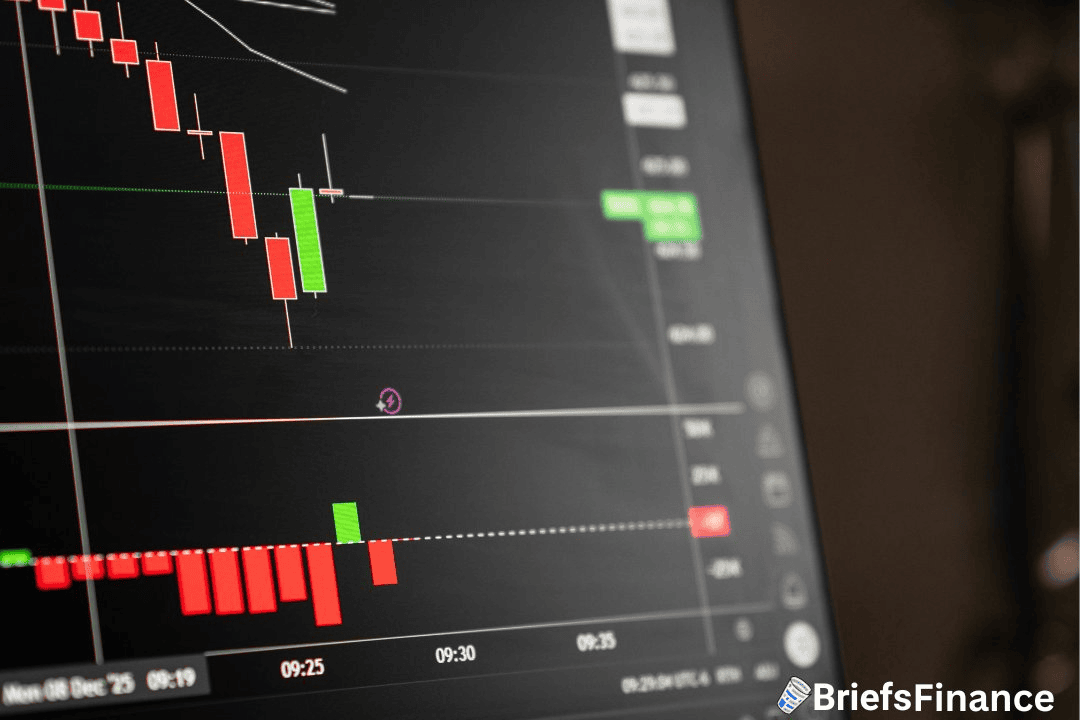
When markets fall, that can sometimes create opportunities for investors to buy great companies at a discounted price.
Here's a simple framework:
- Market down 10-15%? This is the type of pullback that happens every so often. If you have cash ready, it may be worth deploying some.
- Market down 20%+? This is a bear market. Scary in the moment, but historically some of the best long-term buying opportunities.
But here's the catch: You need to have already decided this in advance.
The worst time to make investment decisions is when the market is dropping and emotions are running high. Build a plan before the dip happens so you can execute without panic.
And again - this is why knowing how to research and analyze companies is so valuable.
Not every company will survive a downturn. Doing your research helps you understand which stocks may be worth buying.
When You Probably Shouldn't Buy A Stock
Just as important as when to buy is when to wait.
Watch out for these situations:
- The stock is clearly overvalued relative to its industry and historical norms - you might be buying at the top.
- You haven't done your research. Buying because a friend is excited or because a stock is trending is how people lose money.
- You need this money in the next 1-2 years. The market is volatile in the short term. Money you'll need soon shouldn't be in stocks.
- You're being emotional. Fear and excitement are both dangerous. Great investing is boring by design.
The Real Answer On When To Buy A Stock
There's no magical date on the calendar when it's the "best time" to buy a stock.
Whether you’re a passive investor, active investor, or choose a style that does both, picking a strategy and doing your research is often more important than when to buy.
That’s because in the long-term, you want to pick a stock that is a winner.
But no matter what - the sooner you get started, the sooner your money can start compounding, which is what builds real wealth that lasts.
Which stocks will be a winner in 2026 and beyond? In order to answer that question, you need to know what you’re looking for.
Our CEO Jaspreet Singh is hosting a free live investor workshop on March 18th that breaks down how to spot market shifts and potential investing opportunities.
Save your spot by clicking here - but act fast, participation is limited.