
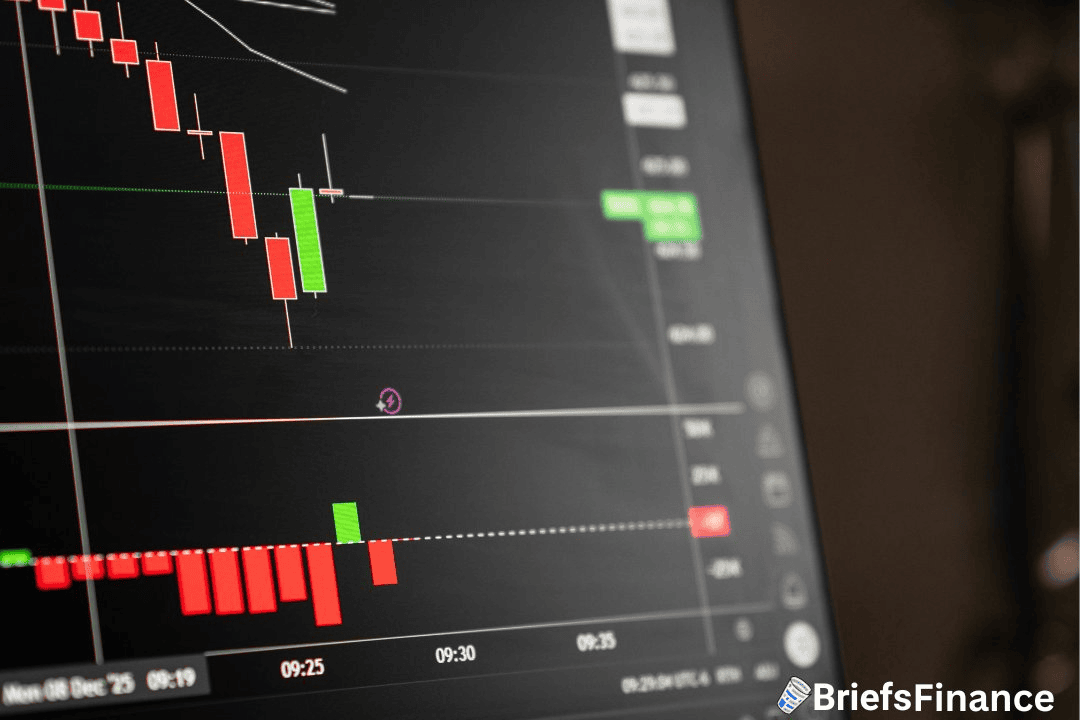
Most investors learn about buying stocks pretty early on. Buy low, sell high. Simple.
But what if you think a stock is about to drop - and you want to protect yourself? Or even profit from it?
That's where put options come in.
Some investors think options are a way to get rich quick. Others think they're just gambling.
The truth is in the middle. This guide covers what a put option is, how it works with a real example, when buying or selling a put makes sense, and the risks every investor needs to know.
Investing sounds complicated - but it really isn't.
The first step is staying up to date with what's happening in the financial world.
Subscribe to our free daily newsletter Market Briefs to get the hottest news in your inbox every morning.
What Is a Put Option?
An option is a contract. It gives you the right, but not the duty, to buy or sell a stock at a set price before a set date.
That set price is called the strike price - the price you've locked in. The set date is called the expiration date - your deadline to use the contract.
Options are a type of derivative - their value comes from a stock or other asset.
There are two types. Call options give you the right to buy a stock at the strike price, while put options give you the right to sell. (For a broader look at how options trading works, check out our full guide.)
Think of a put option like car insurance. You pay a small fee up front, and if something bad happens, you're covered.
If nothing goes wrong, you lose the fee. But you had peace of mind the whole time.
That's the basic idea behind a put option in stocks. You pay a small cost now to guard against a bigger loss later.
How a Put Option Works
Let's say you own 100 shares of Tesla at $250 a share. That's $25,000 of stock.
You're worried it might drop. But you don't want to sell and pay taxes on the gain.
So you buy a put option with a strike price of $240 that expires in three months for $400. That $400 is your premium - the cost of the contract.
Options contracts cover 100 shares, so that $400 covers all of your Tesla stock.
If Tesla drops to $200: Your put lets you sell at $240, even though shares are only worth $200. Your stock lost $50 a share, but your put gained $40 a share. After the $400 cost, your net loss is just $1,400 instead of $5,000.
If Tesla stays flat or goes up: Your put expires with no value, and you lose the $400. But your shares are worth the same or more - like paying for insurance you didn't end up needing.
The key point: You pay a small amount up front for the right to sell at a set price, and the most you can ever lose is the premium.
Buying Puts vs. Selling Puts
There are two sides to a put trade, and knowing the difference matters.
Buying a put - also called a long put - means you pay a premium for the right to sell at the strike price. Most investors use this to guard shares they own or to profit if a stock falls.
When you buy a put, the most you can lose is what you paid. Your risk is capped.
Selling a put - also called a short put - is the other side. You collect the premium, but you take on the duty to buy the stock if it drops to the strike price.
This is also called a cash-secured put - because you need enough cash on hand to buy the shares if the buyer uses the contract.
Why sell a put? Some investors use it to buy stocks at a lower price. You pick your target price, sell a put at that level, and collect the premium while you wait.
If the stock drops to your price, you buy it - which you wanted to do. If it doesn't drop, you keep the premium as income.
It's a way to get paid while waiting to buy stocks at the price you want.
Here's how buying and selling puts compare:
| Buying a Put | Selling a Put | |
|---|---|---|
| Your role | Right to sell at the strike price | Duty to buy at the strike price |
| Max loss | Premium paid | Strike price minus premium |
| Max gain | Strike price minus premium (if stock hits $0) | Premium received |
| Best when | You think the stock will drop | You want to buy the stock at a lower price |
| Risk level | Capped at premium | Higher - you're on the hook to buy shares |
The Risks Of Puts Every Investor Should Know
Options are leveraged - meaning small moves in the stock can lead to big gains or losses.
When you buy a put, the most you can lose is what you paid. If the stock doesn't drop enough before expiry, you lose the full premium.
But there's a risk that trips up a lot of new investors: time decay.
Each day that passes, your option loses a bit of value - even if the stock doesn't move. This is called theta decay. You can guess the right direction and still lose money if the stock doesn't move fast enough.
If you sell puts without enough cash to cover them - called naked options - your losses can be much bigger, since you could be forced to buy a stock at a price far above what it's worth.
Put options are different from other derivatives like futures contracts, where both sides are locked in. With a put, the buyer has a choice - the seller has a duty.
When Put Options Make Sense
Put options can make sense when investors own shares and want to guard against a stock market correction without selling, when they think a stock will fall and want to profit from it, or when they want to buy a stock at a lower price and get paid to wait through cash-secured puts.
Puts are not a good fit if you're just starting out, if you can't watch your trades, if you can't afford to lose the full premium, or if you don't understand how time decay and expiry dates work.
The best path for newer investors: Learn about options first. Paper trade them - which means practice with fake money - and only use real cash once you get how they work. Start small, with a tiny part of your portfolio.
If you're still building your investing foundation, it helps to understand key tools like how to read a balance sheet, what an income statement tells you, and how earnings per share works before jumping into options.
It also helps to understand the difference between trading and investing - since options are closer to trading, and most wealth is built through long-term investing strategies like index funds and dividend stocks.
The Bottom Line On Put Options
A put option gives you the right to sell a stock at a set price before a set date.
Investors use them to guard against losses or to profit when a stock drops, and the most you can lose when buying a put is the premium you paid.
But options are not simple. Time decay, leverage, and expiry dates all add risk that every investor needs to understand first.
One more thing to keep in mind - if you do profit from options, capital gains taxes apply. It's worth knowing how to reduce your taxable income before tax season rolls around.
Don't miss another headline - subscribe to our free daily newsletter Market Briefs today.









