Free NewsletterPro Login

Trump And Iran's President Just Signed An MOU

Published Jun 17, 2026
Share:
Summary:
  • Trump and Iran's President Pezeshkian signed an MOU Wednesday, marking the first leader-to-leader deal between the U.S. and Iran since ties broke in 1980.
  • The full text has not been released, leaving open whether the deal covers sanctions relief, the nuclear program, or prisoner swaps.
  • Iran holds the world's third-largest oil reserves, and even a partial sanctions rollback could add 1 to 2 million barrels per day to global supply and pressure prices.

The U.S. and Iran haven't had a leader-to-leader deal in 45 years. That just changed.

The two countries cut ties in 1980 after the Iran hostage crisis. No U.S. president since has put his name on a deal with Iran's leader.

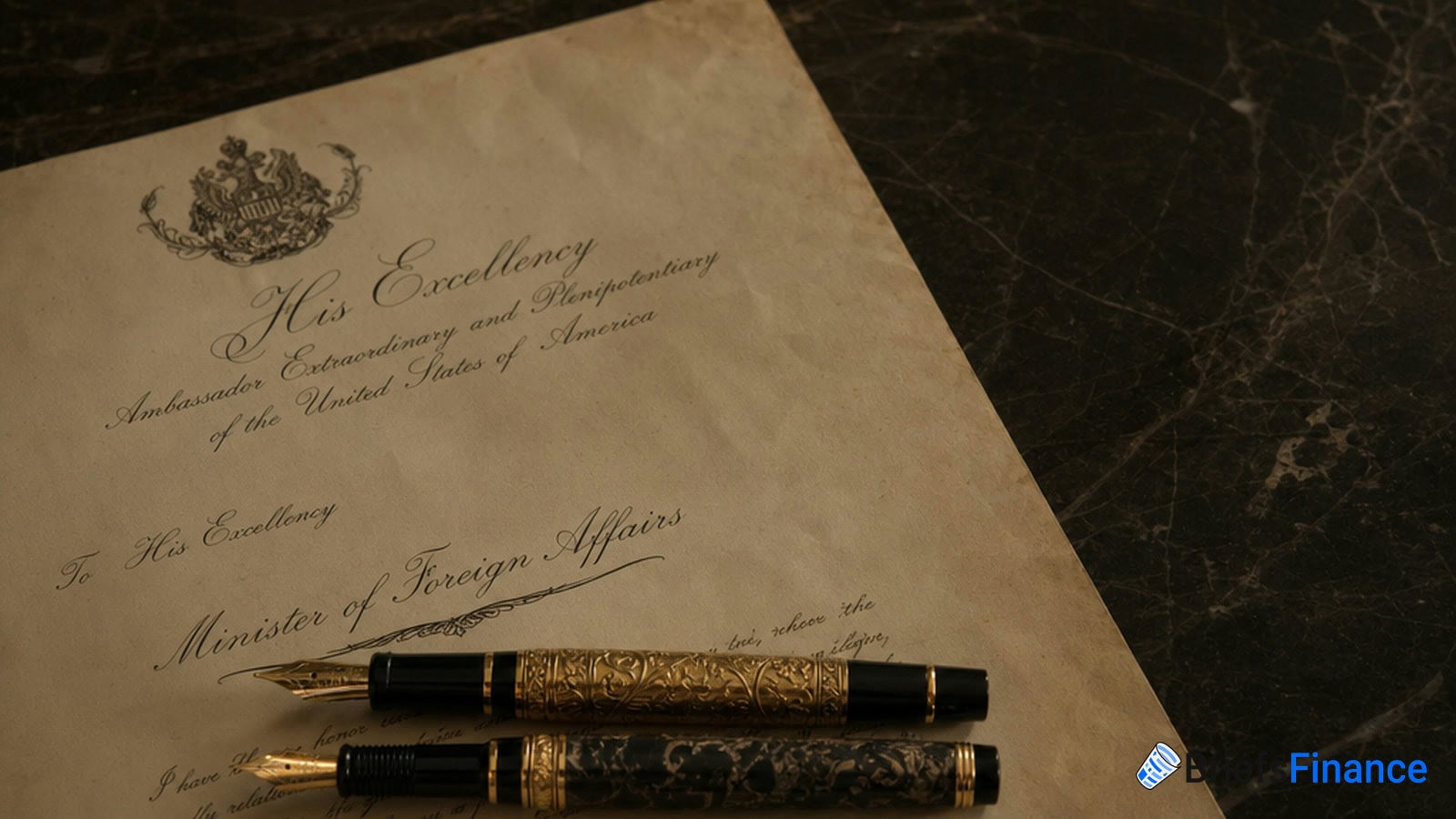
That all changed Wednesday. A U.S. official says Trump and Iran's president, Masoud Pezeshkian, signed a deal called a memorandum of understanding.

That's an MOU - a written deal where both sides agree on broad terms. It's not a treaty, so it doesn't need a Senate vote.

The full text of the deal hasn't been released, and that's the open question driving most of the early talk.

How An MOU Works

An MOU sits between a handshake and a contract. Both sides agree on goals before locking in the details.

It doesn't need Senate approval, which is why presidents use one when they want to move fast.

That speed matters here because U.S.-Iran talks have run through back channels and third countries for years.

Both sides avoided any paper with both leaders' names on it. A signed MOU skips that whole dance.

Geopolitical moves like this ripple through oil, defense, and shipping stocks fast. Market Briefs breaks down what matters every morning in five minutes - and you get a free investing masterclass when you sign up.

How Markets Are Reading It

Iran holds the world's third-largest oil reserves. U.S. sanctions have kept most of that oil off global markets for years.

Any sign of a thaw moves prices, which is why Brent crude reacts to every Tehran headline.

Even a small rollback of sanctions could bring 1-2 million barrels per day back to global supply. That would push prices down at a time when OPEC+ is managing output.

OPEC+ is the group of major oil-producing nations that sets supply targets together. Their pricing power could shift if Iranian oil floods back in.

The shipping lanes through the Strait of Hormuz carry about 20% of the world's daily oil. Stress in that area gets priced into freight rates, insurance, and defense stocks.

An MOU doesn't change that math overnight. Sanctions stay on until Congress or the Treasury moves.

But the odds of future easing just moved for oil majors, defense stocks, and tanker firms.

What's Still Unknown

The full text of the MOU hasn't been released, which leaves every big question open:

  • Does it cover the nuclear program?
  • Is sanctions relief in there?
  • Are prisoner swaps or trade in the deal?
  • What about U.S. troops in the region?

Until the text drops, investors are pricing in chance, not policy. That uncertainty grows with Israel and the Gulf states still silent on how they'll respond.

What To Watch

Three signals matter from here: the official text release, the response from Israel and Gulf allies like Saudi Arabia and the UAE, and where oil futures open in Asia.

The signatures are real, and the terms will follow.

Want this kind of read on every market-moving headline? Join 350,000+ investors reading Market Briefs - daily delivery, plus a free 45-minute investing course thrown in.

Disclosure

Get Market Briefs delivered to your inbox every morning for free!

No fluff. No noise. No politics. Just finance news you can read in 5 minutes.

Blogs

June 17, 2026
What Are Penny Stocks? Risks and Rewards Explained
  • Penny stocks are very low-priced shares of very small companies, often trading for just a few dollars or less.
  • They promise huge gains but carry huge risks: low liquidity, high failure rates, and wild price swings.
  • Most investors are better served by quality companies and funds than by chasing cheap shares.
Read More
June 17, 2026
Best Stocks for Beginners With Little Money
  • The best stocks for beginners with little money usually aren't individual stocks at all - they're low-cost index funds.
  • You can start with $100 or less and use small, regular investments to build wealth over time.
  • Focus on diversification and consistency, not on picking the next big winner.
Read More
June 16, 2026
Tech Stocks: A Simple Guide for New Investors
  • Tech stocks are companies in the information technology and related sectors, from software to chips to the internet giants.
  • They've driven much of the market's growth, but they can be volatile and richly valued.
  • The smart approach is to understand what you own and not let one sector run your whole portfolio.
Read More
June 16, 2026
What Is a Joint Stock Company? A Simple Guide
  • A joint stock company is a business owned by many people, each holding shares of stock that represent a slice of ownership.
  • It's the basic idea behind every public company you can buy on the stock market today.
  • Owning a share makes you a part-owner, entitled to a piece of the profits and growth.
Read More
June 16, 2026
Capital Gains Tax in California: A Simple Guide
  • Capital gains tax is what you owe when you sell an investment for more than you paid for it.
  • How long you held it matters: long-term gains are taxed more gently than short-term gains at the federal level.
  • Smart investors lower the bill with tools like tax-loss harvesting and holding for the long run.
Read More
June 15, 2026
Top Covered Call ETFs: How to Compare Them
  • Top covered call ETFs are income funds that own stocks and sell call options against them to generate steady cash.
  • The best one for you is the fund whose income, holdings, and fees fit your goals, not simply the one with the flashiest yield.
  • They all share one trade-off: more income today, less upside in a big rally.
Read More
June 15, 2026
What Are Stock Options? A Plain-English Guide
  • Stock options are contracts that give you the right, but not the obligation, to buy or sell a stock at a set price by a set date.
  • There are two kinds: calls (the right to buy) and puts (the right to sell).
  • Options can multiply gains or wipe out your money fast, so they suit investors who already know the basics.
Read More
June 15, 2026
EBITDA Margin: What It Is and How to Calculate It
  • EBITDA margin measures how much core profit a company keeps from each dollar of sales, before interest, taxes, and accounting deductions.
  • The formula is EBITDA divided by revenue, shown as a percent.
  • A higher, steadier EBITDA margin usually signals a more efficient, more durable business.
Read More
June 15, 2026
What Is Taxable Income? A Simple Guide for Investors
  • Taxable income is the portion of your money the government can tax after deductions are applied.
  • Not all income is taxed the same: job income, investment income, and passive income face different rates.
  • Investors and business owners get more tools to legally lower their taxable income, which is a big edge over time.
Read More
June 15, 2026
What Is a Covered Call? How the Strategy Works
  • A covered call is an options strategy where you own a stock and sell someone the right to buy it from you at a higher price.
  • You collect cash, called the premium, up front, and keep it no matter what happens.
  • The trade-off: if the stock soars, your shares get sold at the set price and you miss the extra upside.
Read More
1 2 3 23
Share via
Copy link










