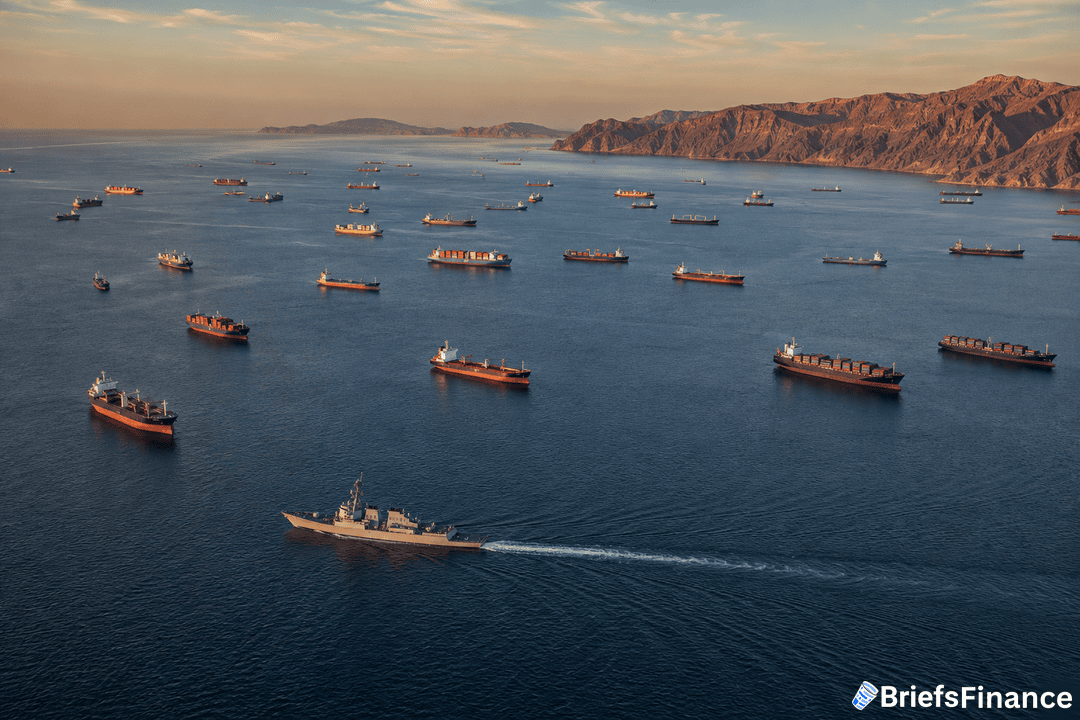
Before the war, 130 cargo ships moved through the Strait of Hormuz each day.
They carried about a fifth of the world's oil and gas.
Now the strait is a parking lot for more than 1,500 ships.
And the Navy is spending millions just to push one ship through at a time.
That is the gap Wall Street is trying to price.
It is the space between a Pentagon mission and the actual reopening of the lane.
What Project Freedom Looks Like
The mission launched on May 4.
Two cargo ships made it through under U.S. military cover on May 5.
Then talks with Iran stalled, and the Navy paused the runs on May 6.
The force on station is big: more than 100 land and sea planes, 15,000 troops, and U.S. missile-guided ships.
Marco Rubio called the goal a "zone of transit" set up under a bubble of U.S. air and sea power.
Iran calls the mission "Project Deadlock."
A fragile ceasefire between the U.S. and Iran has held since April 8.
Both sides have since rejected the other side's peace plans, so the truce could break at any time.
For a busy investor's daily read on stories like this, Market Briefs lands in your inbox in five minutes, and joining gets you a free investing masterclass on top.
Why The Costs Keep Climbing
Running an air and sea umbrella over the world's most fought-over shipping lane is not cheap.
Fuel, gear, and combat pay for 15,000 troops pile up by the day.
What the cost has bought so far is two cargo ship trips.
Iran still says the lane is theirs and that no ship moves without its OK.
A South Korean ship caught fire in the region on Monday.
That added one more layer of risk for any owner thinking about sending a ship into the lane.
Oil traders saw enough.
Brent crude is back near $105 a barrel, with diesel and gas at the pump climbing along with it.
Each day the lane stays shut hits the global supply of oil and gas, since most of the flow that used to move through has no other path out of the Gulf.
What To Watch
The Trump-Xi summit this week could move Beijing to lean on Tehran, since China is Iran's top oil buyer.
Markets will also watch how long the Pentagon keeps paying for trips that barely move cargo.
Each day the strait stays shut adds to the cost at the pump and the cost on the books.
Energy stocks have moved with each new bit of news from the Gulf, so any sign of a real reopening could swing the sector fast.
Shippers will also watch the South Korean fire, since each new mishap raises the cost of war risk cover on cargo.
If you want this kind of read on the markets every morning, join 350,000+ investors reading Market Briefs, and your sign-up also comes with a 45-minute investing course at no charge.