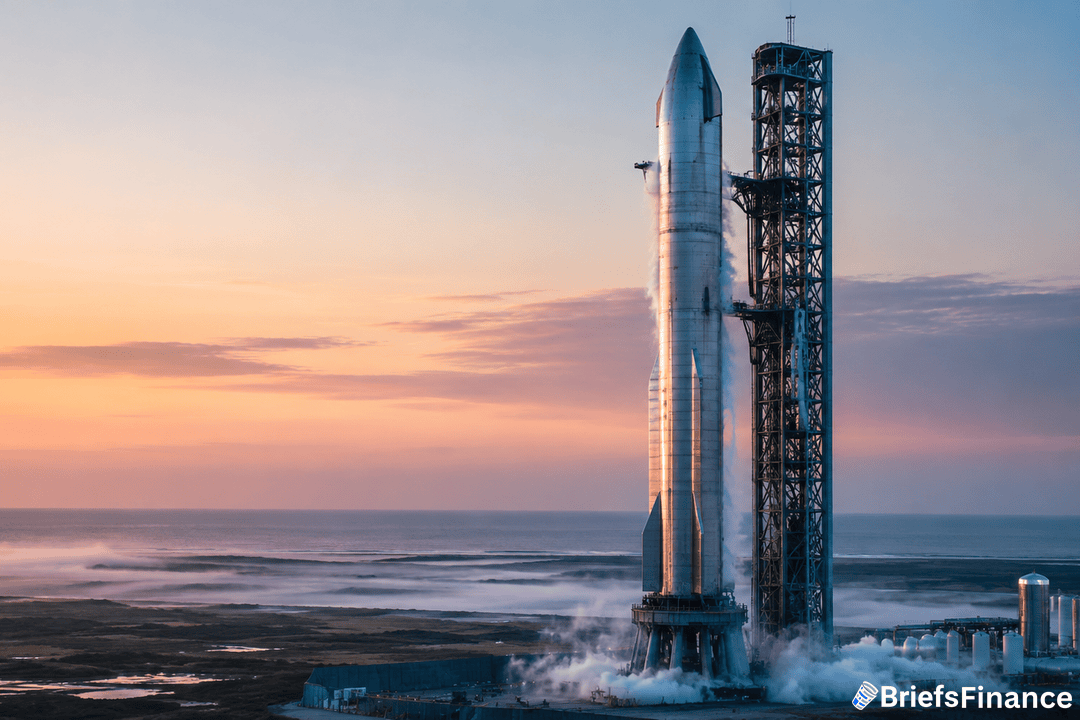
The biggest IPO in history belongs to a firm that has never turned a profit.
SpaceX just raised $85.7 billion going public. Last year, it lost $4.9 billion.
What A "Greenshoe" Actually Is
The first $75 billion came in on Thursday. That alone made it the biggest IPO ever recorded.
The rest came from a move called a greenshoe. It lets the banks sell extra shares when demand runs hot.
Banks usually use it only when the stock is rising. So it is a sign of strong demand, not weak.
The extra shares brought in about $10.7 billion more. That took the total from $75 billion to $85.7 billion.
Think of a concert that holds back a block of tickets. The promoter only releases them once the show sells out.
That is what happened here. Goldman Sachs and Morgan Stanley ran the deal and sold 83.3 million more shares.
Demand was easy to see. SpaceX staff even wore green shoes on the trading floor Friday.
Musk re-shared the photo on X. The stock had priced at $135 a share.
It then soared 19% in its first day and closed near $161. That pushed the company's value above $2 trillion.
The stock kept climbing Monday, up more than 7% in its first full day. Big IPOs, odd Wall Street terms, real money calls - Market Briefs breaks it all down each morning, and a free 45-minute investing masterclass comes along when you join.
A $2 Trillion Bet On What Comes Next
The price tag is huge next to the actual business. SpaceX is valued near 112 times last year's sales.
It has also lost more than $41 billion since it began. So what are investors paying for?
A plan, mostly. The cash is meant to finish Starship, the largest rocket ever built.
Starship is being designed to fly again and again. That could make each launch much cheaper.
The money will also launch new satellites that grow the Starlink internet service. Starlink already beams internet to far-off places.
More satellites would stretch that reach further. SpaceX wants to run data centers in space too.
Musk pitches those as a fix for the huge power needs of AI. It even plans a chip factory in Texas with Tesla and Intel.
That 112 times figure is rare for a public firm. Most large companies trade at a tiny slice of that.
It means investors are paying for the future, not today. The bet is that SpaceX grows into the price.
What To Watch
The rockets are still being tested. So far they have mostly carried dummy cargo.
The space data centers are still just an idea. The tech is unproven and comes with real risk.
SpaceX also makes far less money than Big Tech does. Yet it now trades like one of the giants.
A $2 trillion price says investors expect the plan to work anyway.
If you like markets explained without the jargon, join 350,000+ readers of Market Briefs. You'll also get a no-cost investing masterclass to sharpen your own playbook.