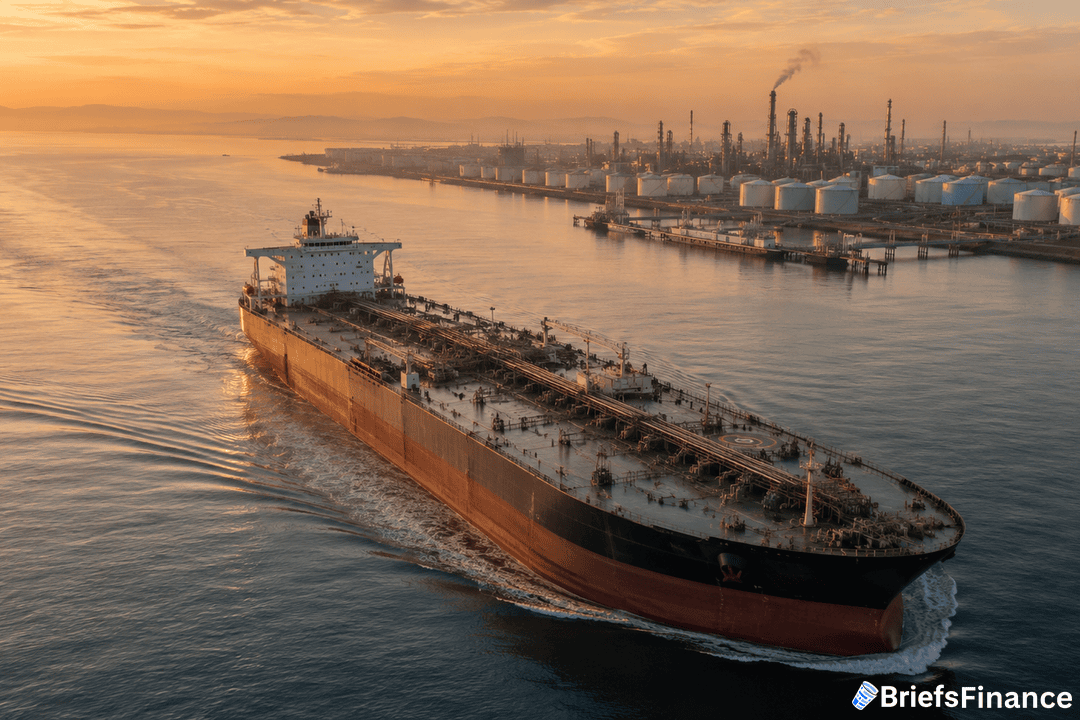
Ukraine has spent months hitting Russia's oil refineries. Its drones keep targeting them. You would think that would cut Russia's oil sales. It has done the opposite. Russia is now selling more oil than ever.
Why Hitting Refineries Can Backfire
Russia just shipped 3.83 million barrels of crude a day. That figure covers the four weeks to June 14. It is the most since December. It is also the fastest pace this year. It held about flat from the week before. Most of those barrels go to buyers in Asia.
Here is the catch. A refinery turns crude oil into fuel. Think diesel, gas, and jet fuel. When a drone knocks one out, that crude has no home.
So Russia ships it abroad as raw crude. Ukraine's drone strikes have hit plant after plant since the spring. Some refineries have had to stop or cut output. At points this year, strikes idled a big share of Russia's refining.
Picture a kitchen that loses its oven. The cook can't make meals. So the raw food gets sold off a truck. It still leaves the building, just unfinished.
We unpack the market stories behind the headlines every weekday morning in Market Briefs, and you get a free investing masterclass when you join.
The Money Keeps Flowing
The full-year picture is even bigger. Russia's crude flows are averaging 3.49 million barrels a day in 2026. That beats every year since it invaded Ukraine in 2022.
So the strikes hurt Russia's fuel output. They do not hurt its oil cash. The barrels keep moving, and so does the money.
Russia does sell its crude at a discount. Sanctions made sure of that. But the higher volume helps make up for the lower price. The war has shifted Russia from selling fuel to selling raw crude.
Why It Matters For Investors
More Russian crude on the water tends to hold down oil prices. That is good news for drivers at the pump. It is bad news for oil producers who want prices to climb.
It also shows sanctions have not choked off the flow. The oil keeps finding buyers. Oil and gas still bring in roughly a fifth of Russia's budget, so every extra barrel matters to Moscow.
Buyers like India and China keep taking the crude. Lower oil prices usually mean cheaper gas and diesel for everyone else. The flow has stayed strong all year.
What To Watch
The damage may last a while. The International Energy Agency sees the hits weighing on Russia's fuel output into mid-2026.
The longer the refineries stay down, the more raw crude Russia sells. Traders will watch how fast Russia can repair the damage. Repairs to a hit refinery can take weeks or months. For now, the export taps are still wide open.
Ukraine is breaking Russia's refineries, but the oil money keeps coming.
Want the market's strangest contradictions explained in five minutes a day? Get Market Briefs in your inbox and pick up a 45-minute investing course as a bonus.