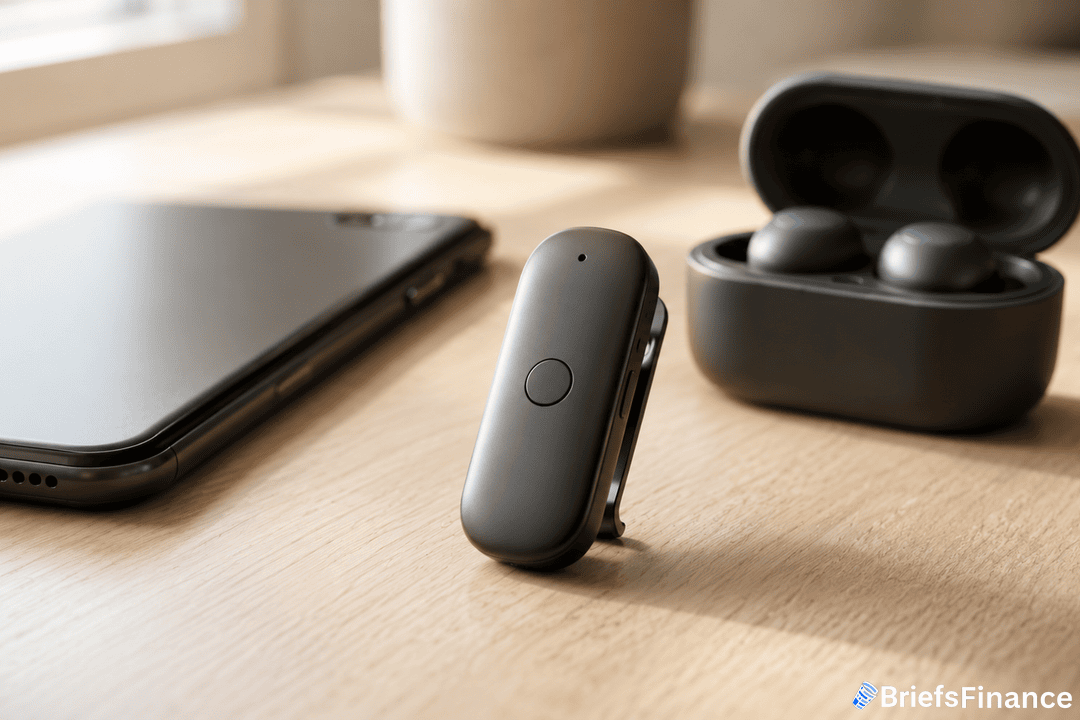
Plaud makes a voice recorder smaller than a credit card. It is chasing half a billion dollars in sales this year.
Its devices clip to your shirt or stick to the back of your phone, then turn your meetings into typed notes. Now it wants the next one to do more than just listen.
That goal sounds bold for such a small gadget. But Plaud has a head start, and it is moving into software at the same time.
From Note-Taker To Something That Acts
Plaud says its new wearable will arrive later this year, and it will work with AI agents. An AI agent is software that can do tasks for you, not just answer questions.
That is the real shift, since the gadgets today only capture what was said. The next one is built to act on it.
Think booking the follow-up or drafting the email before you ask. For a company built on recording, that is a whole new kind of business.
It moves Plaud from a fancy microphone toward a helper you wear. People already use these gadgets for meetings, interviews, and classes.
A device that also acts on those notes could be much harder to give up. That stickiness is what investors prize most.
We cover the firms turning AI hype into real products in Market Briefs, sent every weekday morning - and you get a free investing masterclass when you sign up.
The Numbers Behind The Bet
The $500 million goal is bold for hardware this small. But Plaud is not starting from zero, since it has already sold more than 1.5 million devices.
Its lineup starts at $159. The phone app writes up to 300 minutes of audio a month with no monthly fee.
That low price is how a niche gadget turns into a mass-market one. The lineup keeps growing, too.
Its newest pin sells for $179 and adds a button to mark key moments. It even works with Apple's Find My, so you can track it down.
It Is Going After Software, Too
Plaud is not stopping at hardware. It just launched a desktop app that records online meetings and writes up the notes.
That puts it up against software tools like Granola, Fathom, and Fireflies. The plan is simple: sell you the device, then keep you paying for the software.
That mix of a cheap gadget and paid software is a proven way to earn steady income. It is the same razor-and-blades model that has worked for years.
The risk is real, though. Small hardware is a tough, low-margin game, and the field is crowded.
What To Watch
The big question for investors is whether one clever gadget can carry a company to $500 million. It also has to become a software player at the same time.
The next launch will be the first real test.
If you like spotting trends like this early, join 350,000+ investors at Market Briefs and get a free 45-minute investing course as a bonus.