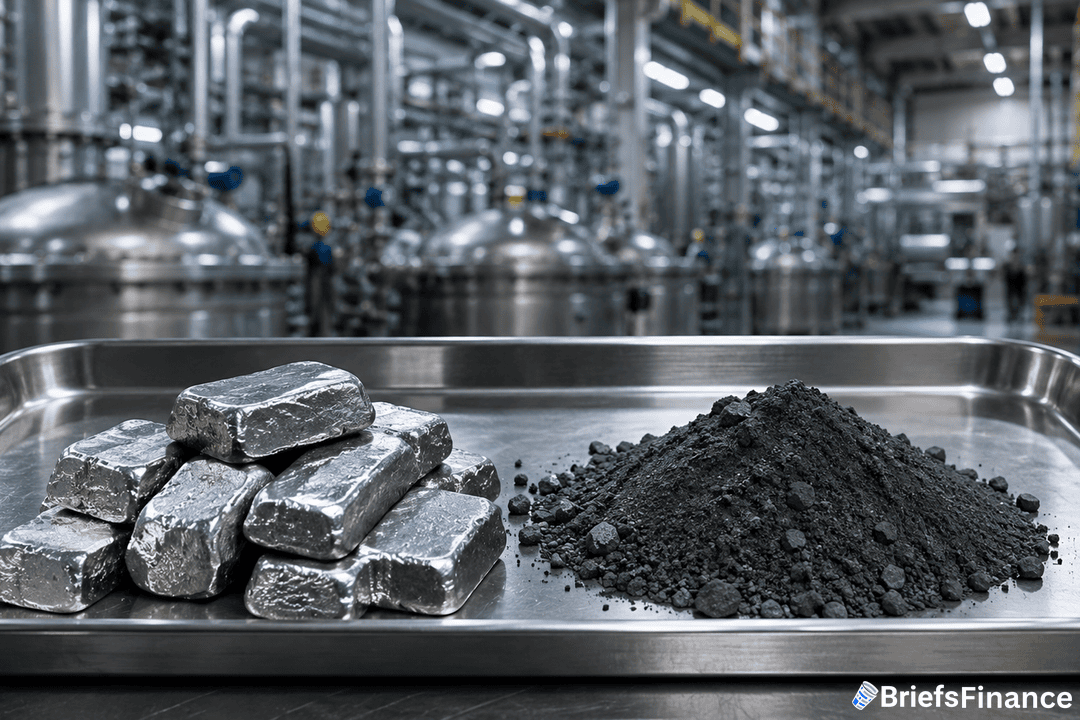
China controls most of the world's rare earths. The Pentagon just put $500 million toward changing that.
The money is a loan to a firm that cleans up rare earths. It is the latest in a string of government deals to build this supply chain at home.
That pattern is the real story. Washington keeps acting like an investor to break China's grip on key metals.
China's lead did not happen by chance. It spent years building plants others did not.
The Deal
Rare earths are a group of metals. They go into magnets, electric cars, gadgets, and missiles.
Without them, a lot of modern tech stops working. They are not actually rare in the ground.
The hard part is cleaning them up, and that is where China leads. The US barely does any of this work itself.
The loan would anchor a $1 billion plant called the Freedom Facility. It would turn mined rock and reused scrap into key rare earth metals.
Those metals come in light and heavy types. Both industry and the military need them.
The plant aims to be running by 2028. That is a long road from a loan offer.
One catch: the loan is conditional. It still has to pass the usual money, legal, and tech reviews before any cash flows.
We unpack policy stories that move markets in Market Briefs, every weekday morning - and you get a free investing masterclass when you join.
Why Washington Keeps Writing These Checks
This deal fits a clear pattern. The government keeps funding critical minerals projects it sees as a safety priority.
The reason is simple. If nearly all supply runs through one country, a single trade fight can cut it off.
That risk covers both weapons and clean energy. Heavy rare earths are the hard part.
China makes most of them, and they are tough to find elsewhere. A home plant is a way to lower that risk.
Past trade fights have shown how fast supply can tighten. That fear is driving these deals.
Building plants here is the insurance policy. It costs money up front, but it lowers the chance of being shut out later.
Who's Behind It
The startup is not going it alone. It is backed by carmaker BMW and Japan's Sumitomo.
It aims to start work at the plant in 2028. Two global names backing it points to real demand for a home-grown supply.
BMW and Sumitomo bring money and know-how. That gives the plant a base to build on.
For investors, Phoenix Tailings is part of a bigger theme. When the government keeps funding an industry, private money tends to follow.
What To Watch
The next step is whether the loan clears its reviews and turns final. After that, all eyes turn to 2028, when the plant should open.
Plenty can still go wrong before then. But the home-grown push is clearly growing.
Want to catch themes like critical minerals early? Join 350,000+ investors reading Market Briefs and get a free 45-minute investing course as a bonus.