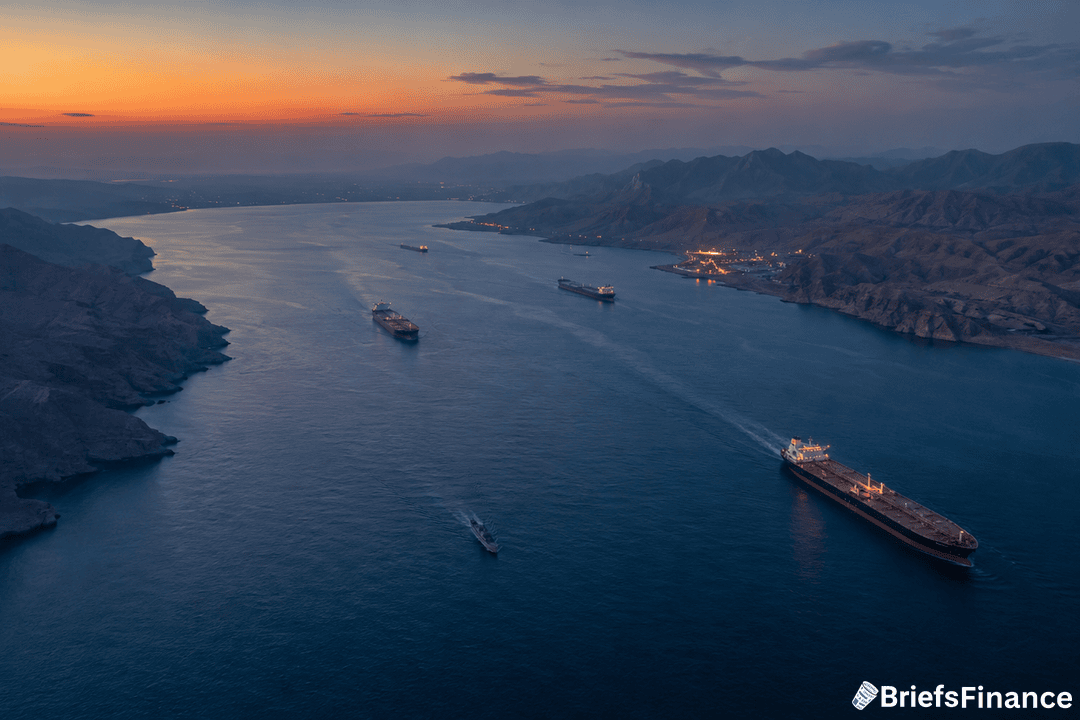
On Monday, Trump said an Iran deal was days away, and that the Strait of Hormuz would reopen the moment it was signed.
By Wednesday, the deal talk was gone and the threats were back.
Iran had "taken too long," he said, and would now "pay the price."
Both moves rattled an already jumpy oil market.
From Handshake To Hard Line
Trump posted that Iran's military was "a complete and total mess," and said its navy and air force barely exist anymore.
The about-face came just a day after his upbeat talk of a deal.
Markets didn't love the shift, and U.S. stock futures fell while oil ticked higher.
U.S. crude rose nearly 2% and Brent added more than 1% after the comments.
That reaction makes sense, because traders read a collapse in talks as more war, and more war as pricier oil.
Headlines are moving oil by the hour right now. Market Briefs cuts through the noise every morning in five minutes, and you get a free investing masterclass for joining.
The 'Steel Wall' That May Be Leaking
The U.S. set up the blockade to choke off Iran's oil sales.
It has cut off most of Iran's normal oil trade, but buyers keep finding workarounds at sea.
Trump bragged about it, calling it the most successful in the history of naval war.
"NOTHING GETS THROUGH unless we want it to," he wrote.
JPMorgan sees it differently, and the bank thinks about 2 million barrels of Iranian oil a day are still slipping out of the Strait.
By the bank's count, roughly 2.9 million barrels a day left the Strait in May, with much of it moving in the shadows.
Some of that crude rides on tankers that go dark by switching off their location signals.
That's the sea version of driving at night with your headlights off.
Why The Reversal Matters
Oil had eased earlier in the week on hopes that a deal was close.
Those hopes are now gone, and a signed deal was supposed to reopen Hormuz and pull the war premium out of oil.
That outcome just got further away.
A calmer market would have meant cheaper gas for drivers.
For investors, the takeaway is simple: the path to lower oil prices now runs through more fighting, not less.
That doubt is why wild, more volatile trading tends to follow every twist in this story.
What To Watch
The question now is whether either side returns to the table or digs in.
Neither one looks ready to blink just yet.
The U.S. energy secretary said this week that ship traffic through Hormuz was actually picking up.
Trump says the blockade is a steel wall, but JPMorgan's numbers point to cracks in it.
The oil that's still getting out may be the only thing keeping prices from going even higher.
Want the market explained the way a friend would explain it, every morning? Join Market Briefs here and grab a free 45-minute investing course while you're at it.